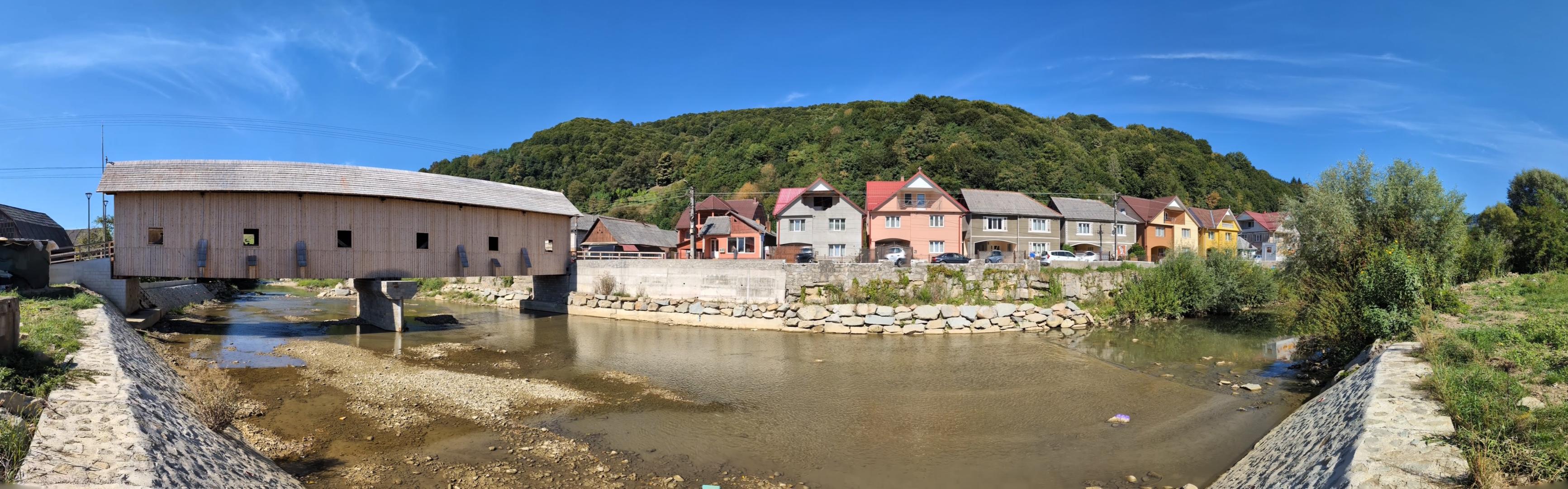
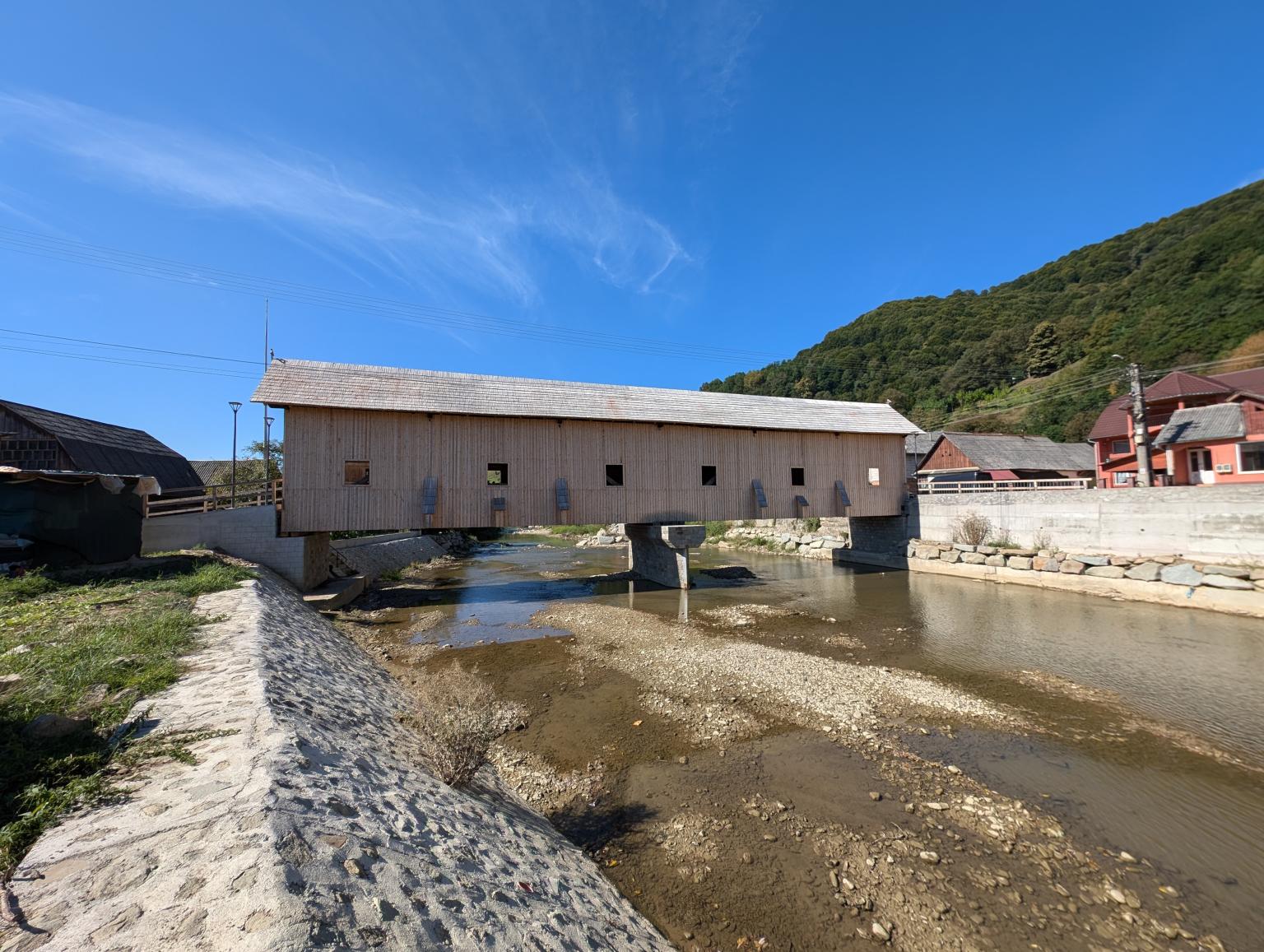
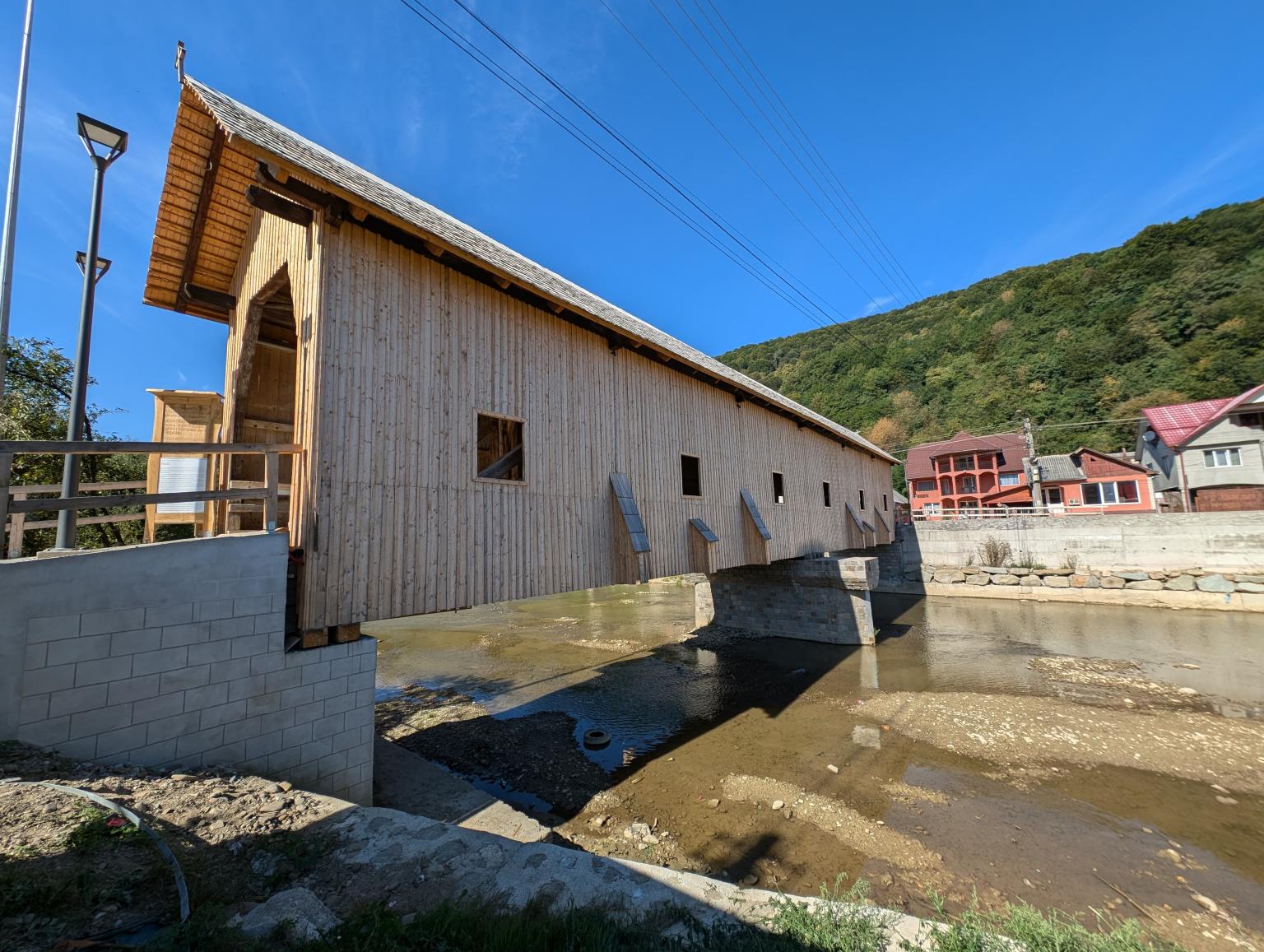
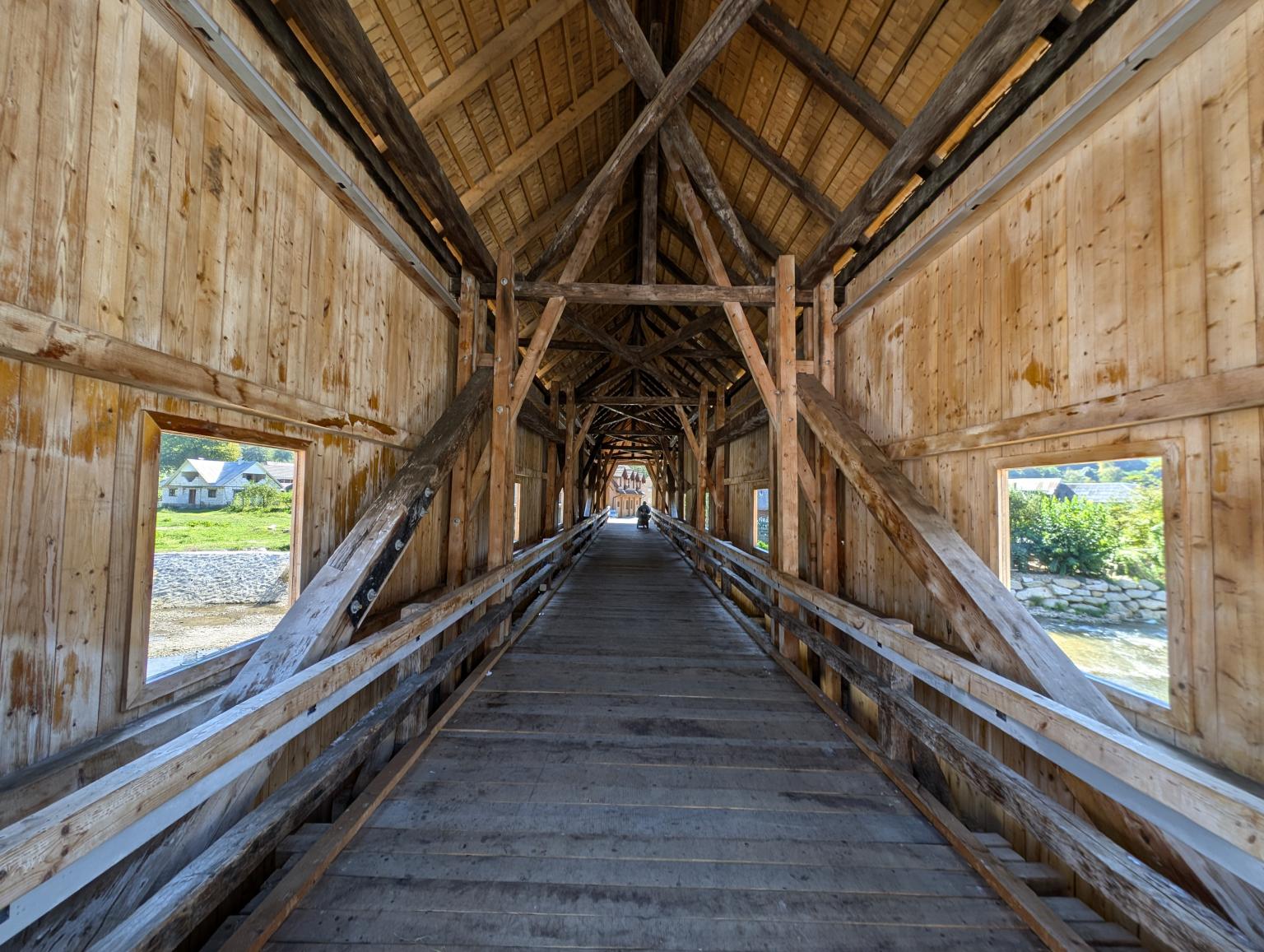
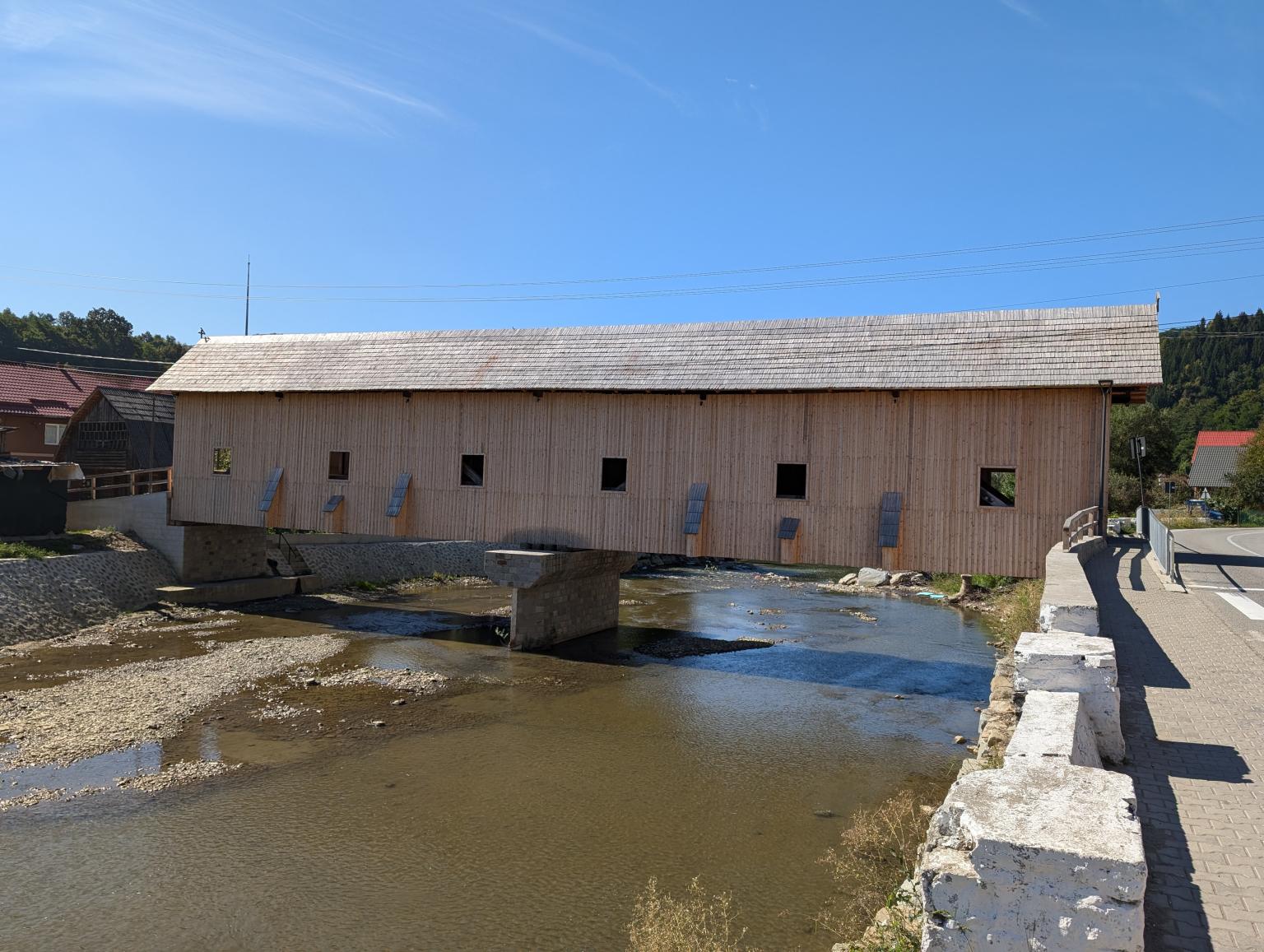
Wooden covered bridge (Tyrolean-style border bridge) over the Sălăuța river
Built: 1778
Remade: 1937
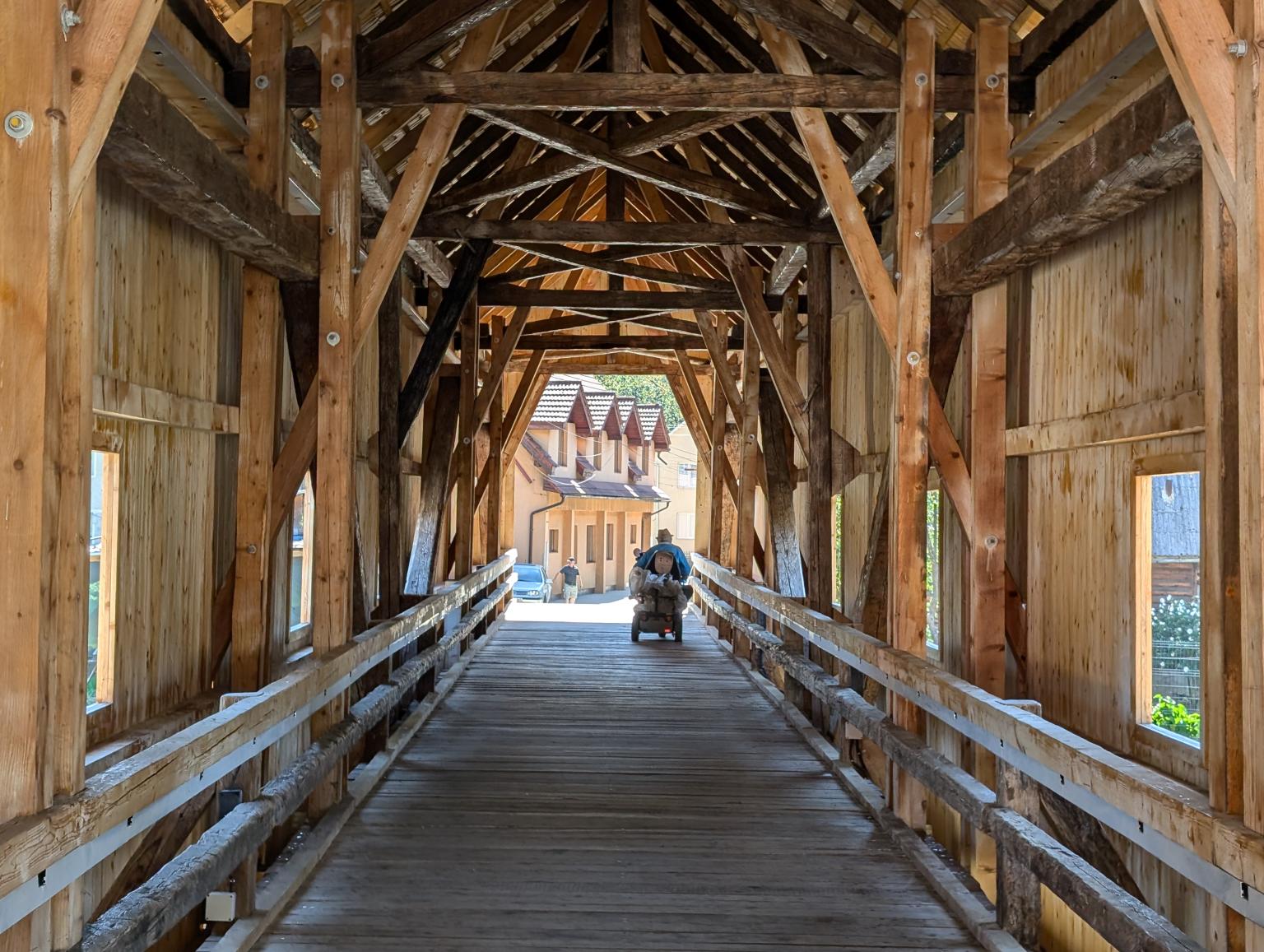
The covered wooden bridge in the town of Coșbuc was built in Tyrolean style in 1778, according to a project by an Italian engineer from Tyrol, by two Hungarian craftsmen from the town of Nimigea, Bistrița-Năsăud county, with the help of local citizens. When erecting it, oak wood was used brought from the forests in the area of Șintereag. The bridge, preserved in its natural state, is unique in Transylvania.
The wood used in the construction of the bridge was cut in February, because during this period the trees are devoid of vegetation. Woodworking was done only with the barda (carpenter's axe); no metal nails were used, only wooden nails, and the joints were made by cross-sectioning into "plasters" (dovetails) and nailing them.
This bridge was built primarily for the movement of soldiers quartered in the town of Coșbuc, border soldiers from the Xth Company of border guards from the II Graniță Regiment, to the training places located in the "Podori" and "Dealul Călinii" areas.
The construction of the bridge was also necessary to serve a large part of the commune's inhabitants who had their homes on the left bank of the Sălăuta river. Until that time, they only used an improvised bridge in the area to cross the river, and to move with goods and animals they had to cross the water.
14 more identical bridges were built in Bistrita-Năsăud county; among these, only the bridge in the town of Ilva Mare still exists, but it is degraded and impassable, being close to collapse.
In 1937, repairs were made to the infrastructure of the bridge, after it was seriously affected by the rising waters of 1909. The piles and culverts, originally built of resinous larch wood, very resistant to the action of water (also used in the construction of water mills) , were replaced with concrete elements. From 1937 until today, the bridge path, roof and side walls, made of dranite (thin boards made of fir wood), have been replaced. The last repairs were carried out in 2002. Over time, this bridge witnessed some idyllic moments, being also called the "bridge of love". It has been used as a venue for weddings, christenings and proms.
In the past, a celebration was held on this bridge called "the feast of the bridge". At this event, the bridge chained the entrances. When the boys of the village, accompanied by processions and musicians, wanted to cross the bridge, they found the gates closed. They sent the girls from the village to negotiate with the podar, and the boys had to honor him. The bridge, in turn, honored the musicians and started the game and the good will, which lasted until the late hours of the night. The last celebration held on the bridge was the Sânzienelor festival and took place in 2004.