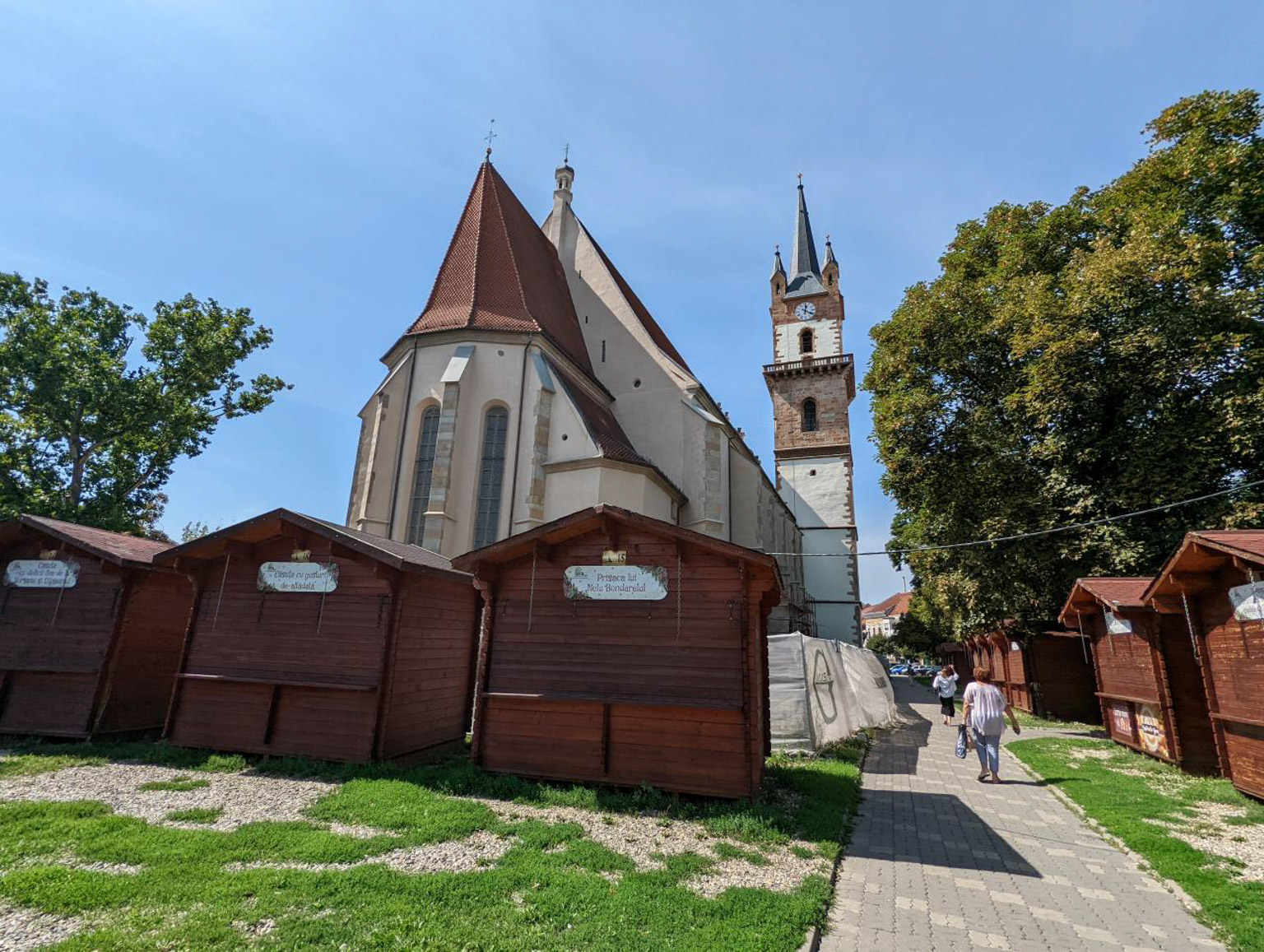
The Evangelical Church in the center of Bistrita is an important architectural monument that marks the transition from the Gothic to the Renaissance style in Transylvania. The church tower, with a height of 75 m, is the highest medieval tower in Romania, slightly surpassing the tower of the Evangelical Cathedral in Sibiu.
Under the current church are the foundations of an old building erected by the Saxon settlers. The first documented parish priest was Johannis plebanus de Bystricia, mentioned in the papal tithe registers of 1332-1333. Economic prosperity and Queen Elizabeth's concessions allowed the citizens to build a new church in the second half of the 14th century, originally a Romanesque basilica with three naves and two towers. The church was later rebuilt in the Gothic style, adding distinctive features such as octagonal pillars and barrel vaults.
Several altars and chapels were erected in the church and its cemetery, such as the altar of the apostles Peter and Paul from 1499. A third stage of construction, between 1475 and 1520, transformed the church into a Gothic hall church, including a defense and surveillance tower of the city.
Construction of the church tower took place in several stages, being completed in 1544. The tower originally had a clock installed in 1521, and after the fire of 1857, the tower was rebuilt and fitted with a new clock in 1861. Subsequent renovations brought changes late Gothic, including portals and choir amplification. In 1533, the bishop of Transylvania approved the restoration of the church, the works being completed in 1563, under the direction of the architect Petrus Italus, who added Renaissance elements.
The last major renovation took place in 1926 under the direction of the architect Hermann Phleps, when the interior of the church was painted and electric lighting was introduced. Currently, the church tower is renovated and accessible to the public through a modern elevator.
The church has a hall plan, with the choir facing east and the nave consisting of seven unequal bays. The tribunes, with a Renaissance decorated parapet, date from the period of the interventions of Petrus Italus. The church pews, a masterpiece of Renaissance furniture, were made by Johannes Begler. The first organ was replaced in 1568, and the current Rococo organ dates from 1795, made by Johannes Prause.
On June 11, 2008, a fire broke out at the base of the church tower, severely damaging the structure due to non-fireproof wooden scaffolding. The fire was caused by three children who were collecting scrap metal, and the damage was estimated at over one million euros. The Evangelical Parish initiated restoration efforts, collecting funds for the urgent repair of the church.
Sursa: ro.wikipedia.org