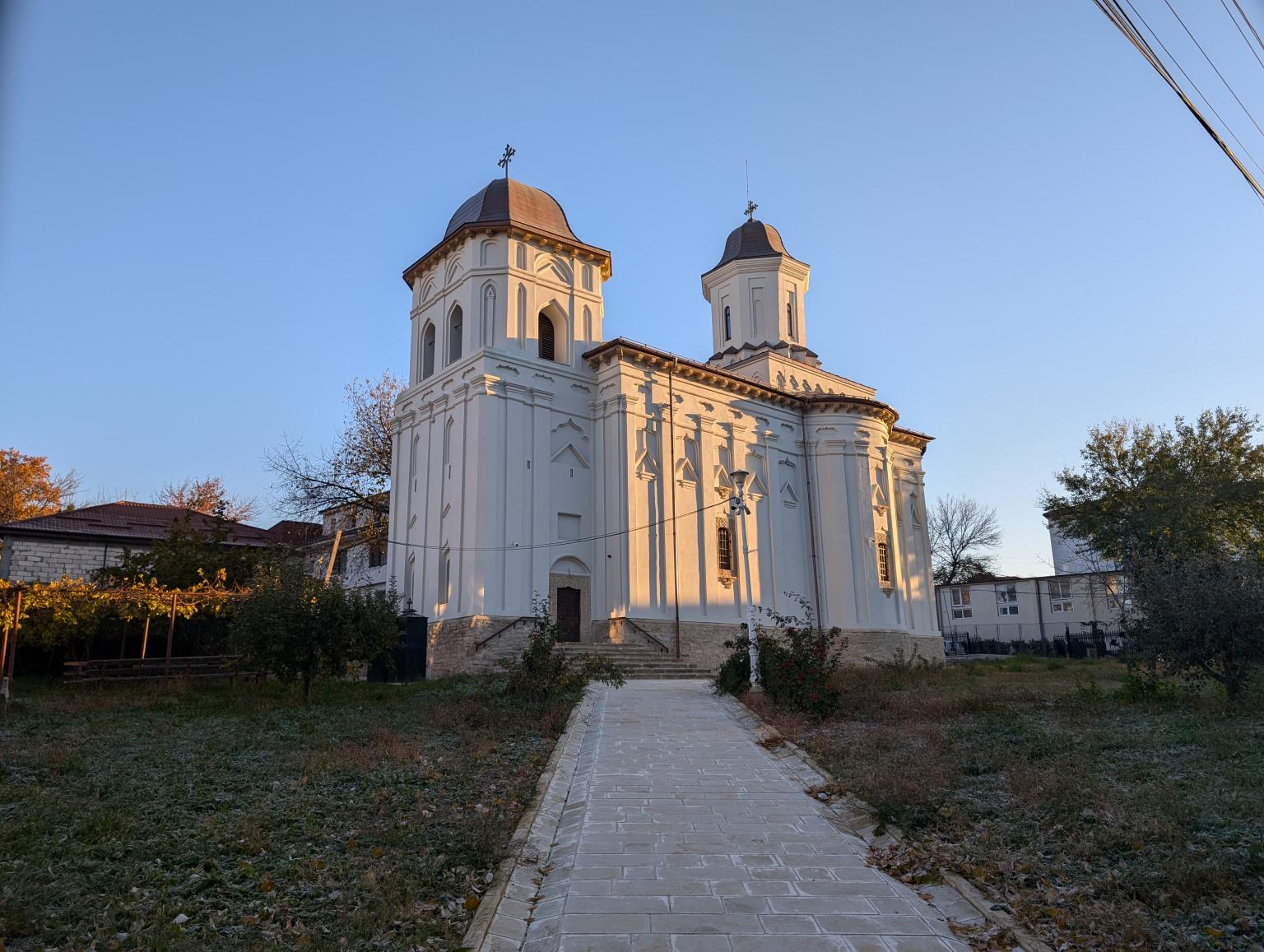
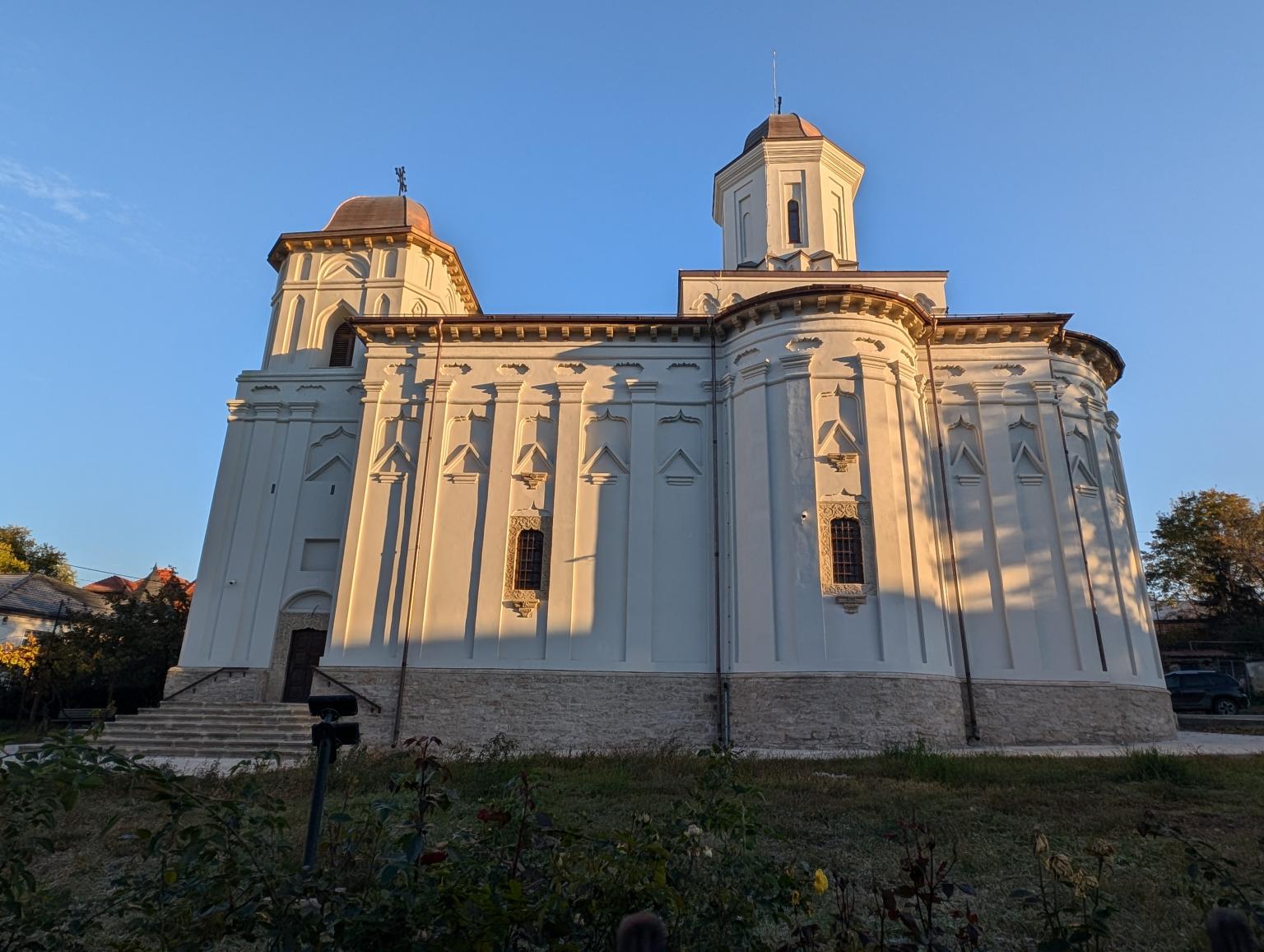
It was built on the site of an old wooden church dating from 1665, built by the great Vornic of Țari de Sus, Solomon Bârlădeanu. The wooden church was completely destroyed in 1735 and replaced in 1760 with a stone one, financed by the parishioners. Although damaged in 1944 by a bomb, restorations were carried out in 1952 to repair the damage. During these works, the interior of the church was repainted, undergoing significant changes from the original paintings.
The structure of the church is composed of an open porch, pronaos, nave and altar, separated by arches in broken brackets. The single steeple of the church is above the nave, placed on a higher level and supported by a drum with a second circle and arches set in an octagon, similar to the motifs found in the Golia church. The tower, although thinner than the belfry, has no ornaments. The heavier belfry takes some decoration from the outer walls, including decorative panels recessed into the wall. The absence of ornamentation on the tower indicates that it was added at another time and by other builders.
The Church of Saints Teodori reflects the main characteristics of the Moldavian architecture from the previous period, at the same time presenting innovations in ornamentation, an aspect highlighted especially in the churches of the 18th century, including the Golia church.
Source: Iași Municipality and surroundings (Ministry of Tourism, 1980)
Sursa: sfteodor.mmb.ro