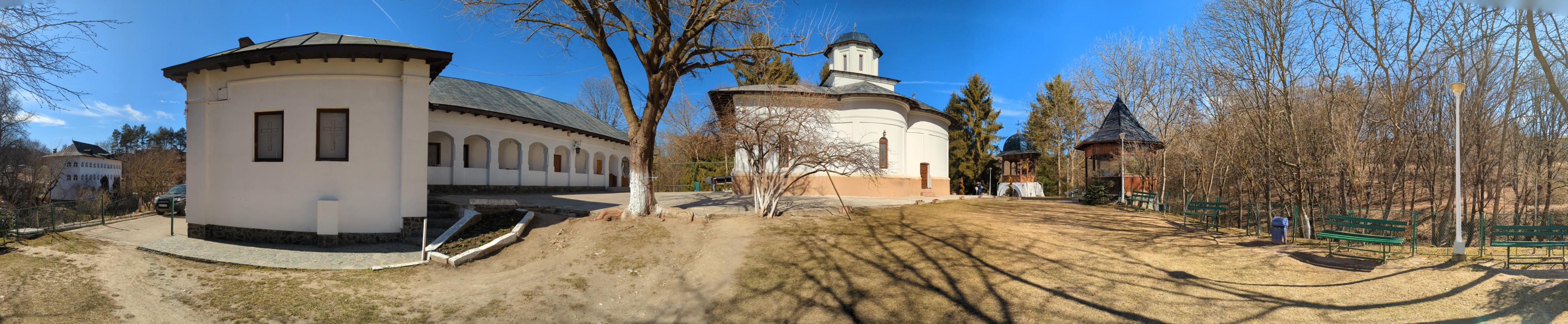
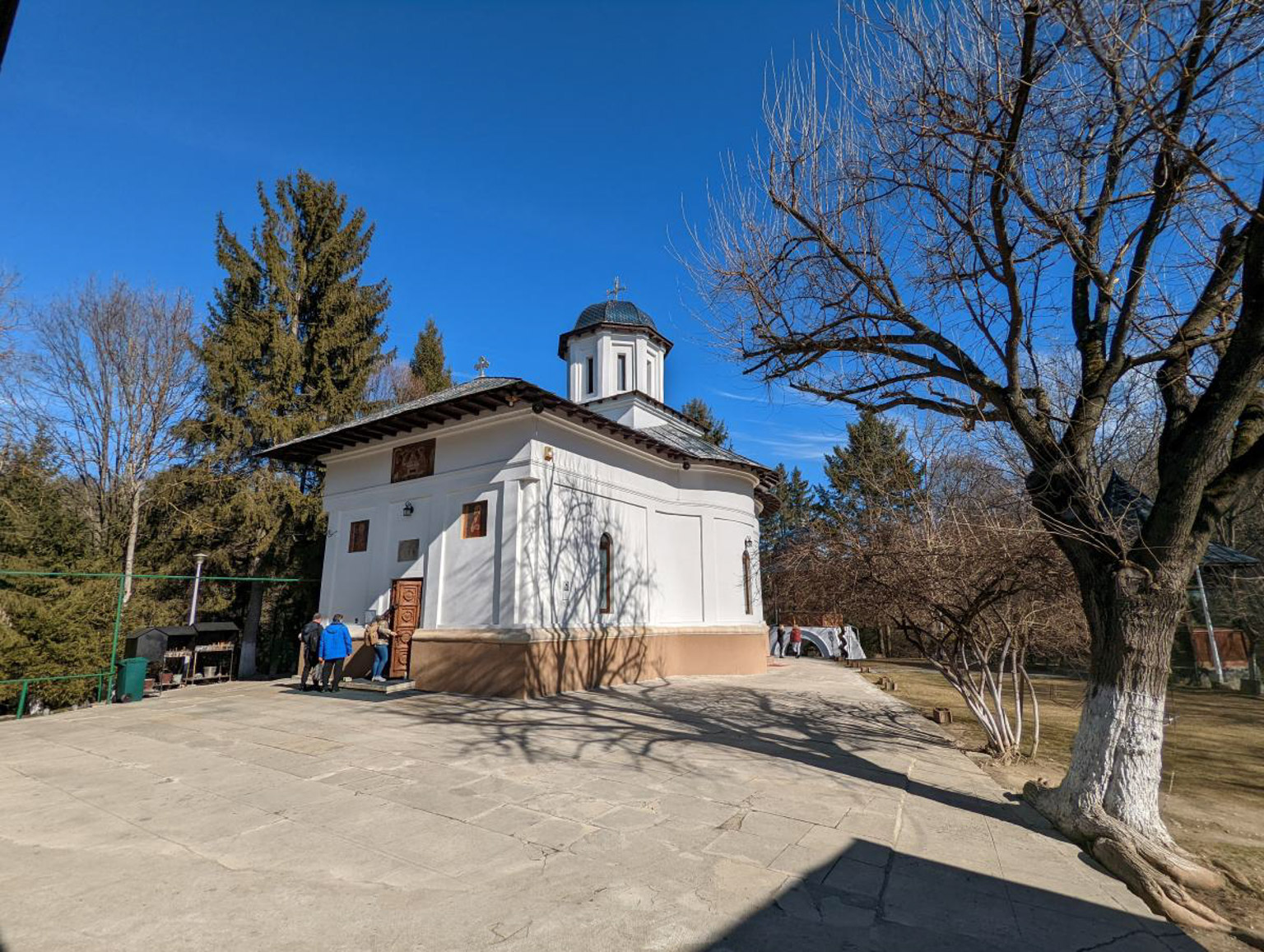
The church of the Trivale hermitage, located in the Trivale park, is a historical monument and was built at the end of the 17th century (in 1698), with Metropolitan Varlaam as its founder. In 1854-1855, the original construction was rebuilt and the interior painting was restored in 1904.
Metropolitan Varlaam, also known by his lay name Vasile Moțoc, died in 1657. He was previously hegumen at the Seciu monastery, priest of Miron Barnovski, sol in Moscow and candidate in 1639 for the seat of the ecumenical patriarchate in Constantinople. In 1644, it was Vasile Lupu's land of peace in Wallachia. His remarkable contribution to Romanian ecclesiastical literature is represented by the work "Carte romănească de uțățătura" (or Cazania), printed in Iaşi in 1643, which includes the first pages of artistic prose in Romanian and some versified compositions.
The church has a flat plan, with semicircular apses and no porch. The spire, the vaults in the nave and the apse of the altar are made of wood, and the pronaos has a wooden ceiling. The exterior decoration features neoclassical elements, consisting of rectangular panels.
According to local legend, the head of ruler Mihai the Brave (1593-1601), brought from Transylvania to the Dealu Monastery, would have been hidden in this hermitage. This story is supported by the existence of a painting in the church that depicts Mrs. Stanca holding the ruler's head in her hand. It is known that Mrs. Stanca owned numerous properties in the Pitesti area.
Source: Bucharest-Sibiu (Ministry of Tourism, 1977)
//
The current ensemble was built between 1672 and 1688 by Varlaam, metropolitan of Wallachia, on the site of a ruined stone church, raised, in its turn, in place of a wooden sketes metochton of Cotmeana Monastery, founded by Trifon and Stanca Stăncescu in the XVth century