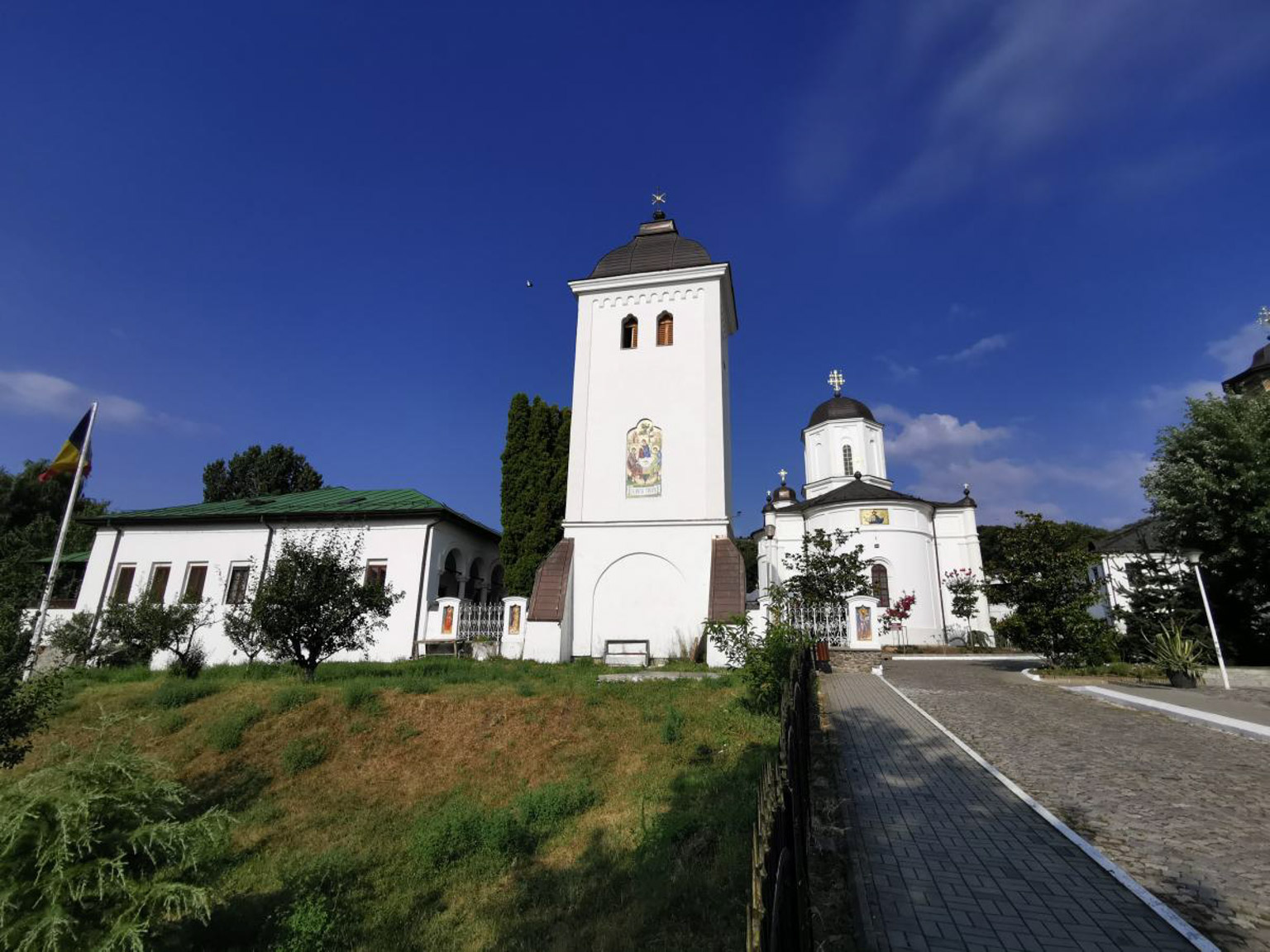
The municipality of Râmnicu Vâlcea, located at the confluence of the Olăneștilor and Oltul valleys, on a terrace of the Capela hill, is the seat of Vâlcea county. To the north, about 30 kilometers away, stretches the chain of the Southern Carpathians, while to the east the city is protected by the Goranu hill and to the west by the Capela and Petrișor hills. Thanks to this positioning, the locality benefits from shelter from the winds and is protected from excessive heat during the summer. The pleasant and comforting climate gives Râmnicu Vâlcea the characteristics of a pleasant climatic resort.
The town, with a history lost in the mists of time, is mentioned in a documentary from the reign of Mircea the Elder, where the donations of the Cozia and Cotmeana monasteries are made, and "a mill from Râmnic" is also mentioned. In the same period, the town is attested under the names of Târgul Râmnicului, Râmnicul de Sus or Râmnicul de pe Olt. The term "râmnic" had the meaning of "fish pond" or "elesteu" in the old language.
Râmnicu Vâlcea developed in the following centuries due to its advantageous terrain and soil fertility, as well as its strategic position on one of the most important routes connecting Transylvania with Wallachia, thus facilitating the development of trade.
Numerous rulers, including Mircea the Old and Pătrașcu the Good, preferred the region for rest and contributed to adorning the places with monuments of religious architecture.
Râmnicu Vâlcea became the key to Mircea's roads to Cozia and Matei Basarab's to Arnota, being also the route of Lady Despina to the Călimănești island, of Lady Chiajna to the Iezer hermitage hidden in wild forests from Olănești. Constantin Brâncoveanu's roads to Hurez also passed through Râmnic, and here Pătrașcu cel Bun, the father of Mihai the Brave, found fresh air especially in the last part of his life.
Due to its importance, Radu cel Mare (1496-1506) restructured the bishopric, which Antim, the bishop of Severin, had moved to Râmnic at the end of the 14th century, "in a church that belongs to the city".
The city had a fortified courtyard with walls, the ruins of which can still be seen today in the city center, in the public garden, where the ruler Pătrașcu cel Bun (1554-1557) had his residence.
During the Russo-Turkish War of 1716, an operations quarter was established here, and some buildings were fortified. During the Turkish-Austrian wars (1738-1788), Vâlcea was almost completely destroyed. In the 19th century, the town was known only for its plum orchards and a few manufactures. In 1788, Râmnicu IX became famous for its derived products, including the famous Vâlcea brandy.
The old inhabitants of Vâlcea, quick, stubborn and unruly people, actively participated in the social struggles, including many pandus of Tudor Vladimirescu. In 1848, near Râmnic, in Râureni, the camp led by General Magheru was established, and the city's residents enthusiastically supported the fight for Union, manifesting in the Zăvoi garden. During the great uprising of 1907, the surrounding villagers opposed the arrangement.
The architectural complex from the Episcopia Râmnicului can be found in the northern part of the city, at the entrance from Călimănești, occupying an admirable position. The heart of the complex is the Episcopal Cathedral, originally founded at the end of the 16th century by Bishop Mihail. After a fire in 1837, Bishop Climent rebuilt it between 1746-1748, and after another fire in April 1847, it was rebuilt between 1850 and 1856, being painted by Gheorghe Tattarescu.
The chapel, built in 1751 during the reign of Grigore Ghica, houses original paintings of great artistic value. The catapeteasma, carved in wood in Brancoven style, after the model of the one from the church of the Hurez monastery, is located above the building where the archive of the diocese is kept. The hospital church was built and painted in 1744.
Source: Bucharest-Sibiu (Ministry of Tourism, 1977)
//
In order to glorify the Holy Trinity, the Father, the Son and the Holy Spirit, this holy church was built from the ground up, called the Archdiocese of Râmnicu Nou Severin, by the God-loving bishop of this parish D.D. Calinic Cernican for the honor of the Saint Hierarch Nicolae from Mira Lichiei, where this place had previously been a church built by Archbishop Eftimie of Severin and Mihail the Bishop, but in 1735, during the war, the Turks and the Germans burned it down the second time by father Climent the Bishop, then from then until the year 1847, deteriorating from age as well as from the fire that happened in that year through several cities as well as among them consuming both part of the city and this bishopric with all its enclosures and the hospital remained only some ruined walls until 1850 when, after the election made by the general divan of the country, ascending to the episcopal seat, His Eminence Calinic and seeing with regret their dilapidation, not long after, he first put in work making the bishop's houses, having no room for dwellings, then pushed by love and religious zeal, they started this holy church as shown from the foundation and decorated it with odorous paintings and others that can be seen still pretending to the seminary as such they once again rode the houses next to the hospital for the school of candidates for the priesthood and others that can be seen around all this taking place in the days of the good-faith ruler of the country, Barbu Dimitrie Știrbei Vodă in the year 1856 November 3.
Text taken from pisanie
Sursa: arhiepiscopiaramnicului.ro