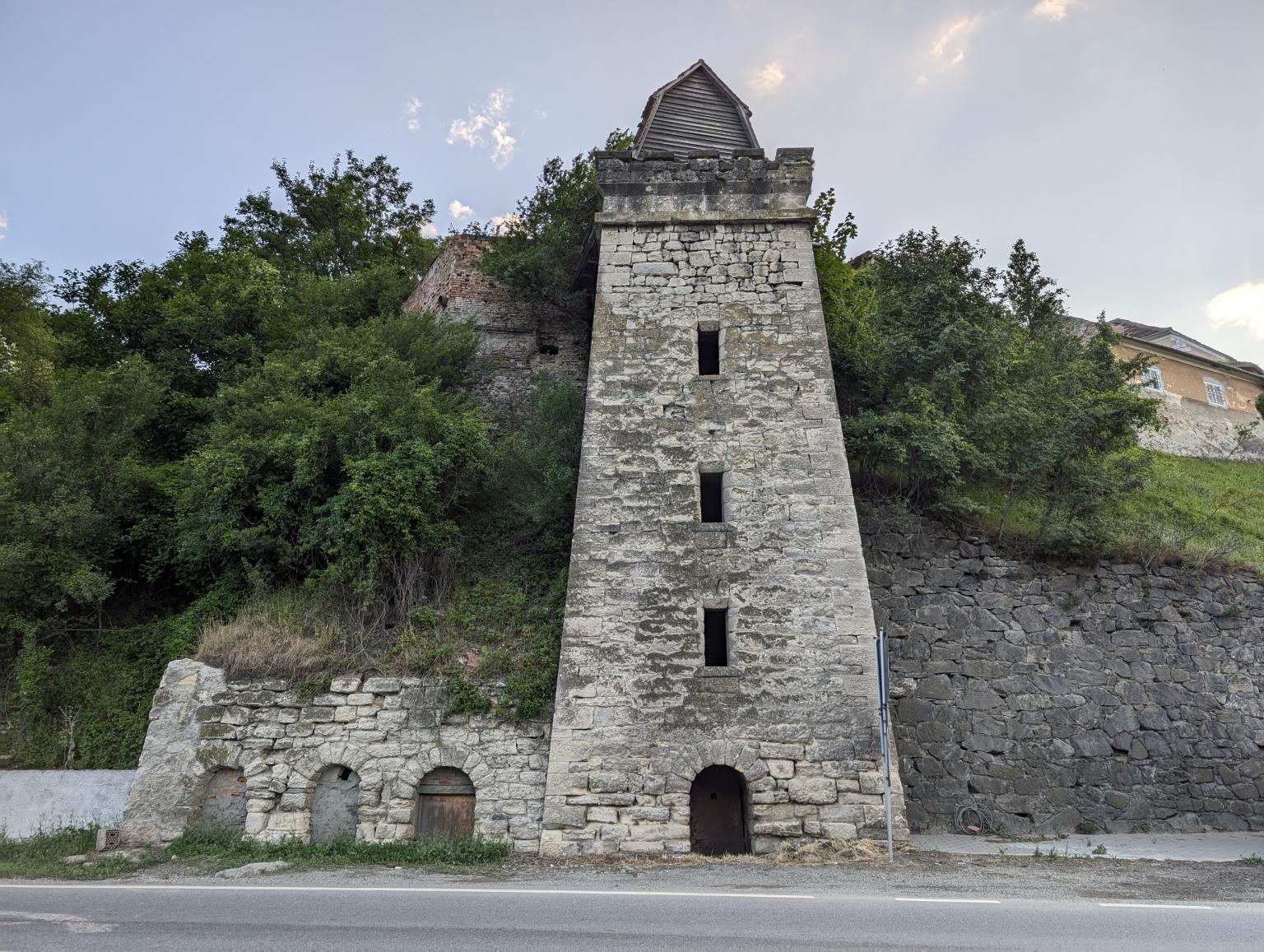
Turnu Roșu, located in the commune of the same name on the right bank of the Olt river, at its entrance to the gorge, represents a medieval fortification. In the past, the guard of the Olt pass ensured the security of the Tălmaciu fortress (1370), but in 1453, Iancu de Hunedoara demolished it and built Turnu Roșu instead. This fortification consisted of a courtyard flanked by bastions, with the aim of blocking Olt at the point where the pass opens to Transylvania. Today, of the entire medieval construction, only a massive tower remains, the result of a later reconstruction.
According to tradition, the tower is said to have been painted with Turkish blood following the battle of 1493, when a Turkish army was defeated, leaving behind 15,000 dead, bleeding Olt with their own lives. The tower was also a frequent place visited by Empress Maria Theresa, who spent several days here every summer.
In the memory of the locals, Red Tower now revives the crazy memories of love experienced by Maria Tereza there, between the inflamed walls, as recorded in the "Book of Olt".
Encountered before the entrance of the Olt into the mountains, on the right bank of the river, the first Transylvanian village is Boita, part of the commune of Tălmaciu. This was the place where the Roman fort Caput Stenarum was located, according to the account in the "Book of Olt" by Geo Bogza.
According to Geo Bogza, the inhabitants of the village, described as mostly bright-faced and with lively eyes, shaped their character during the period when the borders between two states passed through these lands. The border separated two historical Romanian provinces, and the Olt valley represented the most famous and accessible pass. Many of the ancestors of these inhabitants offered help to the fugitives, guiding them through the mountains during the legendary nights.
"Then, over those tragic events, on the border, came the great bloodshed of the war. In the autumn of 1916, the cannons pounded fiercely here. The Romanians tried to retreat, but Falkenhayn, a general in the German army, advancing over the mountains, he gripped them as in a pincer.From the hilltops his cannons beat mercilessly upon the road full of men, horses, and carts.
Those from Boita could then, from the edge of the forest, look at the whole abyss. One by one, a cart hit hard, bounced to pieces and its wheels flew through the air. Human heads and arms, torn from the body, splashed the swirling water of the Olt. A few soldiers were gathering in a platoon and trying to hold out. But to whom? Cannons spat out of the sky, unseen. Soon the road became a pool of blood, a pile of bodies of men and horses.
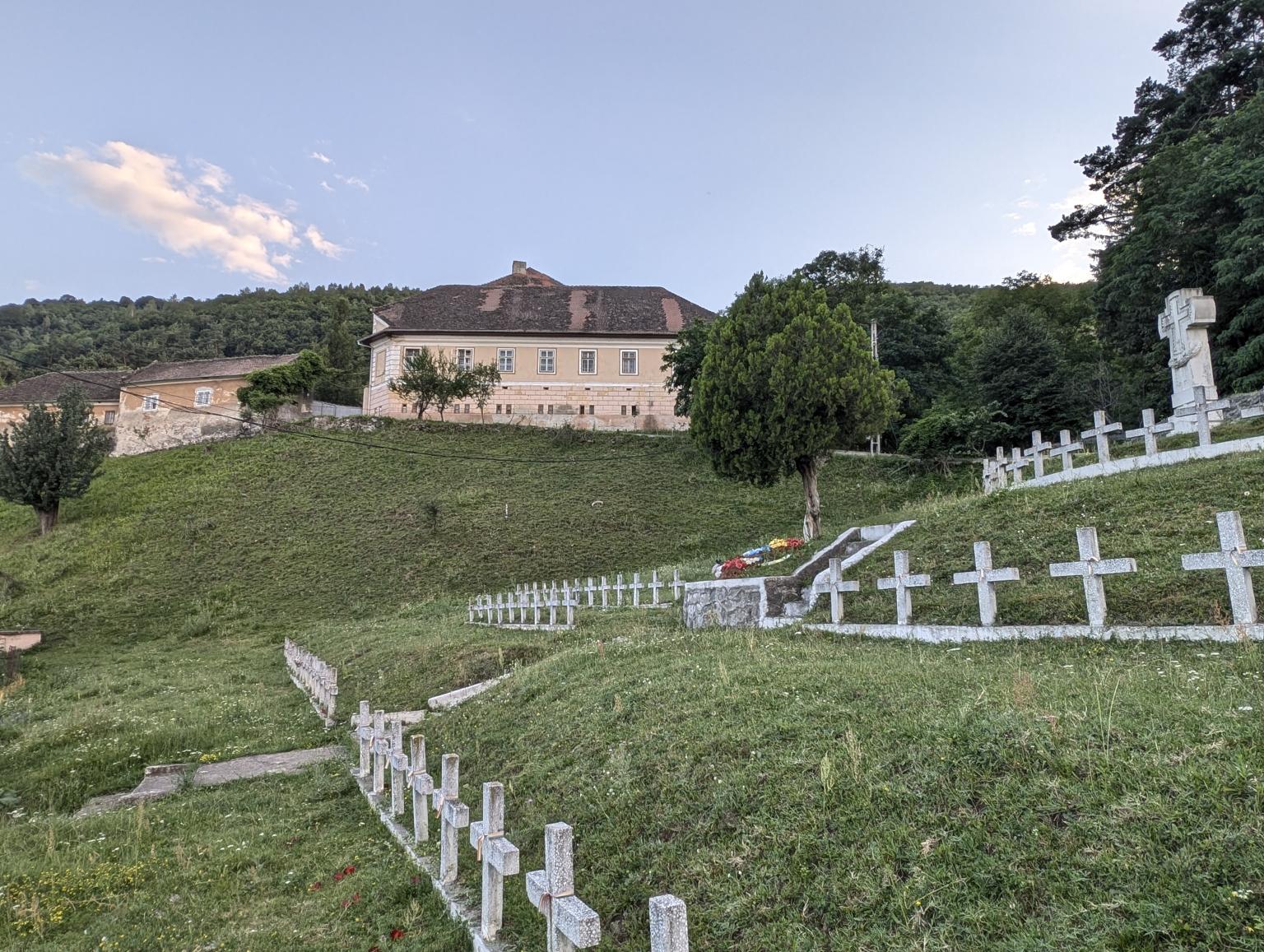
Now, out of this mess, one of the most orderly and sad sights that Olt has ever seen has emerged: a heroes' cemetery.
Their fate appears even more bitter, as they are so close to the Girls' Pool where, on summer evenings, the girls from Boita ("Book of Oltului") come to bathe.
On the left side of Olt, near the Turnu Roșu railway station, there is a beautiful church built by ruler Matei Basarab in 1653. [see more]
Source: Bucharest-Sibiu (Ministry of Tourism, 1977)

4 out of 5 stars
based on 0 reviews
If you’ve visited this place, share your thoughts with others
write review