The commune of Săpânta was mentioned in documents as early as 1363. The reputation of this village was built on the original works of folk art created by the late craftsman Stan Ion Pătraș and his descendants. Their works, although they borrow elements specific to the Maramures area, are distinguished by their unique conception, vividly highlighting aspects of people's lives and concerns.
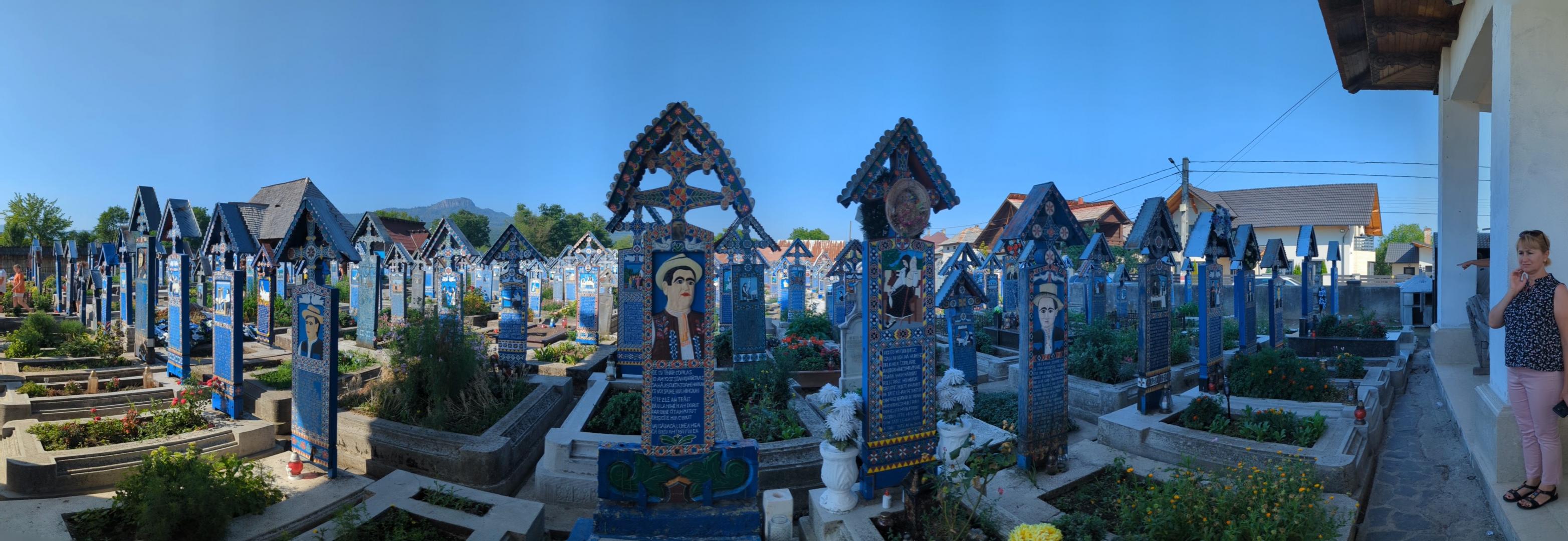
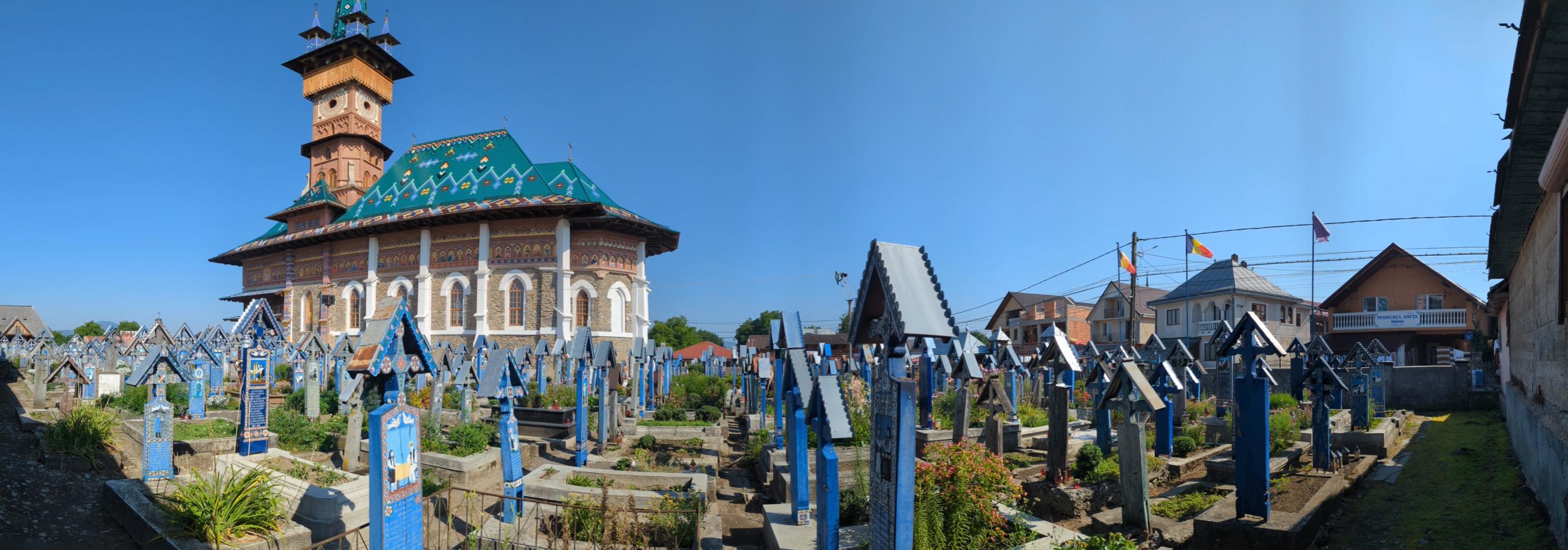
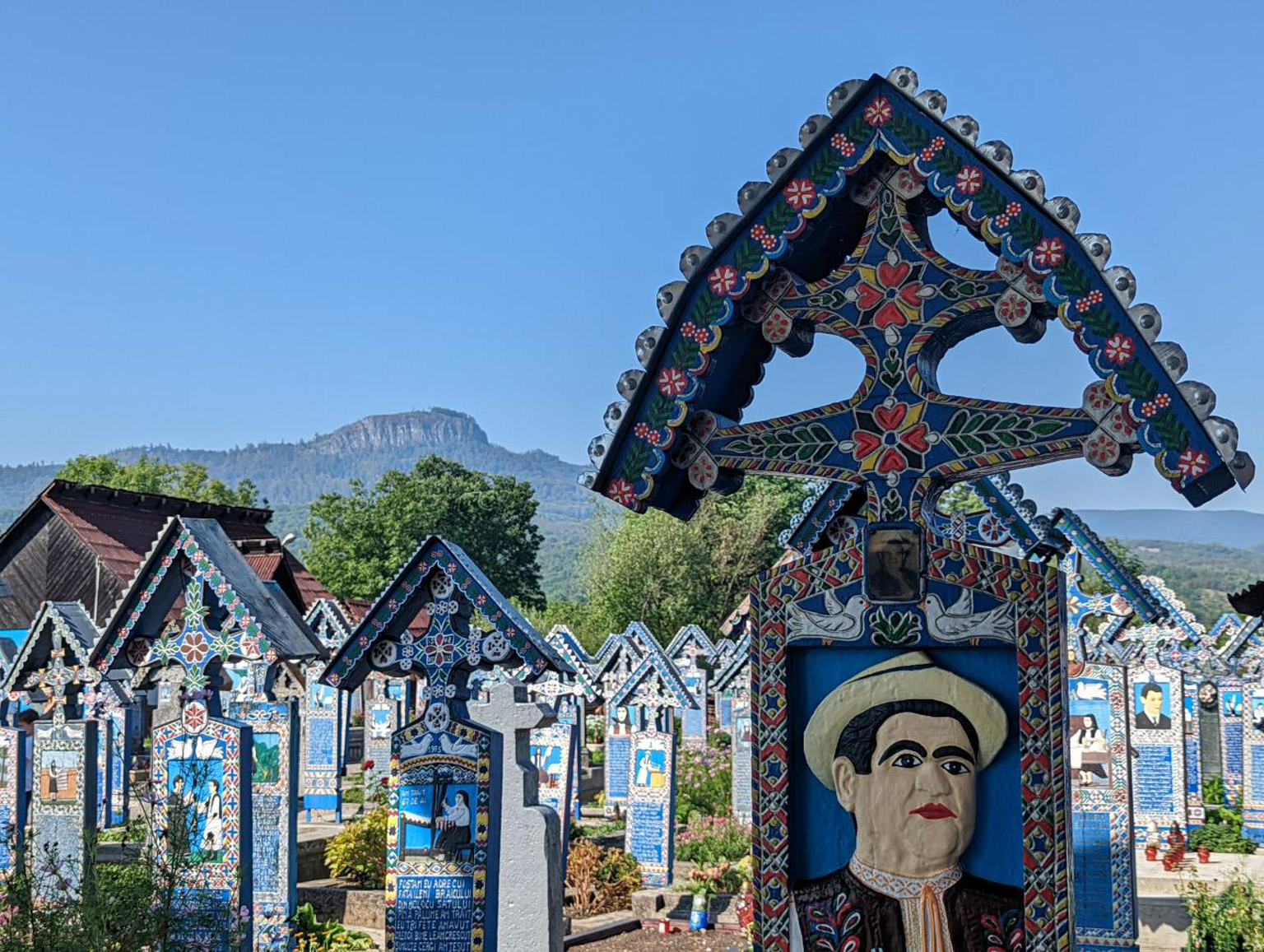
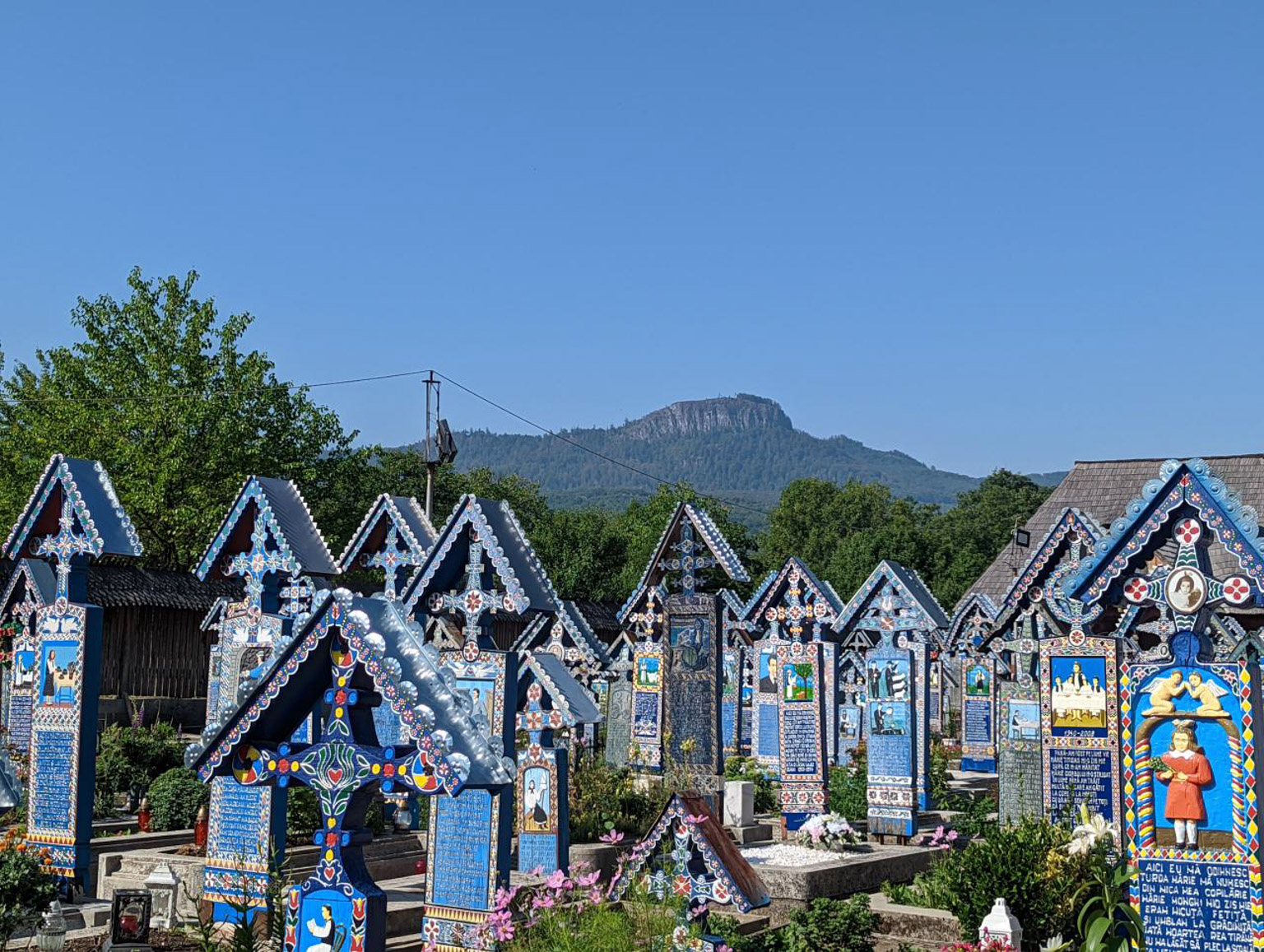
The Merry Cemetery, a tourist attraction with a unique character, summarizes the life of the deceased in an image and a few robust verses, reflecting the unanimous opinion of the community regarding each individual. The 250 crosses, placed at the head of each grave, are carved from oak wood and protected by an eaves against the weather. On each cross there is a drawing representing the person buried, and below the drawing are written epigrams of four, six or eight lines, rendering in a popular style character traits or events in the life of the deceased. These images capture people during their favorite activities or reveal dominant traits of their personality.
As long as I lived in the world
Did I take good care of the cows? - writes on the cross of a woman known for her diligence.
"They were dear to me in my life
"Sheep with wool" - is written on the cross of a shepherd, and the image shows him at the lathe, milking the sheep.
Sometimes the verse becomes moralizing:
Brandy is pure poison
It brings weeping and torment
That he brought me too.
Death under foot put me.
On another cross, an epigram is addressed to a shepherd who, after many years of shepherding, managed to collect money to buy land, but everything was too late...
When I was about to feel good,
Here comes death...
The very author and initiator of this cemetery, who left the living in 1976, created the following epigram:
From a young child
I was Stan Ion Pătraș
Listen to me good people
What I will say is not a lie.
How many days have I lived
I didn't mean any harm
But as good as I could
Whoever asked me.
My poor world
That I hardly lived in it
From fourteen you have
I have to earn money
Hard work in the forest
With goat and hatchet
Father-in-war is gone
It did not pour back
Three small children remained
In the world of hard trouble.
I wish I could live longer
And to fulfill my plan
From sixty-nine countries
They visited me until yesterday.
My cross when it was worked
Which I ordered
Two students what I learned
They did the job to my liking
Turda Toader, Stan Vasile
Holy God bless you.
It is remarkable that all the epigrams are written in the first person. The deceased seems to wish to introduce himself; he seems to be mocking some behaviors he had in life (drunkenness, stinginess, etc.). This aspect, according to the opinion of many experts, represents a very ingenious strategy of oral style.
Exploring this picturesque museum reveals that the memory of the deceased is not idealized in any way, but captured with sincerity, naturalness and in an extremely simple way specific to their character. Therefore, the cemetery in Săpânta becomes an impressive exhibition of human faces, appearances and feelings, constituting an emotional and original chronicle of the village, devoid of the superstitious fear of death.
12 km away from the village, there is a waterfall and a spring of mineral water with a bicarbonate, chlorosodic, carbonated composition, recommended in the treatment of some ailments of the digestive tube and accessory glands, as well as in the case of nutritional diseases.
In Săpânta, Pop Anuța Oşului, a famous weaver, worked earrings of genuine artistic value, and Stan Ileana a Șincului was also known as a skilled weaver.
In the town of Săpânța there is a swamp: Poiana Brazilor, which hosts the lowest Pinus mugo (juniper) plant in the country, at an altitude of 970 meters.
Source: Maramureș, Oaș, Satu Mare (Ministry of Tourism, 1980)