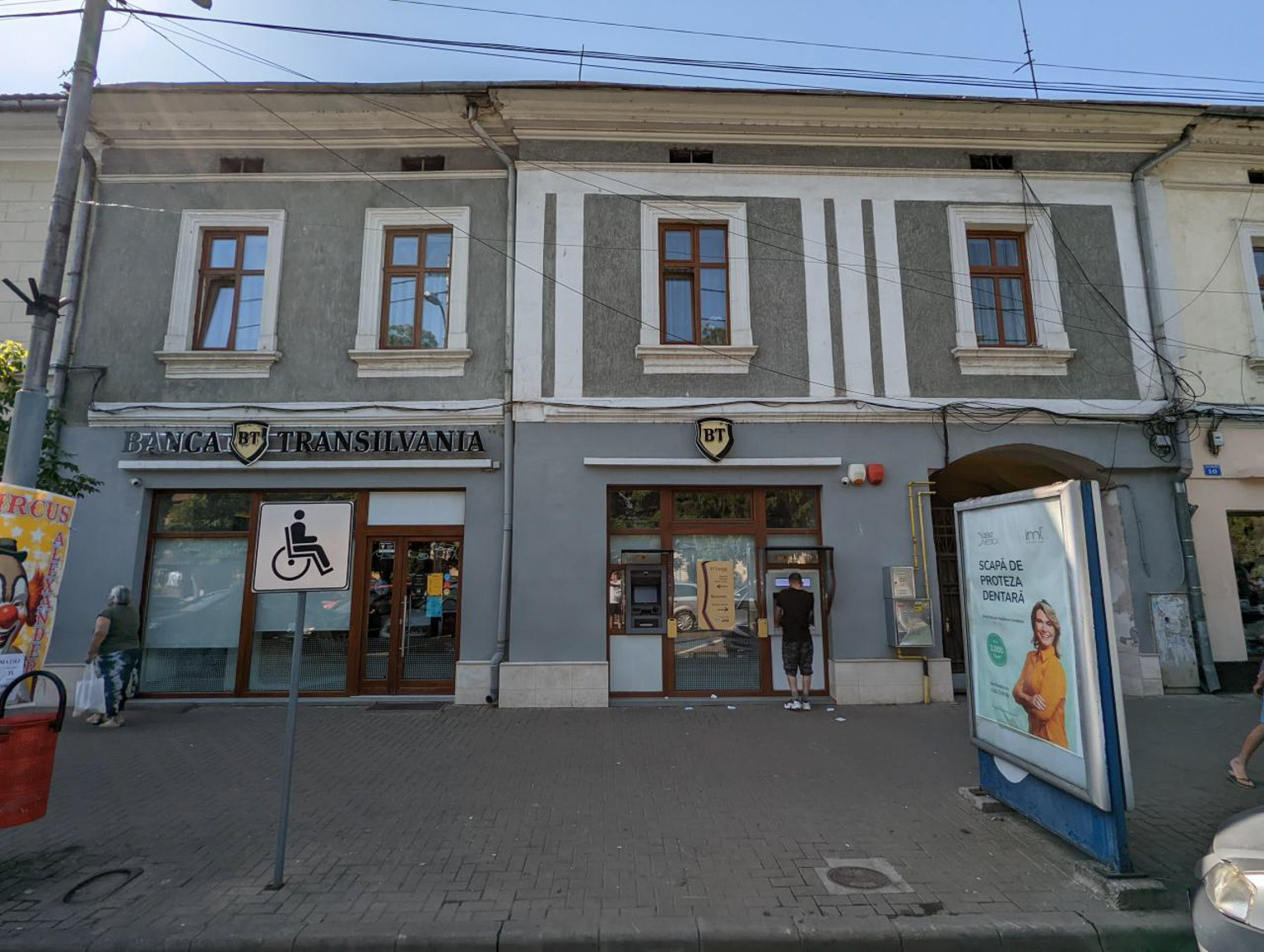
The establishment of the "Maramureșeana" Bank in Sighet, in 1912, was not only an important step in the economic development of the Romanians in Maramureș, but also a particularly important preliminary moment for the Great Union of 1918. Although created with the aim of offering advantageous loans to Romanian peasants, the bank became in the autumn of 1918 a place of conspiratorial meeting, where the foundations of the Romanian National Council in Maramureș were laid.
In November 1918, the historical context was marked by the collapse of the Austro-Hungarian Empire, and the Romanians in Transylvania were mobilizing to assert their national rights. At the parish house in Săpânța, Father Simion Balea received more and more frequent visits from personalities from Sighet, in fact preparing a secret meeting. This took place on November 11, 1918, at the headquarters of the “Maramureșeana” Bank in Sighet, under the pretext of a board meeting. Here, those present drafted the “Appeal” to the Romanians of Maramureș, urging them to participate in the Great Assembly of November 22, to form the National Council and the National Guard. The appeal contained mobilizing and patriotic messages, emphasizing that the moment of liberation had arrived, and the people of Maramureș must prove themselves worthy of the ideal of union.
The “Maramureșeana” Bank was the first Romanian credit institution in Maramureș, founded with the support of local leaders and aiming to support the peasantry in recovering their lands from foreigners. The initial capital was 22,000 crowns, but later the bank grew significantly, reaching two million lei after the First World War. It opened a branch in Vișeu and purchased a building in Sighet, where it also operated a bakery. Due to the economic crisis after the currency conversion, the bank reduced its activity and was forced to close its branch, surviving on rent and the income from the bakery. In 1936, it merged with the Commercial Bank of Sighet, forming an institution with a capital of ten million lei.
The bank's management included prominent figures from the Romanian community in Maramureș. The president was Simion Balea, a priest in Săpânța, a fervent patriot, participant in the Great Union and deputy in the Romanian Parliament. The vice president was the lawyer Aurel Man from Sighet, a prominent figure in the Maramureș justice system, with a rich professional and family career, being married to Baroness Maria Perényi.
Another important member was Vasile (Ladislau) Man, a lawyer from Vișeu de Sus, author of the first tourist guide to Maramureș. Coriolan Pop, founder of the “Bihoreana” bank in Oradea, an active participant in the Great Assembly in Alba Iulia, where he was a deputy, and the first Romanian prefect of Bihor County, was also an executive director.
Dr. Ilie Mariș, a lawyer from Sighet, was another pillar of the institution. Born in Ieud, he dedicated his life to promoting culture and supporting young Romanian scholars, by establishing a foundation that granted scholarships. At the same time, he invested all the wealth accumulated in almost 25 years in the “Banca Maramureșeană”.
Alexandru Cuza Anderco, a large landowner from Borșa, was mayor of the city for 25 years and a generous supporter of the national movement. He donated 100,000 crowns for the functioning of the Provisional Council of the Romanian National Council and for the delegation that went to Alba Iulia. He was elected the first senator from Maramureș in the Parliament of Greater Romania.
Dr. Vasile Kindriș, a lawyer in Sighet, was the president of the Romanian National Council in Maramureș. After studying law in Budapest and Berlin, he was mobilized during the war, but returned in time to be elected head of the assembly on November 22, 1918. He continued to play an important role after the unification of Romania, as a legal consultant and parliamentarian.
In addition to these leaders, the revision committee also included other personalities such as Tit Bud, Ioan Doroș and Mihai Pavel. These illustrative figures formed the core of an economic institution with a profound influence on local Romanian society, but also an essential meeting place for the political organization of Romanians on the road to unification with Romania.
Thus, the headquarters of the "Maramureșeana" Bank in Sighet became not only an economic center for the Romanians of Maramureș, but also a space for historical decisions, the place where the spark of a political movement was ignited that would contribute essentially to the Great Union of December 1, 1918.
Sursa: portal-maramures.ro