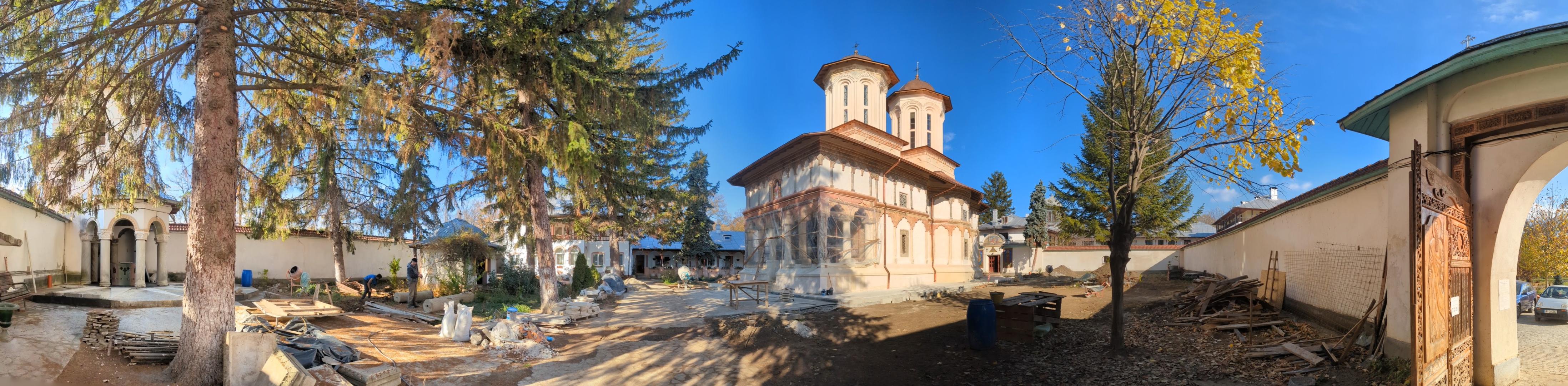
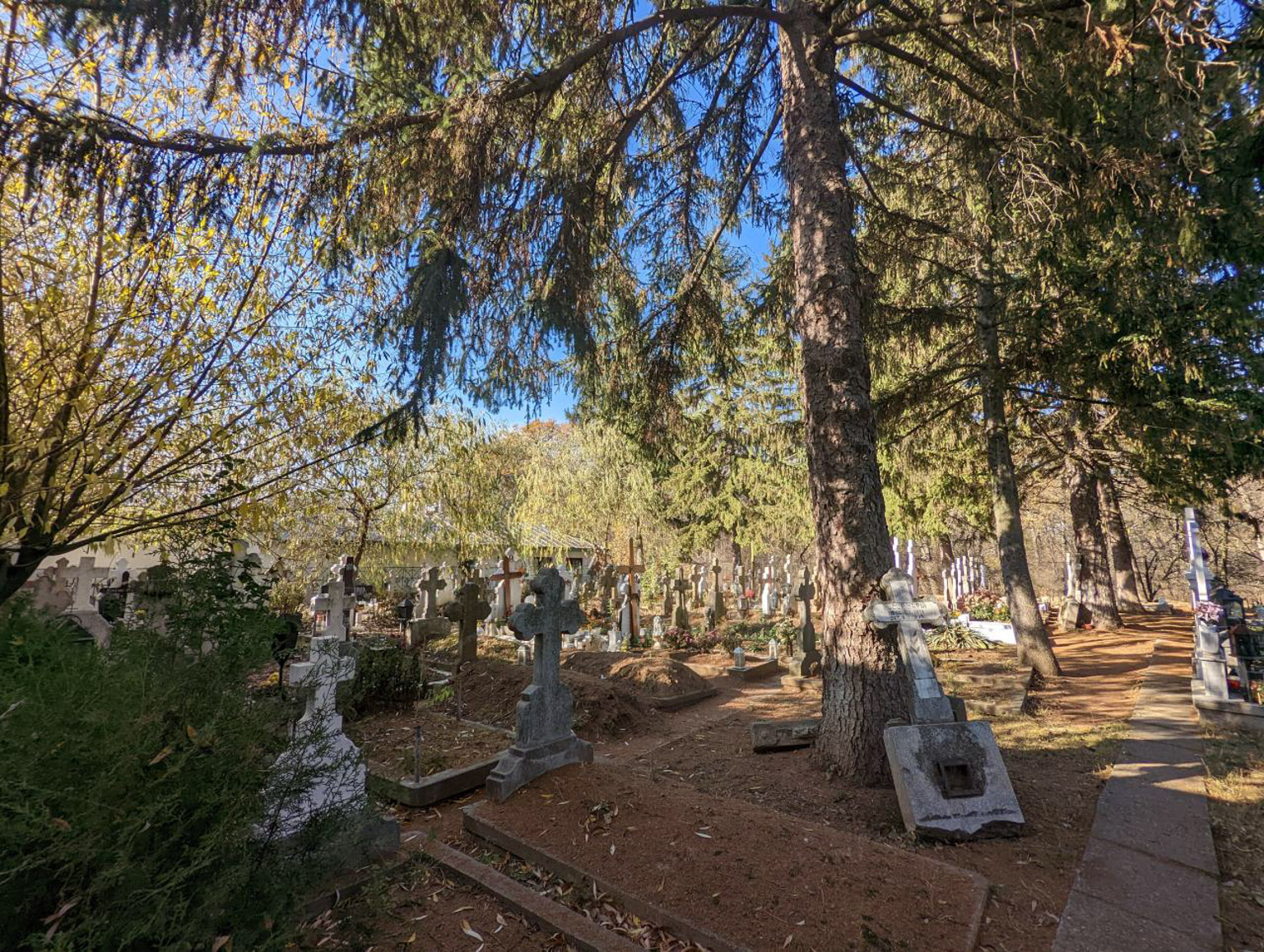
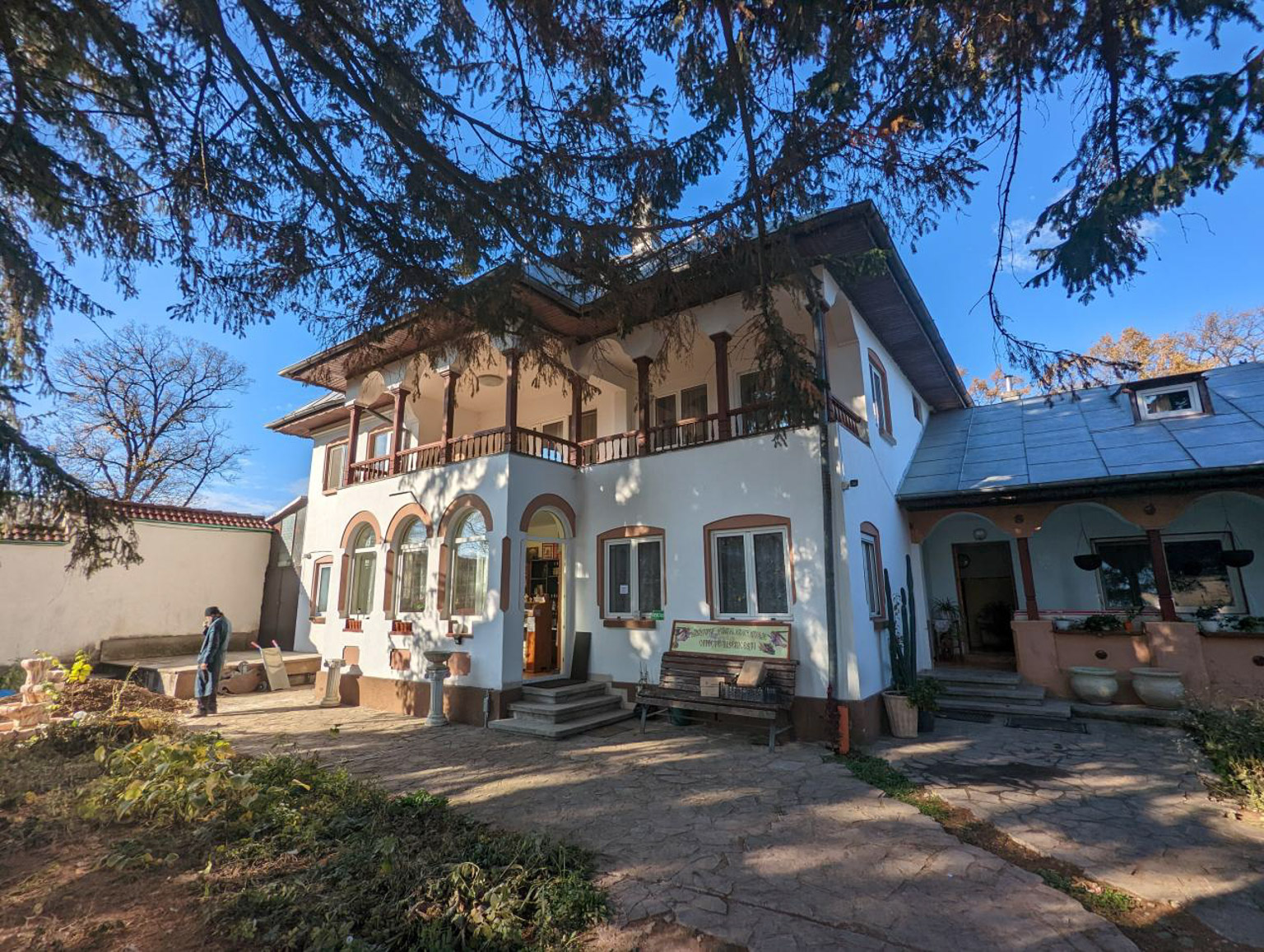
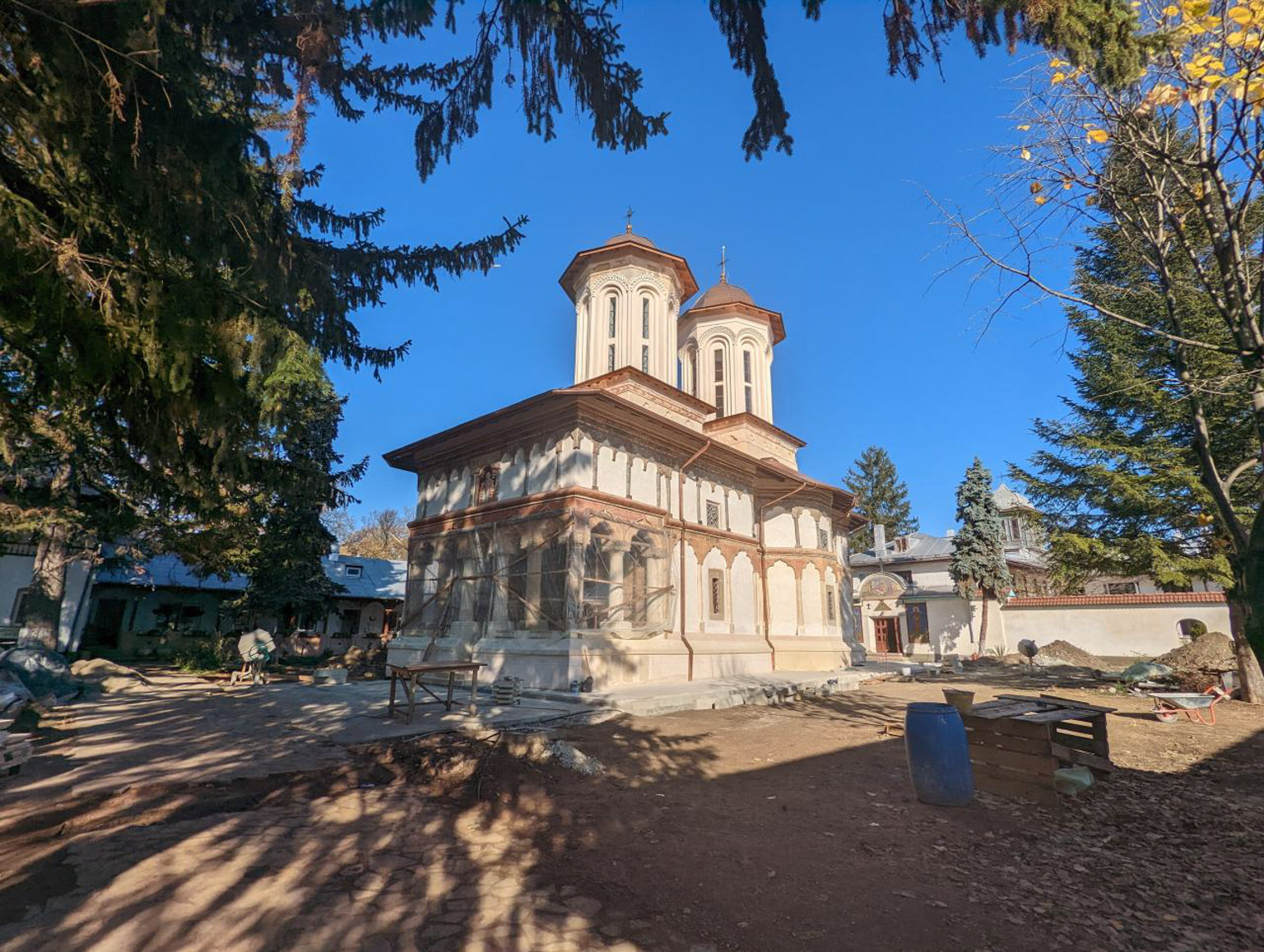
The monastery of Saint Nicolae-Sitaru is located in the northeastern part of Ilfov county, in the forest near the village of Sitaru in Grădiștea commune, for which it is also known as Balamuci.
This region was once covered by the ancient Codris of Vlasia, of which a few isolated forests remain today. The mound on which the monastery was built was originally an island in the middle of the waters of Lalomita, reason for Patriarch Macarie of Antioch (who visited the monastery in 1656) to call it in his travel notes the Water Monastery. Later, changing the course of the waters, the former island is now a mound located in the lalomita meadow.
The documents attest to the fact that, since the 14th century, this region was the property of the Greceanu family, who built on this estate a beautiful noble palace (today in ruins) as well as the family church in the village of Greci.
At the beginning of the 17th century, the Greci estate had become the property of the Snagov Monastery, having been donated by an ancestor of Papa Greceanu, great-grandfather of the future Voivode Constantin Brâncoveanu, as a descendant of those who had made the donation, in 1625, priest Papa Greceanu a redeemed a third of this
estate.
Due to the lack of documents, it is impossible today to say something certain about the beginnings of monastic life in these places, because they are lost in the mists of time.
It is known that the region of Codriri Vlăsia was an ancient hearth of hermits. A characteristic feature of the Sikhasti in this area is the fact that they were located on small islands. On such an island, located in the middle of the lalomita, before the construction of the current monastery, there was a small hermitage whose age cannot be specified. What is known for sure is the fact that there existed here, since the 16th century, a small wooden church dedicated to Saint Nicholas, which lasted until the 19th century.
Here, in 1627, Bishop Papa Greceanu built a beautiful monastery called Balamuci, also giving him a part of the redeemed estate (the rest of the estate was divided among his children). There is no reliable information about the origin of the name of the monastery. The only thing that is certain is that from the very beginning the monastery was called Balamuci and that the nearest village was also called Balamuci (today Sitaru).
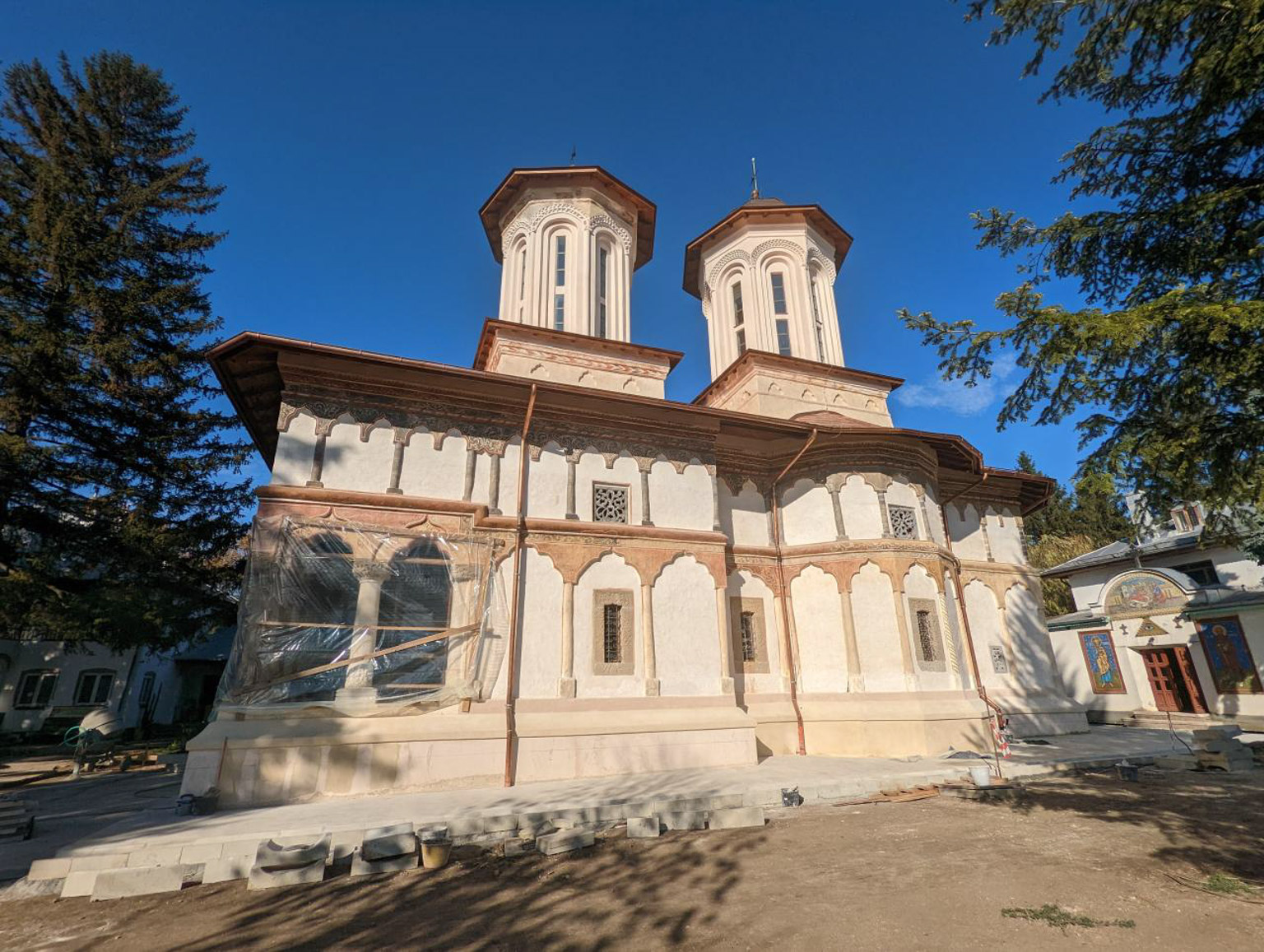
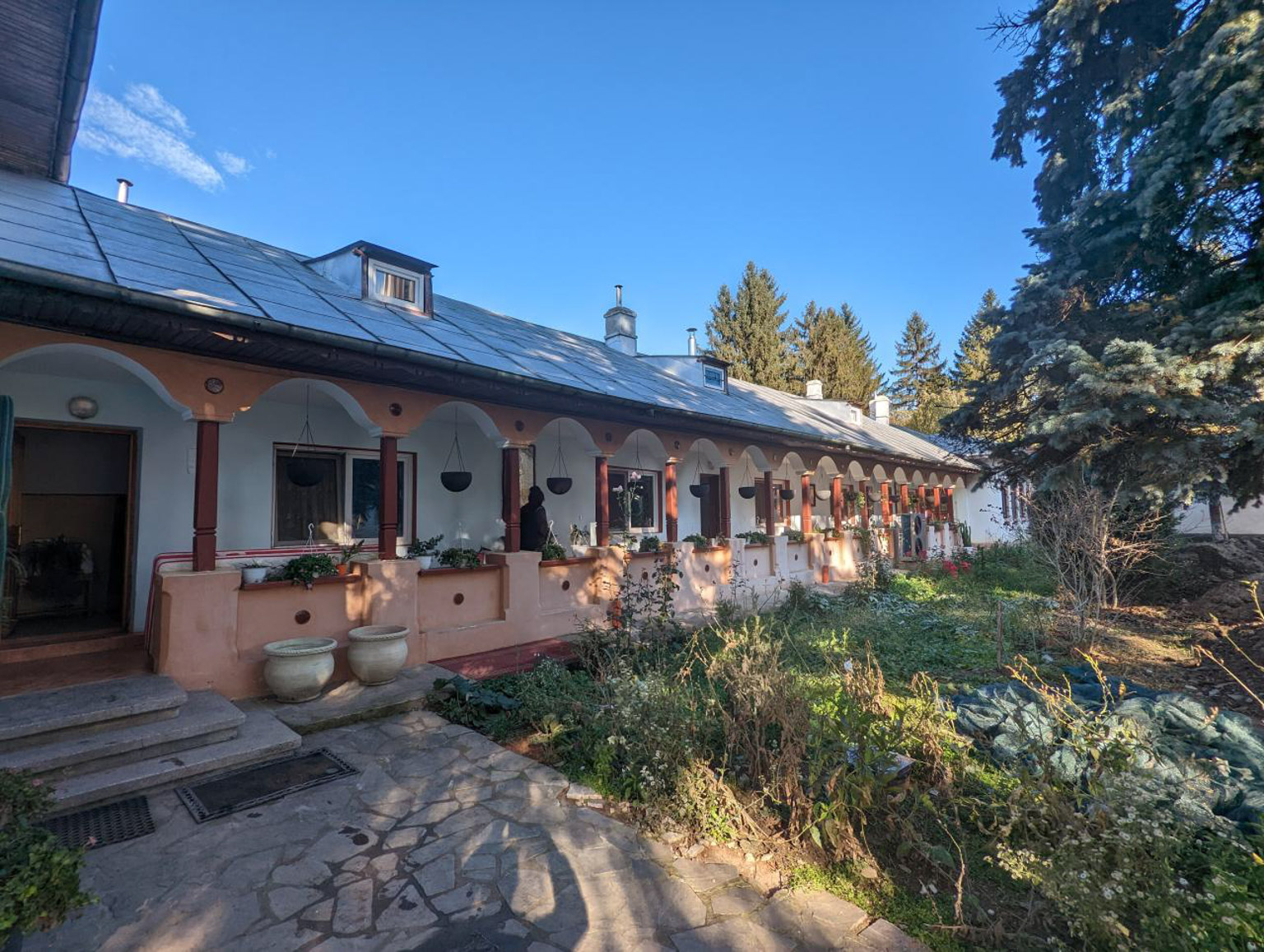
In 1625, jupân, Pope Greceanu bought back a third of this estate and, finding here the old hermit settlement, he built a wall church (also dedicated to Saint Nicholas like the old wooden church) as well as cells and a fortress wall for the new monastery, then he divided his wealth, giving a part to this settlement, and the rest to his children, the exact year of construction is not known today.
In the 18th and 19th centuries, we note that the Monastery of Saint Nicolae-Sitaru had become the metoc of the Sărindar monastery in Bucharest and both monasteries had been dedicated to the monastery of the Holy Fathers in Lanina (called in other documents the Paterias monastery in Rumelia. However, it is not preserved no deed showing that the monastery was dedicated to Sărindar, nor the deed of deference to the Greek monastery.
The oldest document that speaks of worship is the writing at the entrance to the church. But the first princely charter that mentions the monastery is that of April 15, 1631, by which Leon Tomșa strengthens the monastery in question's rule over the Pârvulești Monastery, which was dedicated to him as a monastery. In this charter it can be seen that, at that time, the construction of the monastery had already been completed, being large enough and well organized, for another monastery to be dedicated to it as a metoc. The same document also provides us with the name of the first abbot of the monastery: Abbot Seraphim.
In 1632, the founder Pope Greceanu dies in the war against Matei Basarab. After his ascension to the throne, Matei Basarab did not forget to take revenge on his enemies and confiscated all the wealth that had belonged to Pope Greceanu, including the Greci estate and the monastery land. Due to the lack of documents, we have no news about the monastery in
the first part of the 18th century. From a writing it is known that around the middle of the century, the church built by Pope Greceanu had fallen into ruin, for which he determined the leromonk Antim (hegumen of the Sărindar monastery) and the Vicar Gheorghe Greceanu to restore it between 1751-1752. Then it was added the porch supported by columns on carved stone in Brancoven style; also then the columns that separate the nave from the pronaos were added.
In 1753, the church was painted in its entirety (both inside and outside) by the priests Dima and Neacșa from Brașov, together with their apprentices. The catapeteasma is in the style of the 18th century, which leads to the conclusion that it dates from that period. The first printed mention of the monastery dates back to 1778 in the memoirs of General Von Bauer.
In 1810, the old wooden church still existed, but it was in an advanced state of decay. In 1859, Dionisie Fotina mentions the monastery among those in disrepair, which proves that - although formally it was dependent on the Sărindar monastery - in practice it was quite well organized and enjoyed autonomy.
In 1863, Ruler Alexandru John Cuza took the step of replacing the Greek abbots (from the consecrated monasteries) with Romanian abbots. Then he was appointed abbot of the Sărindar Monastery on which the Sitaru Monastery depended, Archimendrid losif Nanicescu (the future metropolitan).
In 1864, a difficult period began for the monastery: through the decree of the secularization of the monastic assets, it lost all its domains, remaining only with the church yard and its inventory, the monks no longer being allowed to take even dry branches from the forest that had belonged to the monastery.
But by the same decree, the monastery ceases to be worshiped by the Greeks. In the first part of 1864, the monastery continued to depend on the Sărindar Monastery, but starting from the autumn of the same year, it came under the direct subordination of the Metropolitanate of Bucharest and the Ministry of Cults.
Since 1915, the monastery remained deserted for a while. During this period, the arable land he owned passed into the administration of the Metropolitanate of Bucharest, which leased it to peasants.
In 1928, two monks from the Căldăruşani Monastery - Atanasie and Martirie - walking through the forest, found the monastery abandoned and asked for the blessing from the Abbot of the Căldăruşani Monastery to settle down. The abbot of the Căldăruşani Monastery granted it to them, the monastery became a hermitage of the Căldăruşani Monastery. As the old cells had been totally destroyed, Atanasie - chosen abbot - and Martirie dug a bordei in the ground to have a place to live, however, with the help of the inhabitants of the village of Balta Neagra, brief repairs were made to the church and thus the hermitage was restored cult, having at the same time the role of parish church for the village of Balta Neagra. Following the earthquake of 1940, the church was seriously damaged but not destroyed.
In 1944, a number of 24 monks from the Noul Neamț Monastery (Chițcani - Bessarabia) took refuge here from the Soviet tanks. Having nowhere to live, they built a few adobe cells covered with reeds near the southern wall of the monastery courtyard. Since the monks had no means of subsistence, the new abbot, Protosinghel Agatanghel Bolun, requested and received for the use of the hermitage the 7 ha - arable land, which had belonged to the monastery and which were now under the administration of the metropolis. A fairly strong community was established here, in 1946, the Metropolitanate decided that the Hermitage should separate from the Căldăruşani Monastery and become an independent monastery again, bearing the name Balamuci Monastery.
In the autumn of the same year at the request of Abbot Agatanghel, this name was changed to Noul Neamț - Balamuci Monastery. Also due to the difficult living conditions, the holy place acquires from this period the status of a canon monastery for undisciplined priests. Also then the monastery receives a new blow. Through Decree 410/1959, the communist authorities removed the monks from the monasteries and on this occasion the monastery becomes a hermitage of the Căldărușani Monastery.
In 1964, at the request of father Veniamin Gavrilovici, the Balamuci hermitage ceases to have the status of a parish church for the village of Balta Neagra. From 1973, new brothers began to come to the hermitage so that soon the cells became insufficient. That is why the old cells in the ground were demolished in 1975. As the old church had no heating possibilities, it was necessary to build a chapel in which to serve during the winter.
Father Abbot Damian the Archimandrite, in order to obtain construction authorization in the midst of the Ceausist era, resorted to a stratagem: he requested approval for the construction of a water tower and some household annexes (which were also necessary), and when the works began built a chapel. Father Damian was investigated by the communist authorities and was arrested, but then he was released.
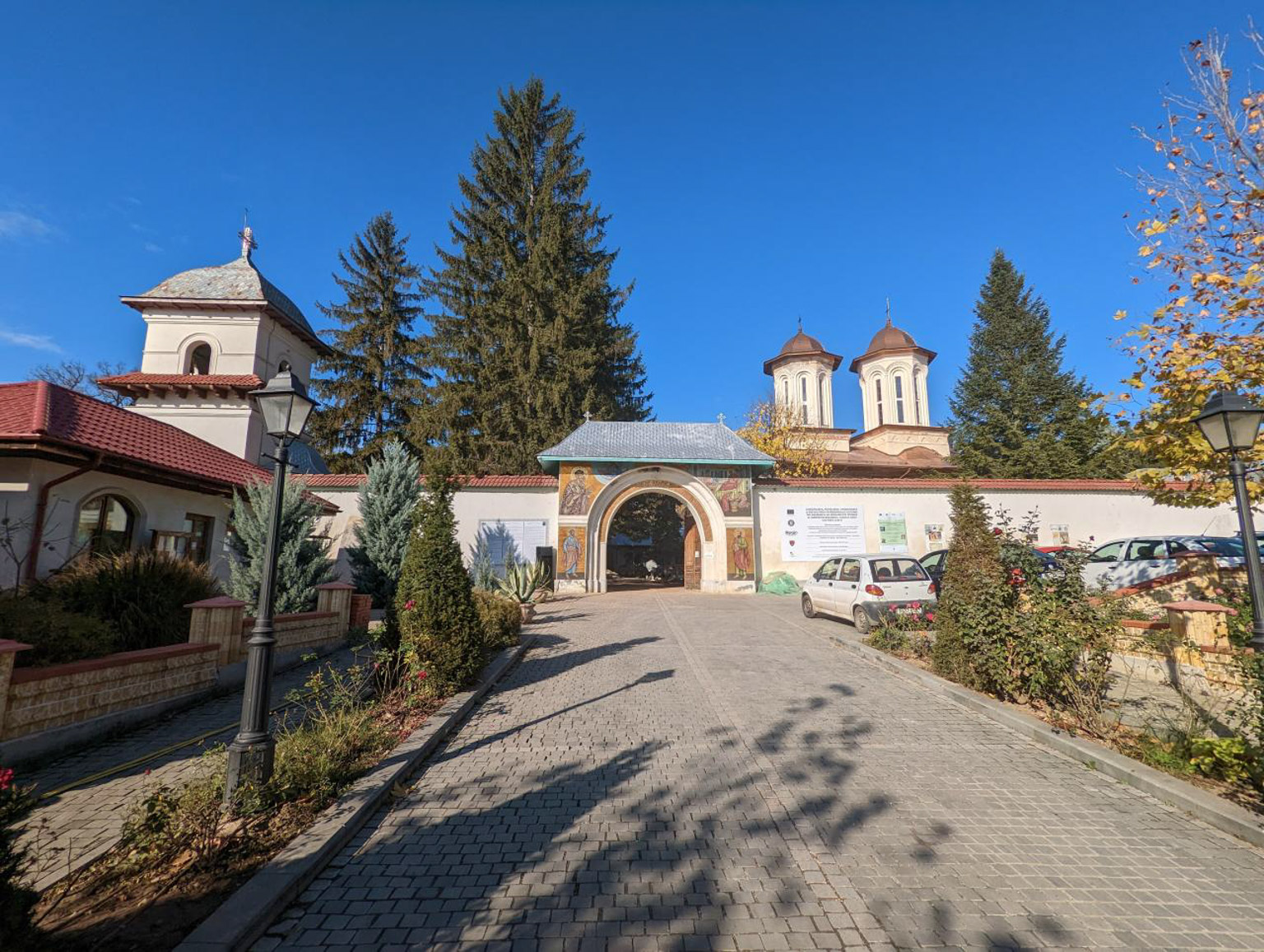
The works were completed in 1986. After the earthquake of 1977, the bell tower on the nave of the old church was damaged and it was decided to build a new tower in the southwest corner of the fortress wall. A gazebo was built at the base of the tower. The old church was rebuilt in 1962, the bell tower, work was carried out to strengthen the tower, change the flooring and clean the painting, which was covered in smoke and partially damaged. The painting was completely redone, in the period 1988-1993, by a team of painters led by Cornel Boambeș, for the interior painting, and the pediment and the exterior painting were restored by the painter Dan Ivanovici, the Pantocrator tower being painted
by the painter Popescu Maria Dragomir.
After 1989, the hermitage became an independent monastery again, bearing the name Sfântul Nicolae-Sitaru monastery
In 2001, a monumental complex was built at the entrance to the monastery. The community of the monastery currently counts 20 living people, under the spiritual tutelage of the father abbot, Hieromonk Natanael Haraga.
Church services are celebrated daily according to the traditional monastic tradition, the monks fulfilling today, as in the past, their mission as supplicants and intercessors to God for the whole world.
Text taken from the history of the monastery displayed at the entrance