The Ostrov commune, which includes the villages of Almălău, Esechioi, Bugeac, Gârlița, Galiţa and Ostrov, has been inhabited since ancient times, as archaeological discoveries attest. At Gârlița, a fortified settlement from the early Hallstatt period was discovered, mentioned in the work "Din istoria Dobrogei" by D. M. Pippidi and D. Berciu.
The ceramics found in these places, exhibited at the Calarasi Museum, include fragments of large vessels and bitronconic urns. The maps in the work highlight the discoveries of treasures and Histrian coins from the 5th-3rd centuries BC, such as those from Păcuiul lui Soare and Ostrov.
Two necropolises were discovered on the territory of Bugeac village. The first was found in 1965, and the second in 1969, both with tombs dating from the 4th century BC. These archaeological discoveries suggest the existence of village settlements on the territory of the Ostrov commune, which had trade links with other neighboring communities and Greek merchants.
The Romans arrived in the Lower Danube area in the 1st century BC, annexing Dobrogea and turning it into a Roman province. The settlement at Durostorum (present-day Silistra) became an important military and civil center during the time of Emperor Hadrian, being fortified and mentioned in historical sources.
After the disappearance of the Roman Empire at the beginning of the 7th century, the Silistra-Ostrov area was researched by Romanian and Bulgarian archaeologists. Important discoveries were made both in Silistra and in Romania, such as ceramic kilns and saturated fragments exhibited at the Museum of Călărași.
The construction of the Durostorum fortress by the Romans marked the beginning of a system of fortifications along the Danube. These fortresses had a crucial role in the defense of the territory and in establishing links with the communities inside Dobrogea, contributing to the Romanization process.
In the 8th-11th centuries, the area of the Ostrov commune continued to be inhabited, and the discoveries from Gârlița in 1966 and 1968 prove the existence of some necropolises dating from this period. After the Byzantine-Kievan War of 971, the region was reorganized into the Paristrion theme under the rule of the Byzantine Emperor John Tsimiskes.
The Păcuiul lui Soare fortress was built by the Byzantines at the end of the 10th century on an island in the Danube. It had an important defensive role, protecting the capital of the region, Dorostolon. The fortress was destroyed and rebuilt several times, but lost its urban character in the 14th century and was abandoned around 1421-1422.
The Dervent fortress, also built in the 10th century, had a short existence, being destroyed by the Pechenegs in 1036. Some of the inhabitants of the fortress took refuge at Păcuiul lui Soare.
In the 14th century, the southwest of Dobrogea was governed by independent political formations, and the fortress of Dârstorului (Silistra) was defended by Mircea the Elder against Ottoman attacks. At the end of his reign, however, the whole of Dobrogea was conquered by the Ottomans.
During the Ottoman period, Dobrogea was organized as part of the blood of Silistra, and Ostrov was included in this territory. Dobrogea depended on the Metropolitanate of Drista until the 18th century, and the majority Romanian population lived in difficult conditions under Ottoman rule.
In the 19th century, the town of Ostrov appears in historical sources related to the Russo-Turkish wars and Dobrogen transports. The origin of the locality remains an unsolved problem, but oral tradition suggests that the village originated on the island of Ostrov, later moving to the right bank of the Danube branch.
Over time, the locality was known by various names, such as Alunet or Fândâc, and developed through the union of two hamlets, one of which came from the fortress at Păcuiul lui Soare, which was increasingly flooded.
The inhabitants of Păcuiul lui Soare would have moved to the right bank of the Danube, in a safer area, clearing a forest of hazelnuts to establish the settlement of Alunetul, named after this forest. The approximate date of the establishment of the village is between 1421-1422, during which Dobrogea came under Ottoman rule. It is suggested that the village appeared with the arrival of the Turks in the region.
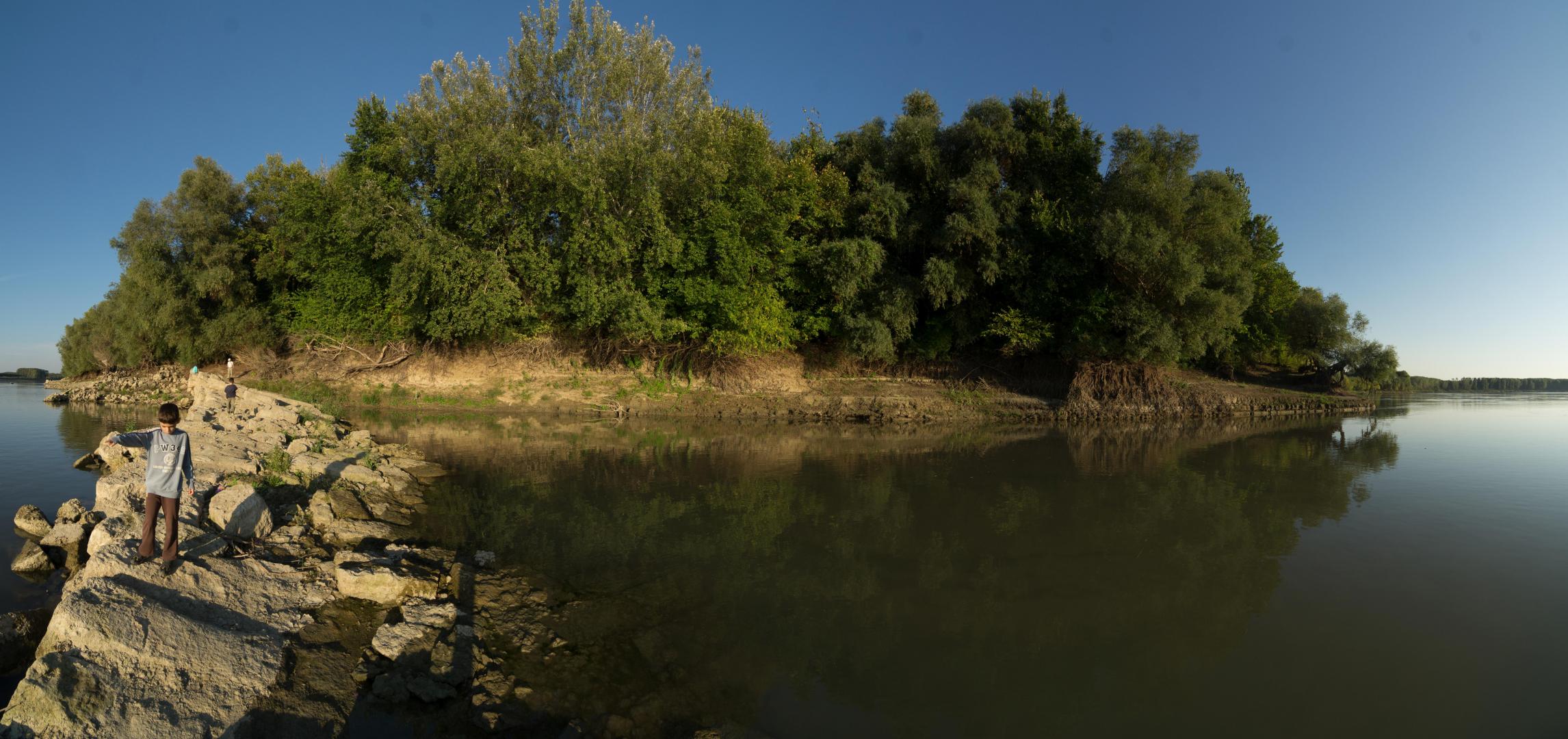
The name Ostrov would come from the island in front of the current town, but there is no clear explanation. Other islands in the area include Păcuiu Mare and Tâlchia. One question is whether the name of the Ostrov arm derives from the locality or from the nearby islands.
A question related to the ownership of the island of Ostrovul Mare appears in documents from the Ostrov Town Hall Fund. Although there is evidence that the island served as a communal pasture in 1940, it is unclear whether this was the original site of the village. Future research may provide answers.
Historical research for the modern period has been difficult due to the lack of documents, many of which were destroyed after the 1989 revolution. At the National Archives, documents related to Ostrov commune date back to 1919, suggesting that older documents may be lost.
After the proclamation of Romania's independence in 1877, the Treaty of Berlin of 1878 confirmed independence and established the borders of Dobrogea, including the town of Ostrov, which remained under Romanian administration, although the historical connection with Silistra was severed.
In 1878-1879, Dobrogea was divided into the counties of Tulcea and Constanța, and the town of Ostrov was included in this new administrative structure. Romania quickly integrated Dobrogea, especially by bringing in settlers and developing the administrative infrastructure.
Population growth in Dobrogea after 1878 was accelerated by the appropriation law of 1903, which brought residents from Transylvania, Banat and other regions. It is possible that the Siberian Mocans mentioned in other sources arrived in Ostrov during this period.
The visits of personalities such as Prince Carol and Minister Spiru Haret played an important role in the integration of Dobrogea into the Romanian state. Carol visited Dobrogea in 1879, and Spiru Haret visited the schools in the Ostrov area in 1904.
After the Second Balkan War in 1913, Quadrilater became part of Romania, and King Carol I visited Turtucaia and Silistra. However, shortly after this integration, Romania entered the First World War, and Dobrogea was occupied by German-Bulgarian-Turkish forces.
After the First World War, Ostrov continued to be an urban commune, part of Constanța county, according to documents from the period 1919-1921. These documents attest to the existence of a well-organized local administration.
In the interwar period, before the cession of the Quadrangle in 1940, Ostrovul was an urban commune with various public buildings and communal properties, including the town hall, police, schools and churches, according to a 1940 inventory.
Sursa: www.ostrov.judetul-constanta.ro