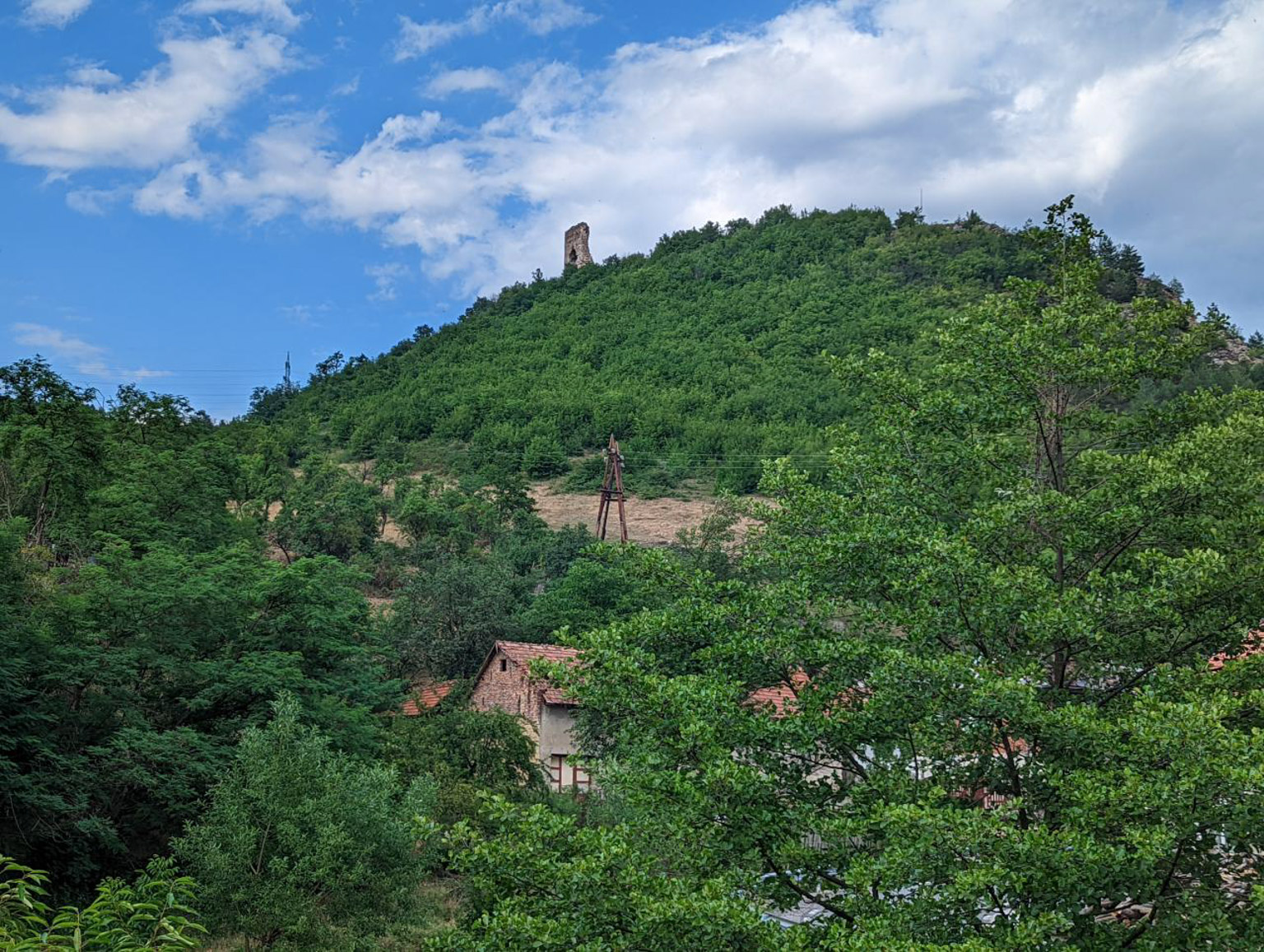
Mehadia is located in the southwest of Romania, in the Cerna valley, at an altitude of 287 m, on the European route E70, between Plugova and Toplet.
The Praetorium fort and the civilian settlement around it developed with the arrival of the Romans. The military who settled here contributed to the formation of the town, founding their families after military service.
The name Praetorium indicates the presence of a Roman military command during the first Dacian war, in the year 101, according to Prof. Iulian Lalescu. He claims that the area allowed a quick retreat south of the Danube.
The castrul is 3 km north of Mehadia and 2 km south of Plugova, on the left side of the E70 road. The importance of the fort increased, being attested over a period of three centuries.
Archaeological research has revealed a temple that functioned from the 2nd to the 4th century.
Linguists agree that the current name of the locality derives from the medieval Hungarian name "Michald", first mentioned in 1323.
In medieval documents, Mehadia appears under various forms of the name "Myhald". Although there are discussions on the origin of the toponym, many authors claim that the current name comes from the Hungarian anthroponym "Myhal(y)".
Roman Catholic parish documents from the 18th century suggest that Myhald was founded in 1273, but this information is not supported by reliable sources.
The first reliable documentary mention of the fortress is from 1323, during the reign of King Carol Robert. Dionysius, the great royal stolnic and castellan of Myhald, is mentioned in several documents.
Mehadia was the political and administrative center of a district until the 16th century and became a royal fortress of the Severin Banat.
The fortress, strategically located, was fortified since the 13th century by King Béla IV, and later by King Carol Robert. This served as a base for the campaigns of the Hungarian kings against the voivodes of Wallachia.
In 1402, Mehadia is mentioned as one of the "Wallachian districts" of Banat de Severin. The first detailed plan of the fortress was made in 1697 by Count Luigi Ferdinando Marsigli.
After the retreat of the Teutonic Knights, the fortress was refortified by John Corvinus and Pavel Chinezul. Kings Sigismund Báthory and Matthias Corvin used the fortress in the wars against the Turks.
Even after the Battle of Mohács in 1526, Mehadia remained in royal possession, but was taken over by Ioan Zápolya, an ally of the Turks. In 1554, the fortress was renovated by the governor Petru Petrovici.
After the Ottoman conquest, Mehadia came under Habsburg administration, and in 1717, Prince Eugene of Savoy ordered the fortification of the fortress. Two forts were built, but only one is still visible today.
The fortifications of Mehadia, built with local stone, had an irregular plan, protected by ramparts and walls.
The battles for the fortress during the Third Turco-Austrian War are described by Karl Kraushaar. In 1739, the Turks conquered Mehadia, but were later defeated by the Austrians. Finally, the fortress was completely destroyed between 1788 and 1791.
Sursa: primariamehadia.ro