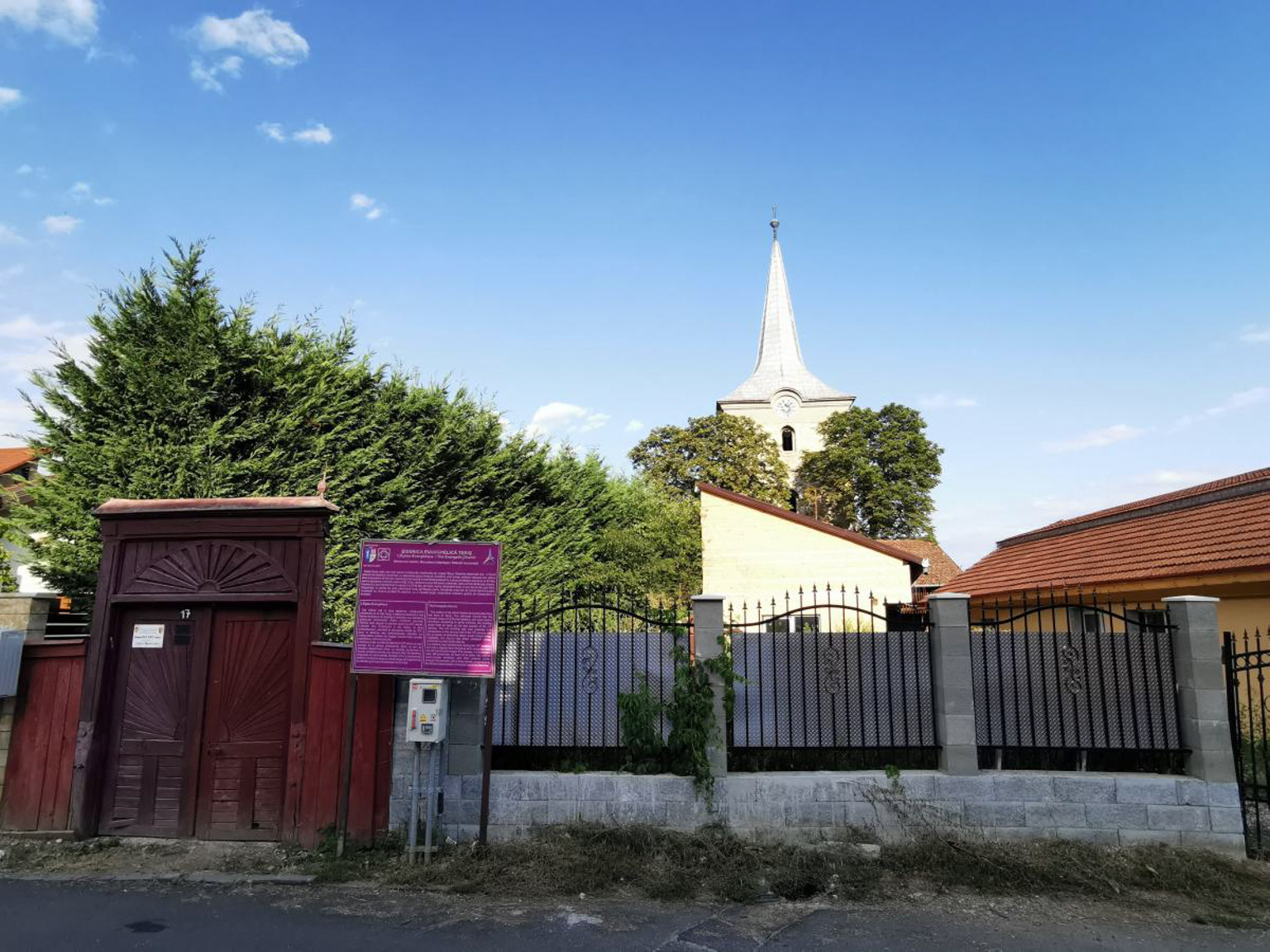
Archaeological excavations have revealed remains from the Bronze Age and the first Iron Age, discovering a settlement from the 7th-9th centuries and objects dating from the 10th-11th centuries, which were associated with the Romanian population in the area.
The documents mention the settlement in 1290 under the name Satul Spinilor, and from 1293 under the current name. In 1603, it obtained the status of a fair, becoming known for the fairs of livestock and agricultural products that have continued to make it famous even today.
The reformed church, originally built in the 13th century in Romanesque basilica style, was later expanded with Gothic elements.
From the center of Teiuș commune, one can look towards the sunset of Geoagiului Valley or Teiușului.
Source: Tourist itinerary Alba Iulia - Cluj-Napoca - Oradea (Ministry of Tourism, 1982)