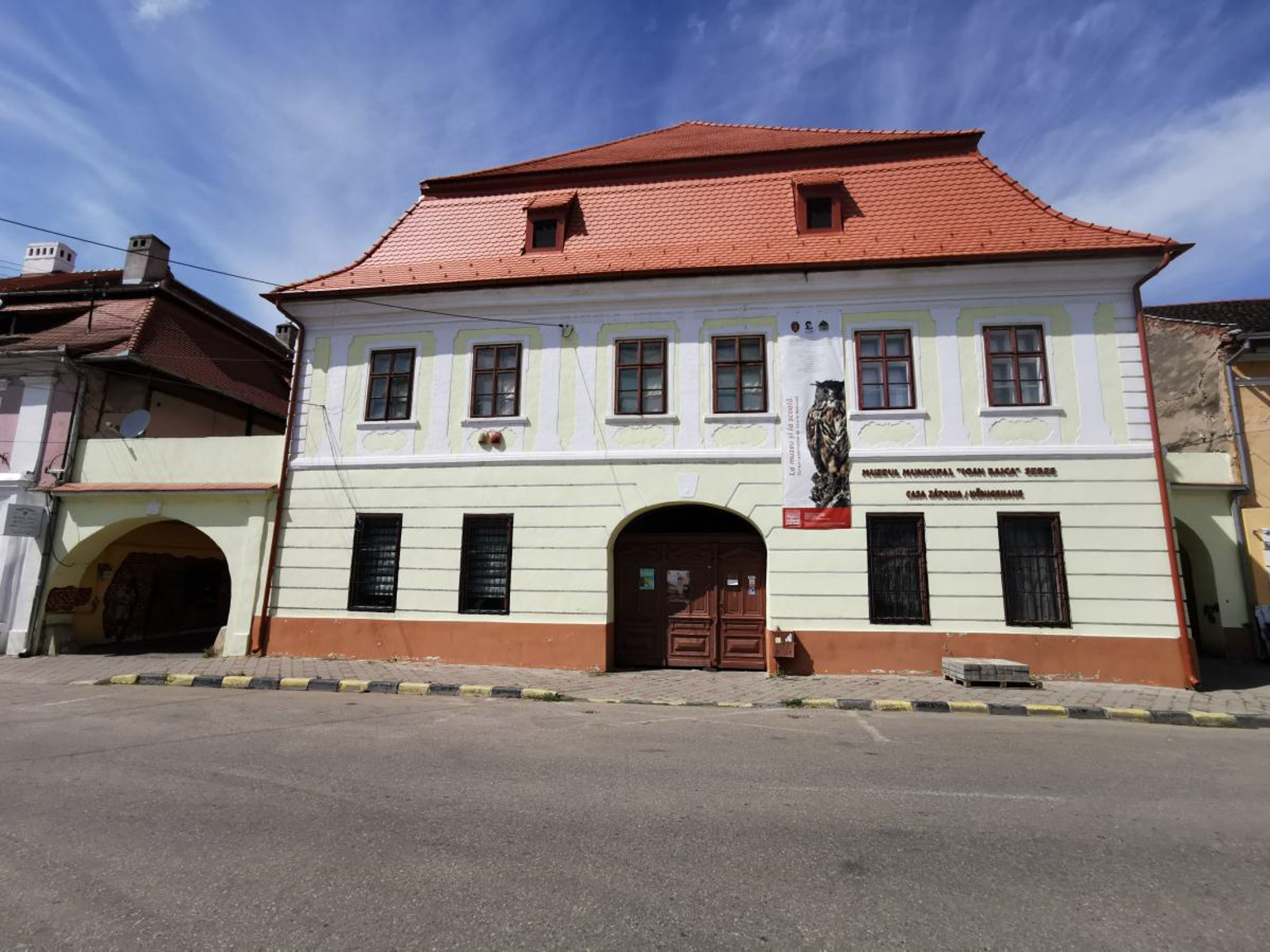
Casa Zapolya, built in the second half of the 15th century, is a small palace with significant connections in the history of Sebeș, serving for a time as the residence of the voivodes of Transylvania and hosting several Diets of Transylvania. During an anti-Ottoman campaign in 1540, voivode Ioan Zápolya met his end in this palace.
The History Museum, established in the Zápolya House in 1951, houses impressive collections of archaeology, history, ethnography, art and natural sciences, totaling over 20,000 objects. The permanent exhibition, organized chronologically, reveals precious archaeological pieces, Roman and pre-feudal vestiges from the city, artifacts related to medieval guilds and a vast collection of old Romanian and foreign books.
The art section houses works by the painter Sava Hentia, originally from the Sebeș valley, including portraits of his family and relatives, scenes from the War of Independence, landscapes, allegorical scenes and still lifes.
In the natural sciences section, fossils, mammals, birds, insects and plants are exhibited, illustrating the diversity of the fauna of the Sebeș valley.
The museum also houses objects collected by a Sebesian traveler who explored the Middle East and Africa for 20 years, including a collection of poisoned arrows and weapons of African tribes.
Source: Tourist itinerary Brașov - Sibiu - Alba Iulia (Ministry of Tourism, 1982)