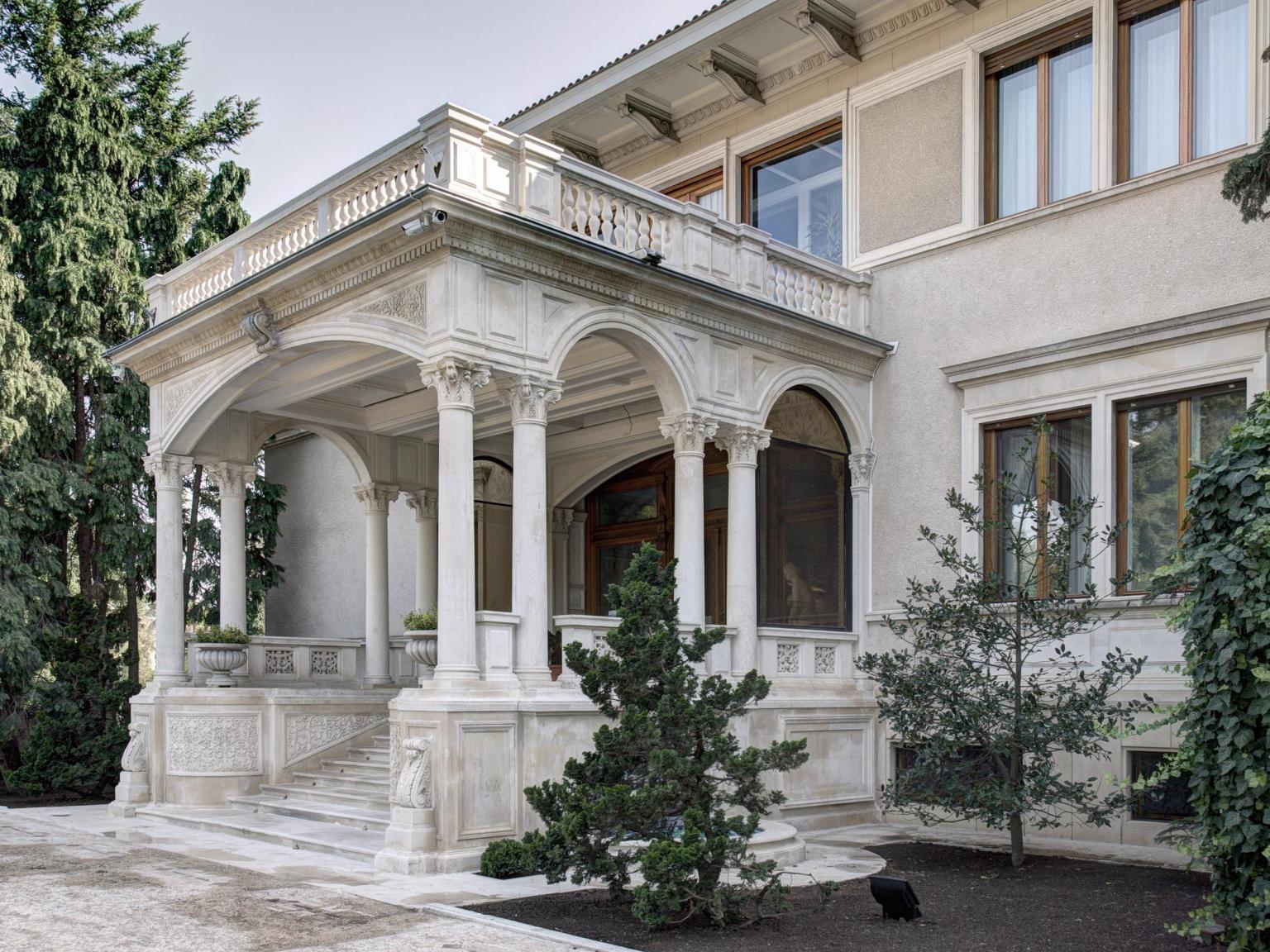
Nicolae Ceaușescu’s residence in Bucharest, known today as the “Primăverii Museum,” has its origins in the late 1950s and early 1960s, a period during which the Primăverii district was reorganized to host the elite of the Romanian Workers’ Party. Although the area had been, since the interwar period, a neighborhood of wealthy families, the communist regime transformed it into a district reserved for the high-ranking nomenklatura, hidden from the eyes of the population and closely guarded by security structures. The villa on 50–52 Primăverii Street was designed by architects Aron Grimberg-Solari and Robert Woll, who created a modern building infused with classical elements and refined details, in line with the socialist aesthetic of the time. Although it was not originally conceived specifically for Nicolae Ceaușescu, in 1965, when he rose to the supreme leadership position, the residence was assigned to him as his official home.
The relocation of the Ceaușescu family to this villa marked the beginning of a period of profound transformations. The space was remodeled to reflect the status of the new leader. Access became strictly controlled, and the entire neighborhood was incorporated into an area permanently monitored by the Fifth Directorate of the Securitate. The villa became not only the intimate home of Nicolae and Elena Ceaușescu and their three children, but also a place where unofficial meetings, restricted political discussions, and moments of relaxation for the ruling couple took place. Daily life was carefully orchestrated, and every activity inside the residence unfolded under the discreet yet constant supervision of maintenance and security personnel.
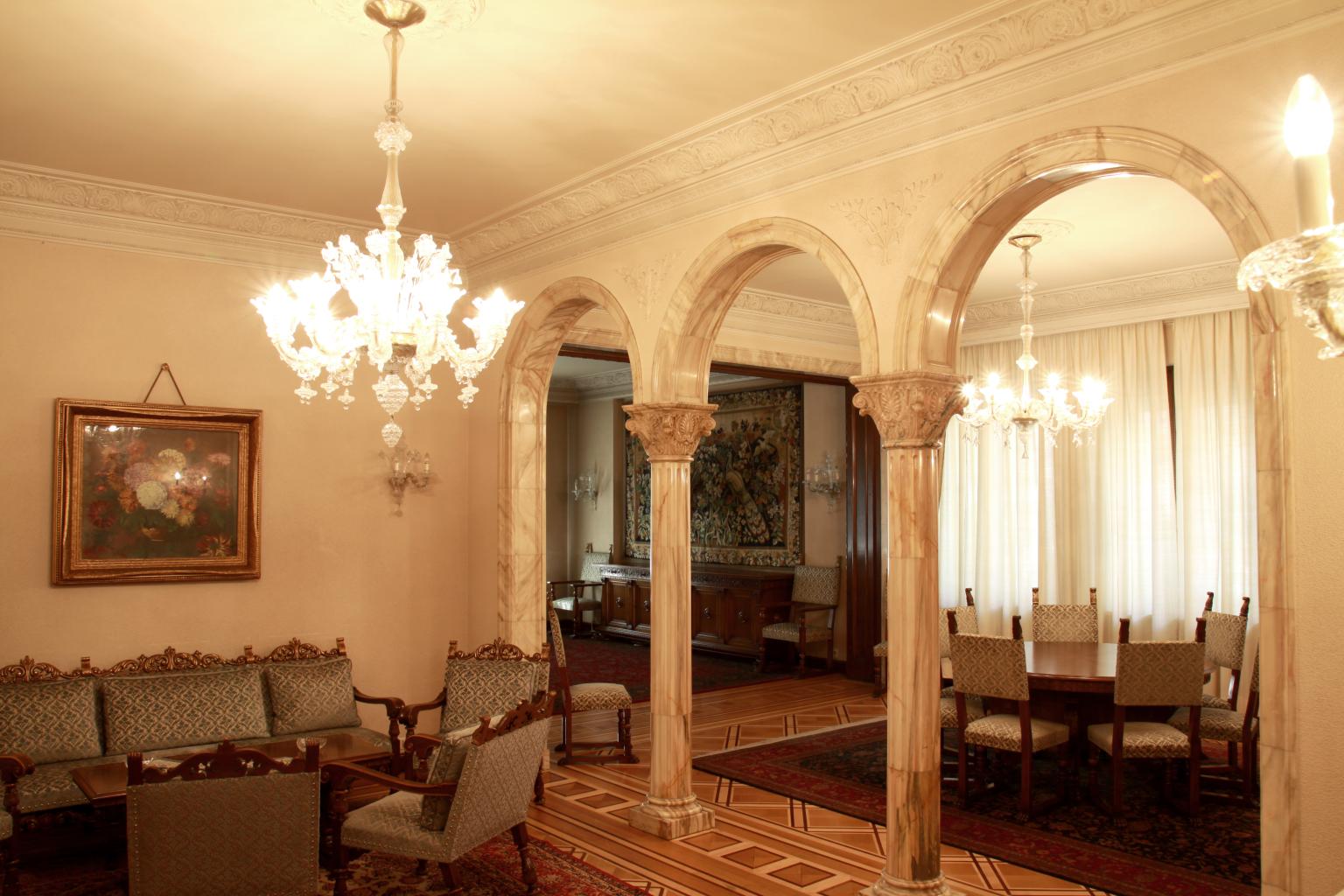
In the 1970s and 1980s, the villa experienced the most spectacular phase of its existence. In a Romania where austerity had become the norm and propaganda promoted the image of a modest leader, the Ceaușescu family residence was transformed into an opulent space, decorated with rare materials and costly objects. The indoor swimming pool, adorned with mosaics inspired by oriental art, became one of the most emblematic rooms of the building, complemented by a sophisticated climate-control system. In addition to these features, the interior was embellished with Persian carpets, sculptures, Murano crystal chandeliers, furniture made from exotic woods, and numerous commissioned artworks. The winter garden housed tropical vegetation, and the oriental salons and the music room were used for discreet gatherings, particularly by Elena Ceaușescu. All these elements shaped the image of a residence in which luxury was omnipresent, a rarity in Romania of that period.
Everyday life in the Primăverii villa was directed with great precision. Supplies were rigorously monitored to prevent any risk, and the staff—often exceeding fifty people—handled everything from house maintenance and culinary services to garden care and the protection of the leadership. Even within the villa, access to certain spaces was restricted, and the rooms used by the three children were arranged in ways that reflected the discipline and discretion demanded by the family’s public status.
The Revolution of December 1989 radically changed the destiny of the building. On December 22, when Nicolae and Elena Ceaușescu fled Bucharest by helicopter, the residence was hastily abandoned. For several years, the building was administered by RA-APPS and used sporadically for delegations or protocol events. Its interiors, however, remained inaccessible to the public, fueling curiosity and speculation about the luxury and lifestyle of the Ceaușescu couple.
Only in 2016, after numerous discussions about the cultural and memorial significance of the site, was the villa opened to the public under the name “Primăverii Museum.” In its current form, the museum preserves the architecture, furniture, and decorations from the Ceaușescu era, offering visitors access to more than eighty rooms. The bedrooms, work cabinets, Elena Ceaușescu’s dressing rooms, the ornate salons, the swimming pool, the winter garden, and numerous personal objects of the family—from clothing and perfumes to musical instruments and official gifts—can be seen today exactly where they stood four decades ago. The villa quickly became one of Bucharest’s most visited cultural attractions, thanks to the combination of its historical value and the fascinating contradiction it illustrates: the contrast between the modest image Ceaușescu promoted and the genuine luxury of his private life.
Nicolae Ceaușescu’s residence stands today as a symbol of the Romanian communist regime and a testament to the ways in which political power shaped not only society but also the personal spaces of those who exercised it. By preserving it as a museum, the public is given the opportunity to understand visually and emotionally the contrast between official ideology and the privileged reality of the state leadership. Thus, the Primăverii villa functions not only as a tourist attraction but also as a lesson about history, memory, and the mechanisms of power.