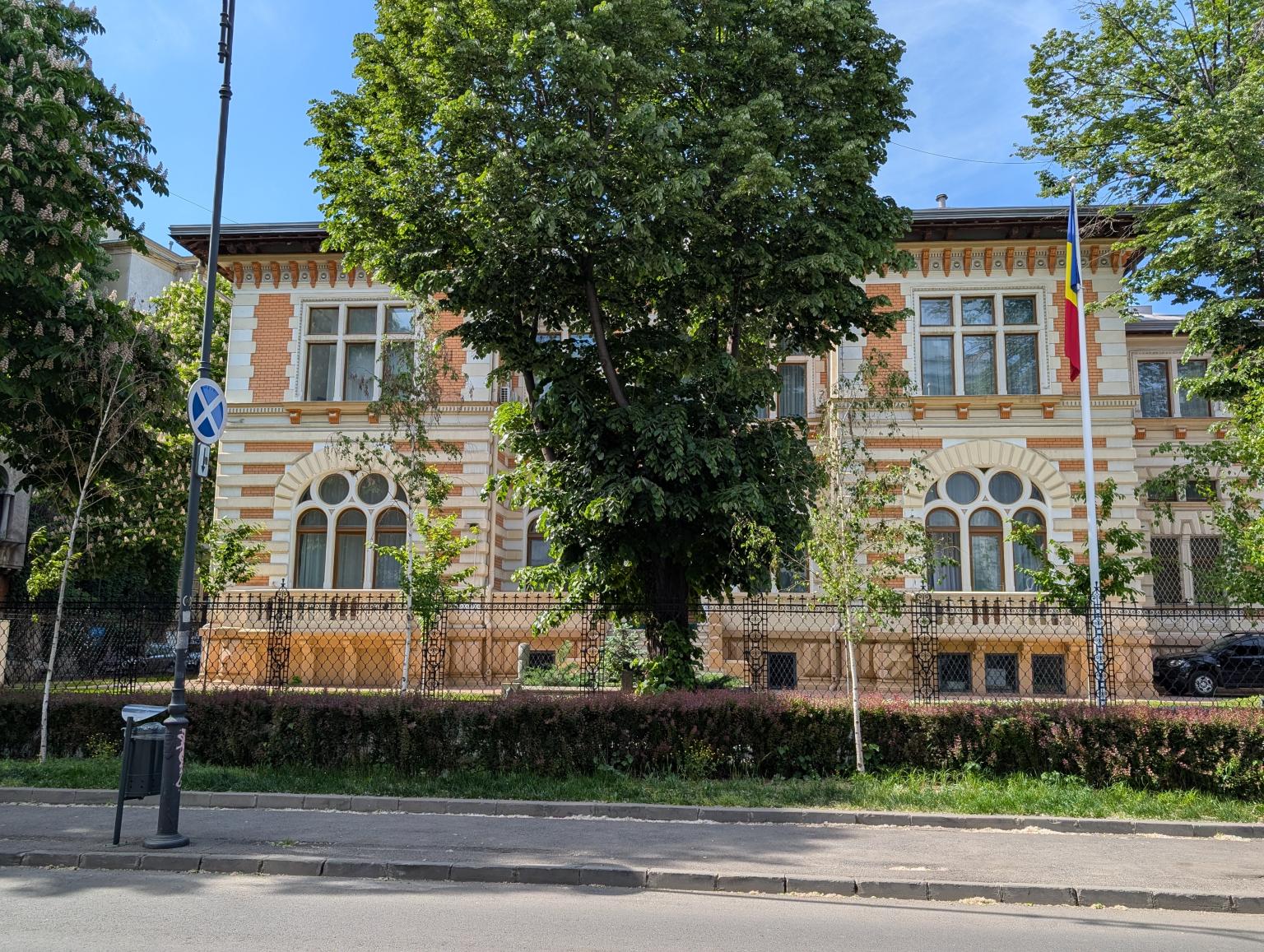
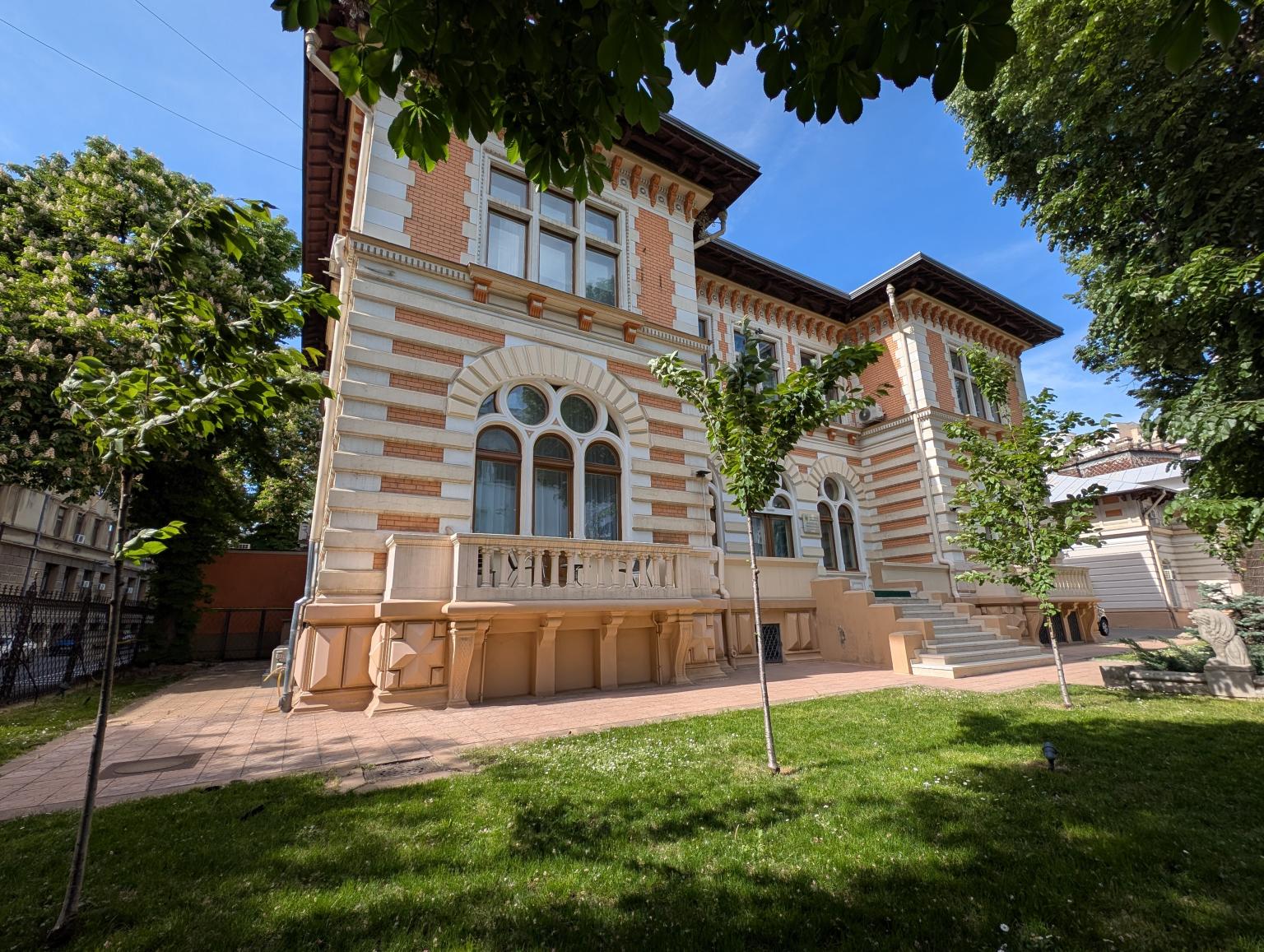
The house, built between 1888 and 1890, according to the plans of the architect Luis Pierre Blanc for the politician Nicolae Filipescu, represents a historical monument of great importance, both from a memorialistic and architectural point of view. It was officially declared a historical monument in 1992, due to its cultural, historical and architectural value.
Nicolae Filipescu, the one for whom this house was built, was one of the remarkable figures of Romanian politics from the late 19th and early 20th centuries. Born in 1862 in Bucharest, he came from an old boyar family, recognized for his patriotism and scholarly inclinations. He studied abroad, obtaining his doctorate in law in Geneva and Paris in 1883.
After returning to the country, Nicolae Filipescu dedicated himself to political life, becoming a prominent figure of the Conservative Party. In 1885 he founded the newspaper "Epoca", an influential press organ of the time, where great personalities such as Titu Maiorescu, Ion Luca Caragiale and Alexandru Vlahuță wrote. From 1888 until his death, he constantly represented the city and Brăila County in Parliament.
On February 9, 1893, Filipescu was elected mayor of Bucharest, being seen by the City Council as an energetic, intelligent man animated by noble feelings. As mayor, he became involved in the urban development of the Capital. He contributed to the modernization of the water supply network, sewage, public lighting and road infrastructure. He was responsible for paving 74 streets, initiating the construction of important boulevards such as Colțea and Regina Maria, developing the education system through the construction of eight schools, but also erecting emblematic public buildings: Obor Station, Traian Hall, the Astronomical Observatory of the Romanian Academy. He also introduced the electric tram on the main arteries and supported the development of urban lighting.
Filipescu also made a special contribution in the cultural field: he financially supported the publication of a historical work about Bucharest, written by Ionescu Gion and awarded by the Romanian Academy. He also held positions such as mayor of the city of Brăila, Minister of Lands and Agriculture and Minister of War, and his publishing activity includes 15 titles in which he addresses economic, constitutional and agrarian policy themes.
During the period of Romania's neutrality (1914-1916), Nicolae Filipescu was a fervent militant for the country's entry into the war alongside the Entente, with the aim of uniting all Romanians. He was co-founder and president of the Unionist Federation, which energetically promoted this ideal. In an emotional speech addressed to King Ferdinand, Filipescu invoked the ideal of union under the royal crown, symbolically evoking the figure of Michael the Brave. Unfortunately, he did not live to see the realization of the Great Union, passing away on September 30, 1916. Upon his death, the President of the Chamber of Deputies, M. Săveanu, praised him as a man dedicated to the homeland, a true son of the nation.
The building has a basement, ground floor and first floor, and is covered with sheet metal. It is notable for its framed windows, a balcony-terrace with a balustrade supported by consoles, bosses on the facade, as well as a hall decorated with columns and arcades. The predominant style is French neoclassical, except for the staircase, which is in an eclectic style, with paneling. The floors are made of decorative sandstone, and two columns inside are made in the Neo-Romanian style.
The interior of the house has undergone changes over time, but two original ceilings have remained intact: one made of solid walnut wood, in the former library, and another painted in the study, representing an allegorical scene with six characters, probably Apollo and the Muses. These decorative elements reflect the artistic refinement of the era. Although the author of the painting is unknown, the composition demonstrates a good mastery of ceiling perspective.
After 1976, the building came into use by the US Embassy, and before that time it was used by the Office for the Organization of Exhibitions. Currently, its consolidation and modernization are desired.
Luis Pierre Blanc, born in 1860 in Geneva, was one of the most active foreign architects established in Romania. He designed numerous important buildings in Bucharest and the country, including: the Lahovari houses, the house of General Adrian, the building of the Ministry of Public Instruction, the University of Iași, the Faculty of Medicine, the Bacteriological Institute, as well as his own residence on Scaune Street.
Blanc was also involved in the completion of the Romanian Athenaeum, according to Galleron's plans. In addition, he contributed to the urban development of the Capital by parceling out vast areas such as Bonaparte Road (today Aleea Blanc), Băneasa and Tei, forming elegant and well-populated neighborhoods.
He was decorated with the Order of the Crown of Romania in the rank of officer for his architectural contributions. Although he had projects approved by the Communal Council of the Capital, many were not executed, which led him to initiate a lawsuit against the City Hall. The house built for Nicolae Filipescu is one of his most valuable achievements, reflecting the style and refinement of late 19th century architecture.
In conclusion, Nicolae Filipescu's house is not just a period residence, but a true piece of heritage, which houses the history of a prominent personality and the mastery of a prestigious architect, symbolizing an important moment in the urban and political development of modern Romania.
Sursa: bmim.muzeulbucurestiului.ro