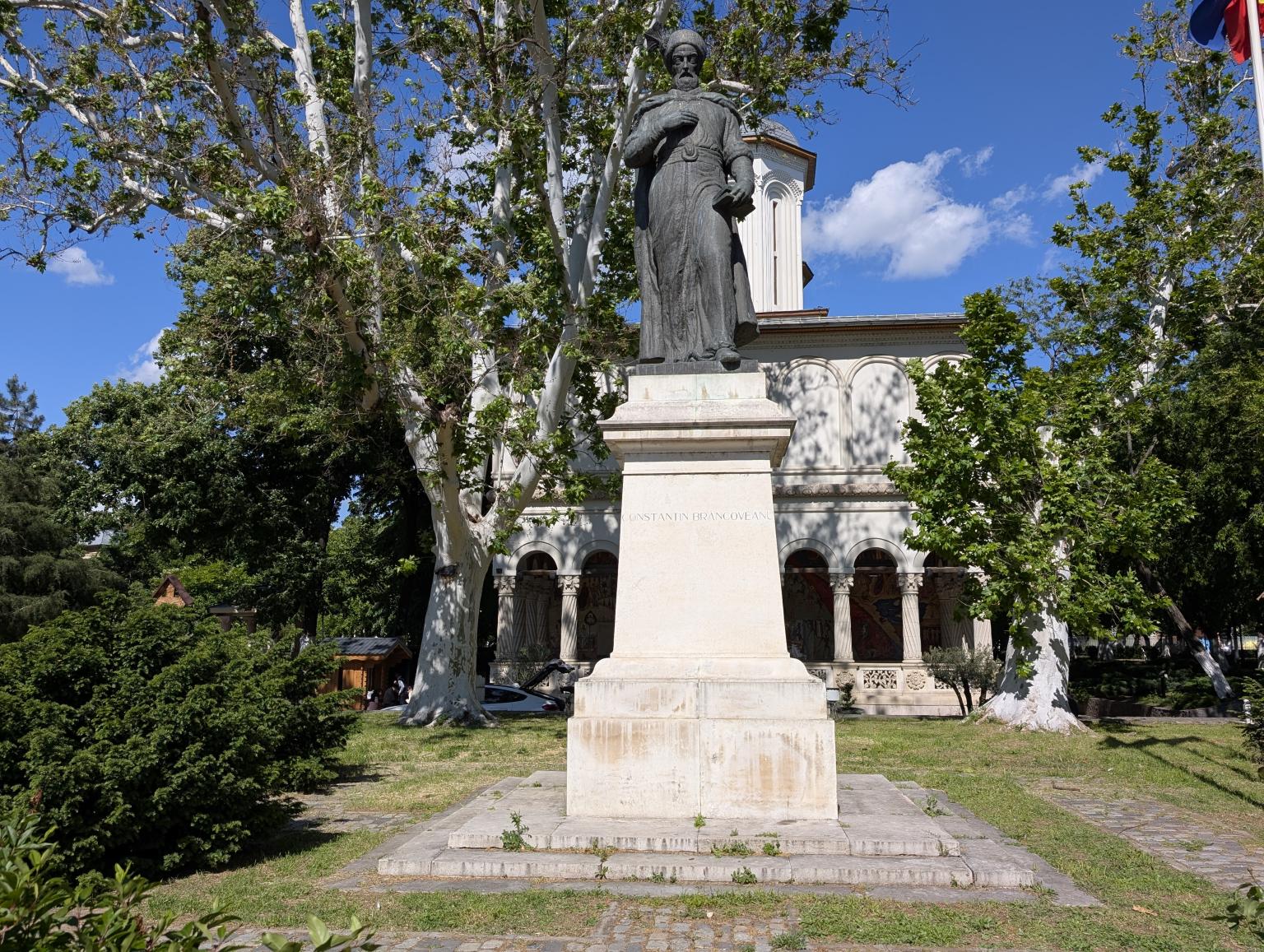
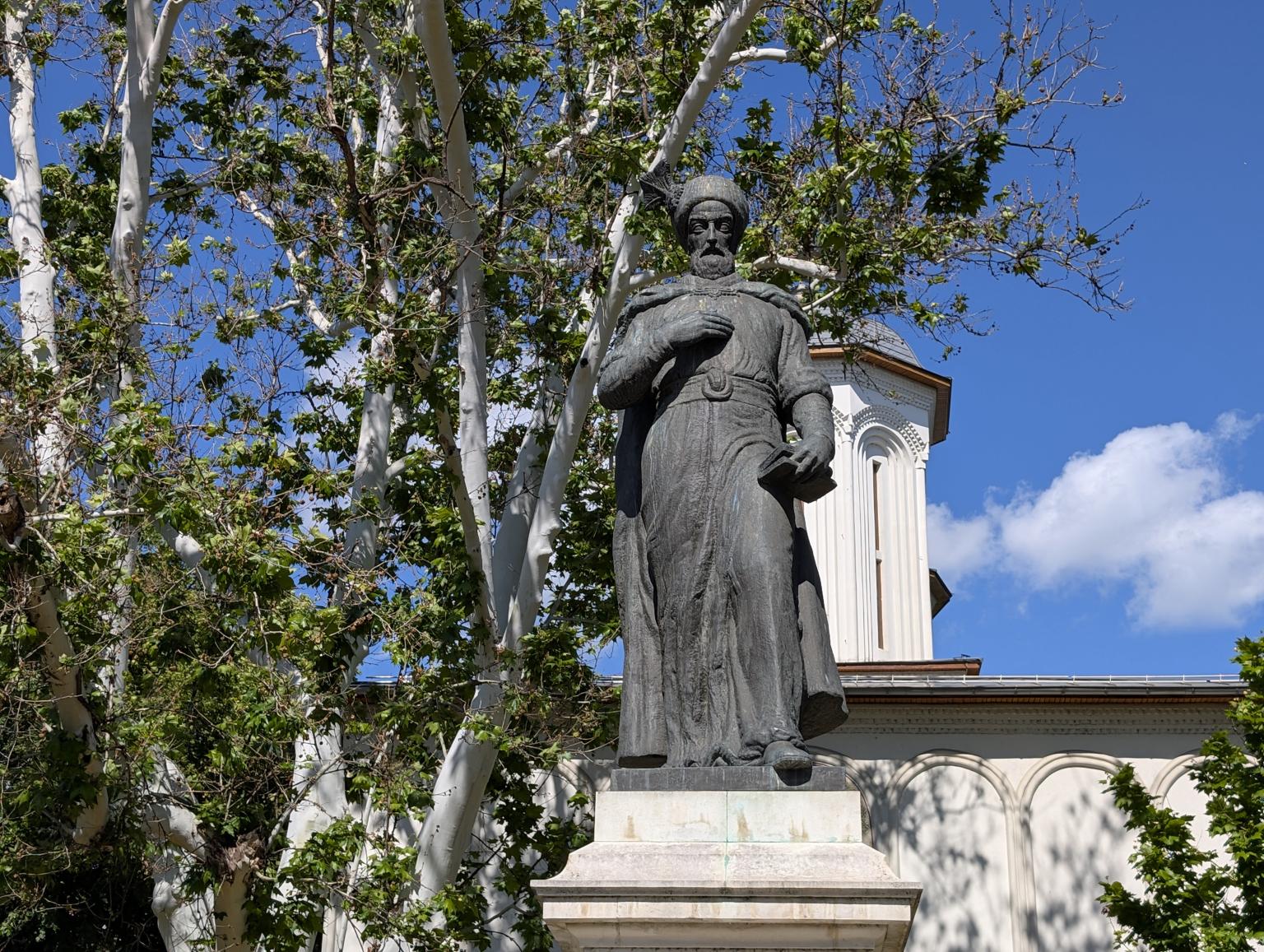
The bronze statue of Constantin Brâncoveanu was erected in 1936, the work of the sculptor Oscar Han.
Ruler Constantin Brâncoveanu of Romania, in the period 1688-1714, showed a passion for the arts and supported the development of culture, contributing to the construction of a significant number of buildings. The distinct style of this era is recognized as the Brancoven style, representing a synthesis between Byzantine and Western art, with influences and overlaps adapted to traditional autochthonous elements.
During Brâncoveanu's time, books were printed in Romanian, Greek, Slavonic and even Arabic and Turkish. Through Antim Ivireanul, he put into operation the printing presses at Snagov, Bucharest and Râmnicu Vâlcea, places where numerous books were printed in remarkable graphic conditions.
During this period, the buildings such as the palaces of Potlogi, Mogoșoaia and Sâmbăta de Jos (Brașov county), the Hurez Monastery (Vâlcea county), and the Dintr-o Zi Church in Bucharest stand out.
Being accused by the Turks of disobedience, Brâncoveanu was arrested in 1914 and transported to Constantinople. After almost four months of torture, in an attempt to get him to confess his accumulated wealth, he, his four sons and the counselor Ianache were executed.

4 out of 5 stars
based on 0 reviews
If you’ve visited this place, share your thoughts with others
write review