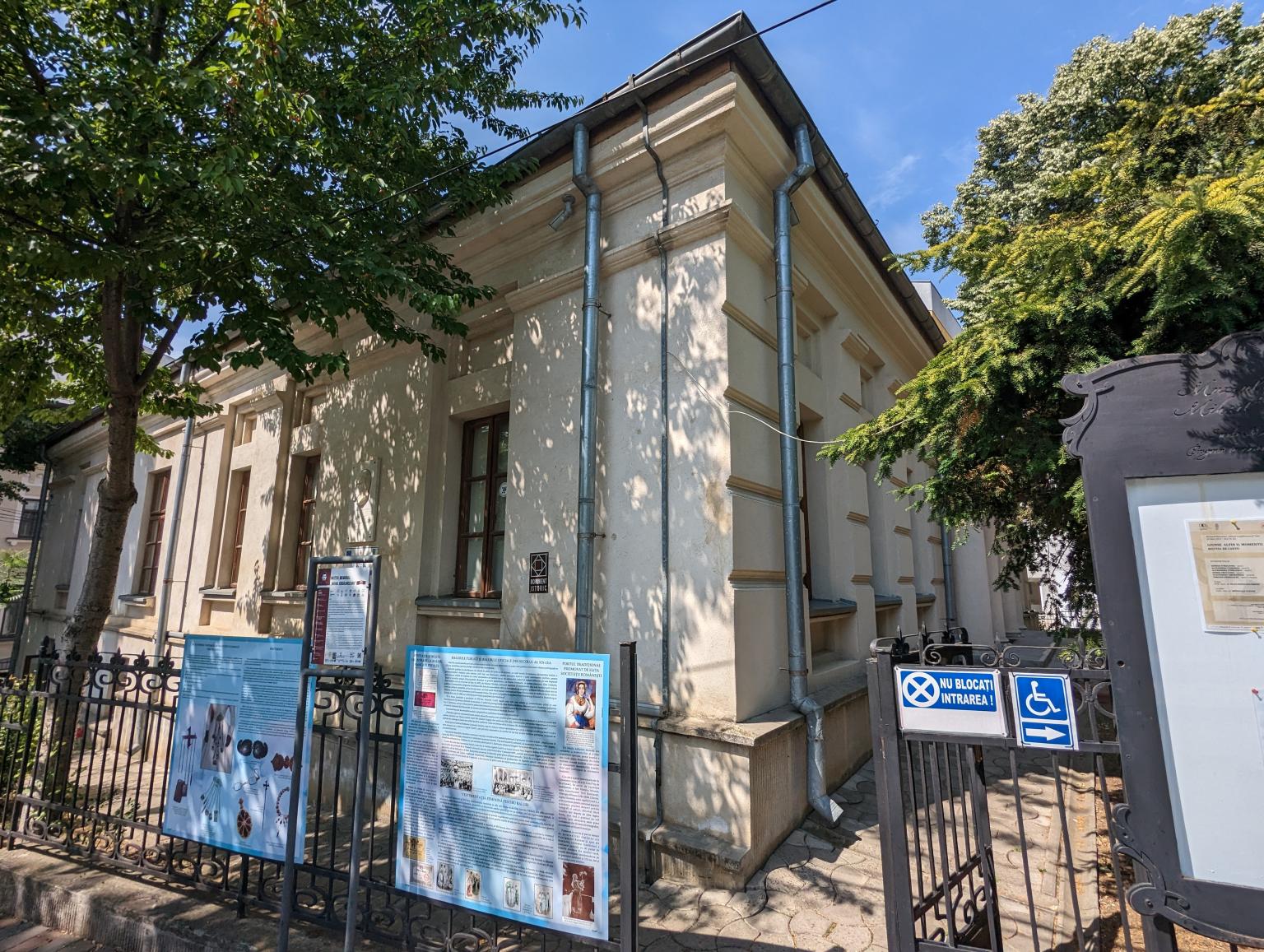
Mihail Kogălniceanu (1817-1891) was born in this house. He was a great militant for the Union, writer, historian, and diplomat. As prime-minister of Romania in the Union era, he promoted agrarian and administrative reforms, as well as the secularisation of monastic properties. In this house, Prince Carol I of Hohenzollern-Sigmaringen was hosted during his visit to laşi in 1869.
The house has been redesigned in Neoclassic style in 1888 by the architect Carol von Kugler. In 1918, when laşi was the War Capital of Romania, the Martial Court was installed here.
The building, turned into museum in 1970, features the elegance of boyar houses: Louis XVI and Biedermeier furniture, Sèvres porcelain etc., and hosts cultural events. Visitors are welcomed by the hologram of Kogălniceanu.
Text taken from the presentation panel
The Mihail Kogălniceanu Memorial Museum is located at Str. M. Kogălniceanu no. 11, in the former Jora house, and is dedicated to remembering the life and work of M. Kogălniceanu, being set up in one of the homes that belonged to him.
Mihail Kogălniceanu (1817-1891), born in Iași, was a prominent figure in the political, historical, journalistic and oratorical field. He was an academician and professor of national history at the Academia Mihaileană and is recognized as one of the founders of modern Romanian historiography. As editor and manager of the magazine "Arhiva românească" (1840-1841 and 1845), he published historical documents, as well as the collections "Letopisețe Țării Moldovei" and "Cronicele României". Kogălniceanu was a supporter of the press with a patriotic and democratic orientation, publishing periodicals such as "Dacia literară" (1840), "Propășirea. Foaie scientifică si literară" (1844) and "Steaua Dunării" (1855-1860). His romantic research method contributed to the elaboration of a national history ("Histoire de la Valachie, de la Moldavie et des Valaques transdanubiens", volume I, period 1241-1792). In the field of literature, Kogălniceanu tackled various genres, including autobiographical prose ("Iluzii piredute, Un prămătu amor"), historical ("Three days from Moldova's history"), satirical observations on morals ("Provincial Physiology in Iași", "Daunting Gatherings "), the unfinished novel ("Secrets of the heart") and the pamphlet. Among the first ideas he stated was that knowledge of the homeland's past is essential for the affirmation of national identity ("Word for the opening of the national history course at the Mihăilean Academy"). Even if he did not participate directly in the revolution of 1848, M. Kogălniceanu's contributions influenced the Paşoptist ideology, and in emigration, at the request of the Moldovan Revolutionary Committee, he wrote "The Desires of the National Party of Moldova".
M. Kogălniceanu had a significant role in the effort to unite the Principalities and, after its completion, he held the positions of minister and later prime minister of Romania between 1863 and 1865. During his mandate, he had a significant contribution to the adoption of some democratic laws such as the secularization of monastic estates and agrarian reform. As foreign minister in 1876, 1877-1878, he remained in history through his involvement in the act of proclaiming Romania's national independence.
The museum, established in 1975, offers a glimpse into the proud history of the Romanian people, highlighting the patriotically resonant name of M. Kogălniceanu. Through its collections of documents, photographs, art treatises, paintings, porcelain, silverware and furniture that belonged to M. Kogălniceanu, the museum recreates the atmosphere in which the great statesman lived a large part of his life and created.
Built in 1835 in neoclassical style, the museum building is a valuable part of the architectural treasure of Iași, having a special historical importance for significant moments in the history of Romania. The chamber concerts held weekly in the former salon of the house, appreciated by the local community, always bring a large audience to this location full of history.
Source: Iași Municipality and surroundings (Ministry of Tourism, 1980)