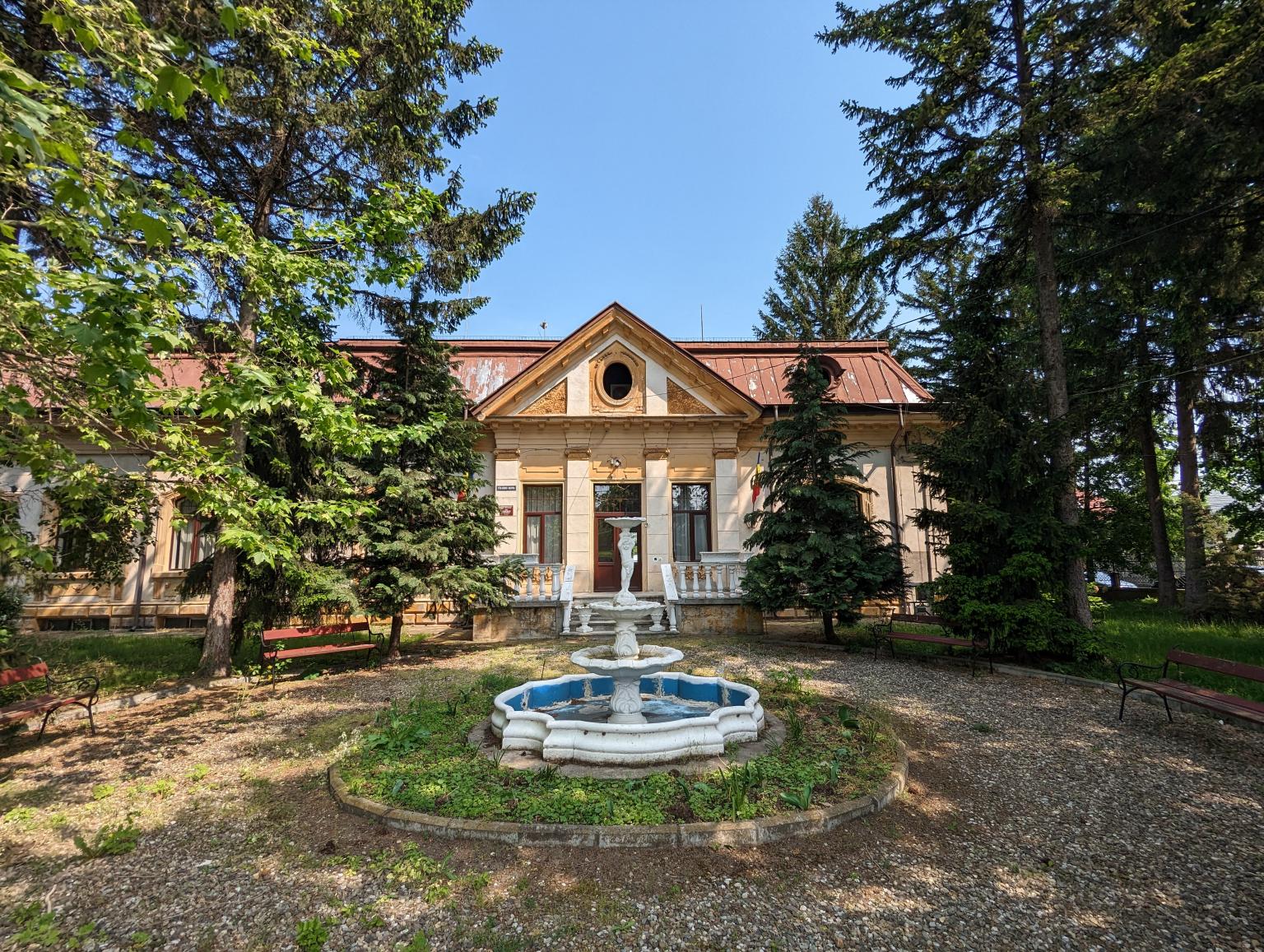
The building in Bacău that is less known to the general public is located on George Bacovia Street, at number 52, and is known as the “Casa General Cantilli”. It was built in 1890, according to plans drawn up by an architect of German origin.
Grigore Cantilli was born on January 24, 1839 in Valea Popii, which belongs to Valea Călugărească commune in Prahova county, and died in Bacău in 1906. He was the son of Panait Hagi Hristu Cantili from Ploiești and Maria Rădulescu from Târgoviște. He spent his childhood and adolescence in Ploiești, and after graduating from the city’s public school in 1851, he attended the boarding school founded by Nicolae Lorenti. After four years of study, he had become fluent in French, Italian, Greek and German.
In April 1857 he graduated from the Military School in Bucharest, then embarked on an exceptional military career that took him to the rank of division general. He worked within the army staff, becoming the first Romanian military attaché in Berlin starting with January 1, 1875. He was delegated to the maneuvers of the Italian army in 1865, was the author of the first work on the modern metric system in Romania and was the one who requested and obtained the introduction of this system in the army as early as 1865, before it was widely adopted in civilian society.
During the War of Independence of 1877-1878, Grigore Cantilli distinguished himself as a modern and courageous commander. He was in command of the 1st Infantry Brigade of the 4th Division and played an important role in the defense of the Danube line and in the crossing of the river. He was involved in the Battle of Pleven, participating in the assault of August 30 and in Osman Pasha's last attempt to break out of the encirclement. He managed to capture two Ottoman batteries at the crossing of the Vid River and contributed to repelling a breakthrough attack by the Turks.
For his outstanding merits, Grigore Cantilli was decorated with numerous distinctions: the Order of Saints Maurice and Lazarus awarded by the King of Italy, Victor Emmanuel II, the Golden Military Virtue, the Order of the Star of Romania in the rank of officer, the Cross of the Danube Crossing, the Order of the Crown of Romania in the rank of Grand Cross, the Russian Order of Saint Stanislav, 3rd class, the Russian Order of Saint Vladimir, 4th class, among others.
After the end of the war, his military career continued. In 1883 he was appointed to the command of the 6th Division in Focșani, in 1884 he was promoted to the rank of brigadier general, and in 1893 he was promoted to division general.
After returning from the War of Independence, where he distinguished himself through his deeds, the general settled in Bacău. Here, his striking personality and the house built in a special architectural style attracted the attention of the local elite. Social gatherings and charitable actions took place in the 16 rooms of his residence, becoming an important meeting point for Bacău society.
The building once known as the "General Cantilli House" has hosted, over time, various institutions: the headquarters of Centrofarm (Romfarm), a vocational school and other organizations. Although the building is in a relatively good state of preservation, the passage of time and the demands to which it has been subjected require increased care from the current owner in the future.
Following his marriage to Maria Brăiescu from Bacău, Grigore Cantilli had two daughters, who married the sons of A. G. Golescu, a prominent figure in the Revolution of 1848.
According to Turist prin Judetul Bacau post
Sursa: www.facebook.com