A tragic incident that took place in the Vrancea region is somewhat reminiscent of the ballad Miorita, but it is even more similar to the famous novel Baltagul, written by our great author and controversial politician Mihail Sadoveanu. The story unfolded as follows: in August 1894, Nicu Sclavone, a young man from a wealthy family from Tifesti, with Italian roots, set out to hunt bears in the Vrancea mountains. He traveled by carriage to the town of Lepșa, from where he hired a local man to be his guide. Accompanied by two hunting dogs, he began to roam the forests of the Tulnici Commune, near the then border with the Austro-Hungarian Empire, today part of Covasna County.
When they reached the border, the two hunters came across four residents of Ojdula, who had come with ox-drawn carts to steal wood from the forests of the Tulnici commune. Afraid of being reported to the authorities for the theft, the four men decided to kill Nicu Sclavone and his guide. Taking advantage of the moment, they attacked them with axes, butchered them, and then hid their bodies in the thickets of the forest. Worried about the young man’s prolonged absence, especially after the two dogs returned home to Tifesti on their own, the family alerted the authorities and paid people from the village and the surrounding area to look for the missing man.
After several days of searching in the mountains, the bodies were discovered. The four criminals could have escaped unpunished or would have been caught with difficulty if one of them had not gotten drunk. In a drunken state, he violently assaulted his wife, and the woman, crying on the village street, confessed that the man had tried to kill her “just like he killed the people in the mountains”. Following this revelation, the notary of the Ojdula commune notified the authorities. The four were quickly captured, confessed to the facts and told how they had committed the crime. They confessed that they had found 25 lei on Nicu Sclavone, which they divided, as well as several items needed for hunting — a quiver, a horn and a rifle, the latter of which was taken by one of the aggressors. The authorities decided that the murder trial should be held in Sfântu Gheorghe, the capital of Trei Scaune county. The archives kept in Vrancea county do not reveal what punishments the criminals received, but it is assumed that the sentences were not lenient.
Despite the tragedy they went through, the Sclavone family showed fortitude and tried to continue their lives as naturally as possible after such a loss.
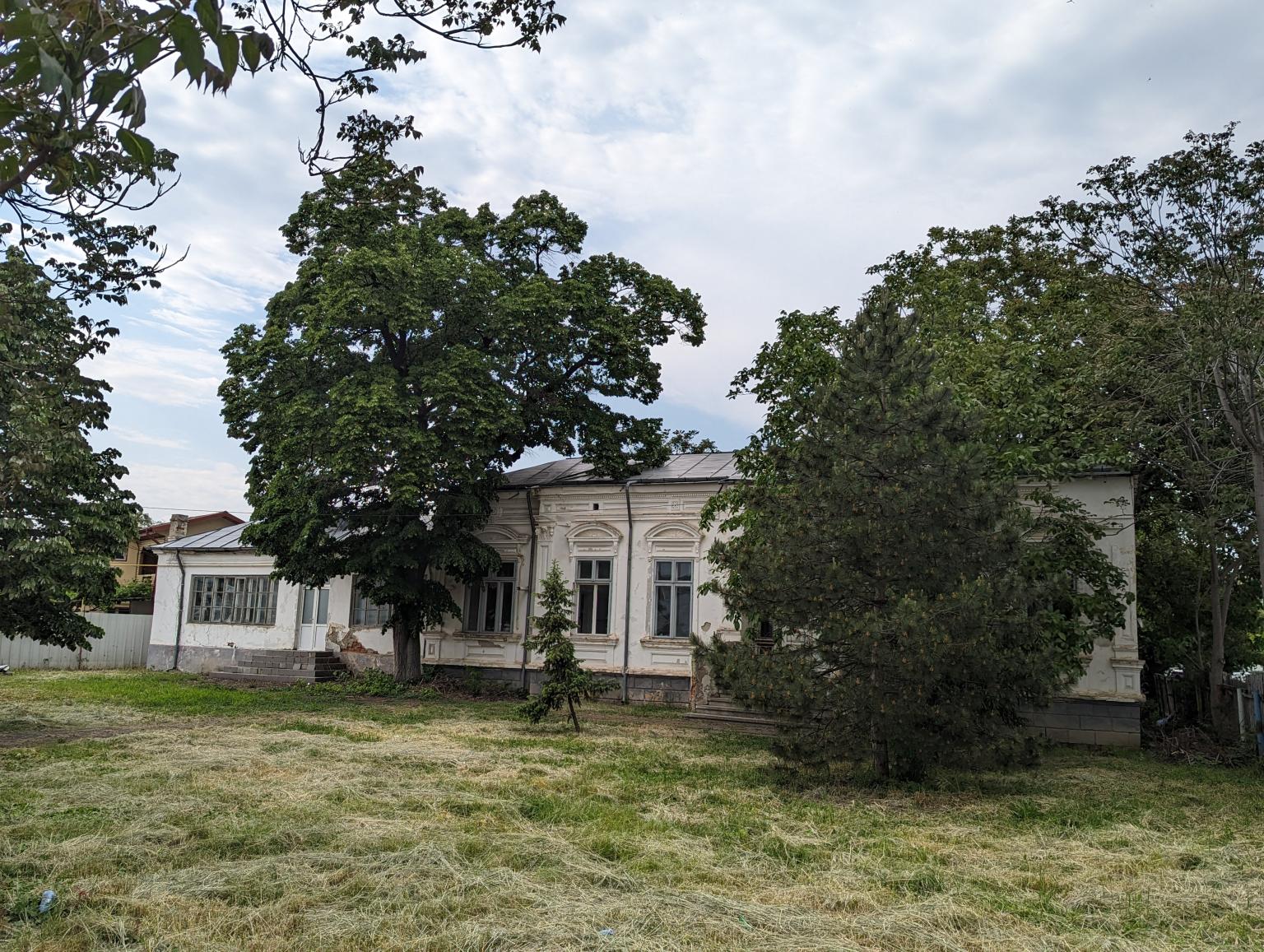
The brother of the man killed in the mountains, Gheorghe I. Sclavone, dedicated himself to increasing the family fortune in Tifesti, managing to considerably increase his assets. From the wealth he acquired, together with his son D. Sclavone, he built, before the outbreak of World War I, a house on the street that is now called Cernei, once known as Mitropolit Varlaam, and even before that as Viitorul Street. The land had previously been owned by Grigore Vartan, an Armenian from the local community. This house, known today as "Casa Sclavone", is on the list of heritage monuments, being a valuable construction from an architectural point of view and quite interesting for those who want to discover the old traces of our city, among the few that remain.
Sursa: www.ziaruldevrancea.ro