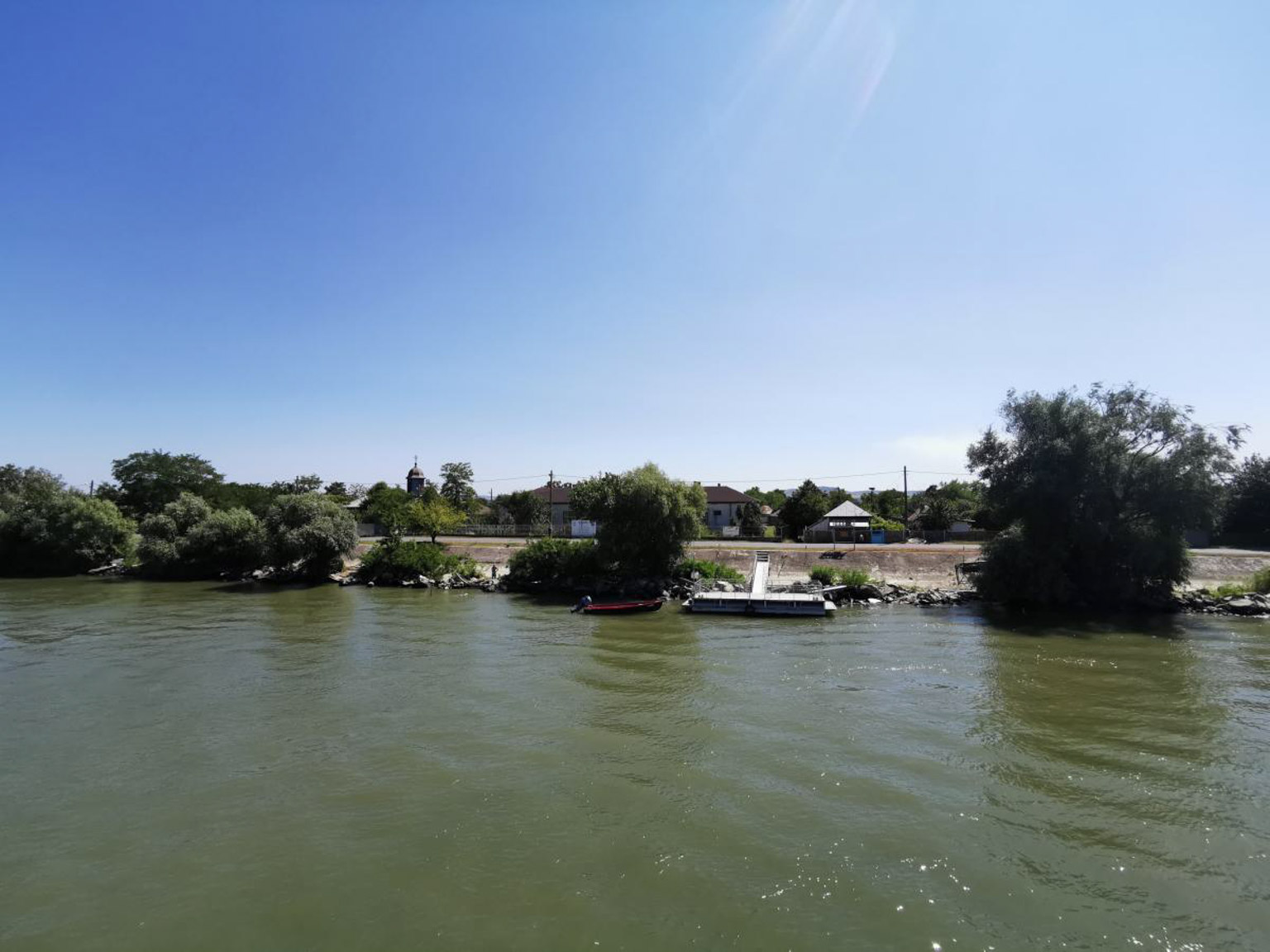
At a distance of 30 miles, along the right bank of the Sulina branch, the picturesque thatched houses of Partizani village, which belongs to the Maliuc commune, begin to take shape.
Starting from the organizational structure imposed by the natural conditions, characteristic of all the settlements in the Delta, and arriving at the way of building the houses, built exclusively from the ground (in mud, mud or adobe) and covered with reeds, as well as their ornamental elements, this confirms the existence of an ethnographic area distinct from that of Dobrogea.
Houses are built on the highest ground to protect them from flooding, in many cases on man-made platforms, with side gables decorated with zoomorphic figures carved in openwork boards. The fences of the houses, mostly made of reeds woven at the top, give an ornate appearance, proving the locals' appetite for beauty.
Downstream of the village of Partizani were the locks of the Rusca dammed area, occupying an area of 5200 hectares and exploiting the fish and reed resources of the region.
Source: Danube Delta (Ministry of Tourism, 1978)