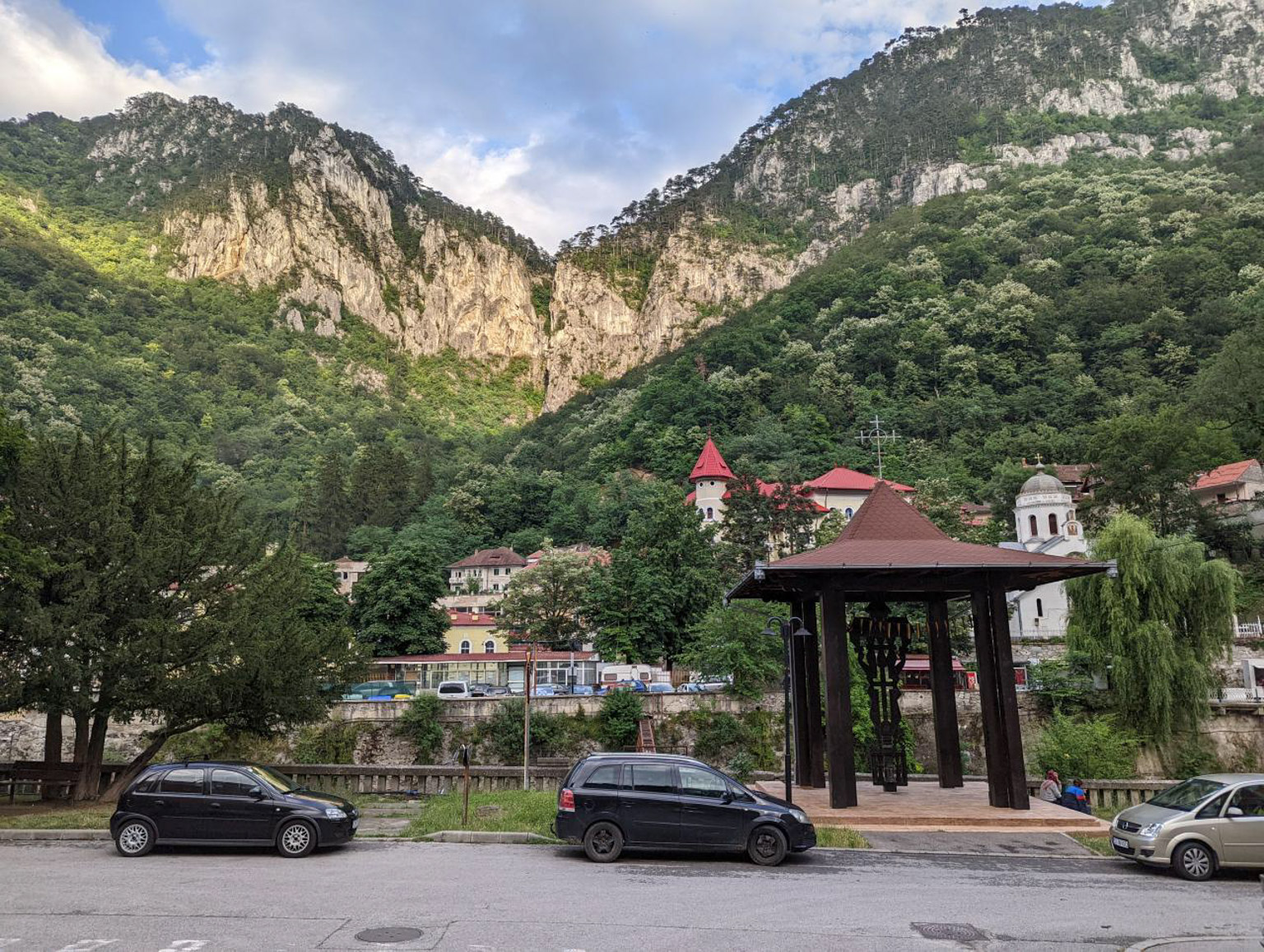
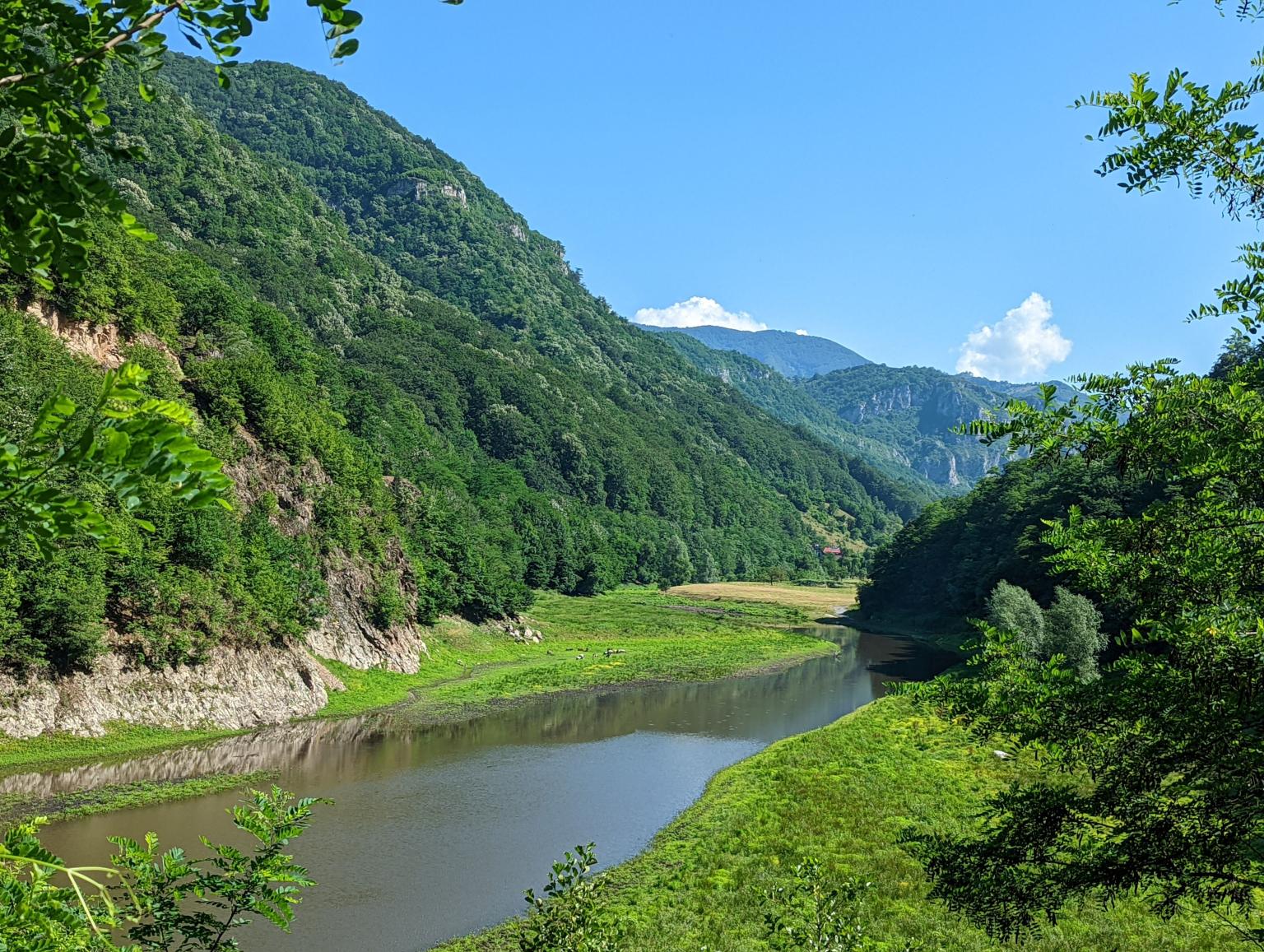
Valea Cerna is one of the rare longitudinal valleys in the Southern Carpathians. Naturalists proposed the establishment of the Domogled-Valea Cernei National Park due to its outstanding landscape and botanical value. The park will cover an area of 63,580 ha, being the third largest in the country, after the Danube Delta and the Rodna Mountains.
Starting from Orșova, the route on Valea Cernei passes by the modern city with the silhouettes of the buildings reflected in the "Iron Gates" dam lake. The lower course of the Cerna is accompanied by the railway line and road that wind between the Mehedinti Mountains to the east and the Almajului Mountains to the west. Toplețul marks the beginning of the route, where you can see old mill installations and the remains of a Turkish aqueduct from 1739. Further on, you can see the rock of the Banatian Sphinx and reach the Herculaneum Baths.
The Herculaneum Baths, located in a narrow depression between the Cernei and Mehedinti Mountains, are dominated by the steep limestone of the Domogled, Şuşcu and Hurcu Mountains, with the 1,105 m high Domogled peak. The mild climate of the valley, the abundant water and the variability of the reliefs and lithological substrates they have favored the existence and conservation of rare species of plants and animals, including forests with downy oak, hornbeam, sky, wild walnut and Banatian black pine.
Domogled is home to a diverse fauna, including vipers, rock partridges, turtles and various mammals such as deer, wild boar and wild cats. The butterfly fauna is particularly rich, with over 1,500 species, representing 45% of all lepidoptera in Romania. Mount Domogled has been a nature reserve since 1932, being one of the first in the country.
In the area of Domogled and on the right slope of Cerna, there are remarkable karst phenomena, such as Peștera Mare de la Șoroniște, Gaura Ungurului and Peștera Hoților. These attractions contribute to the charm of Cerna Valley in Herculaneum.
The route continues on Valea Cernei, known for its straight direction and natural beauty. The Bobot Waterfall and the Seven Hot Springs are points of interest, and the landscape is crowned by the limestone wall of the Ring and the Seven Cold Springs. At Cerna-Sat you can visit the Corcoaiei Gorge, and the road then leads to the Ivanu dam and the Cernei spring, the largest karst spring in Romania.
Source: Caves from Romania, T. Orghidan, Șt. Negrea, Gh. Racoviță, C. Lascu, ed. Sport - Tourism, 1984