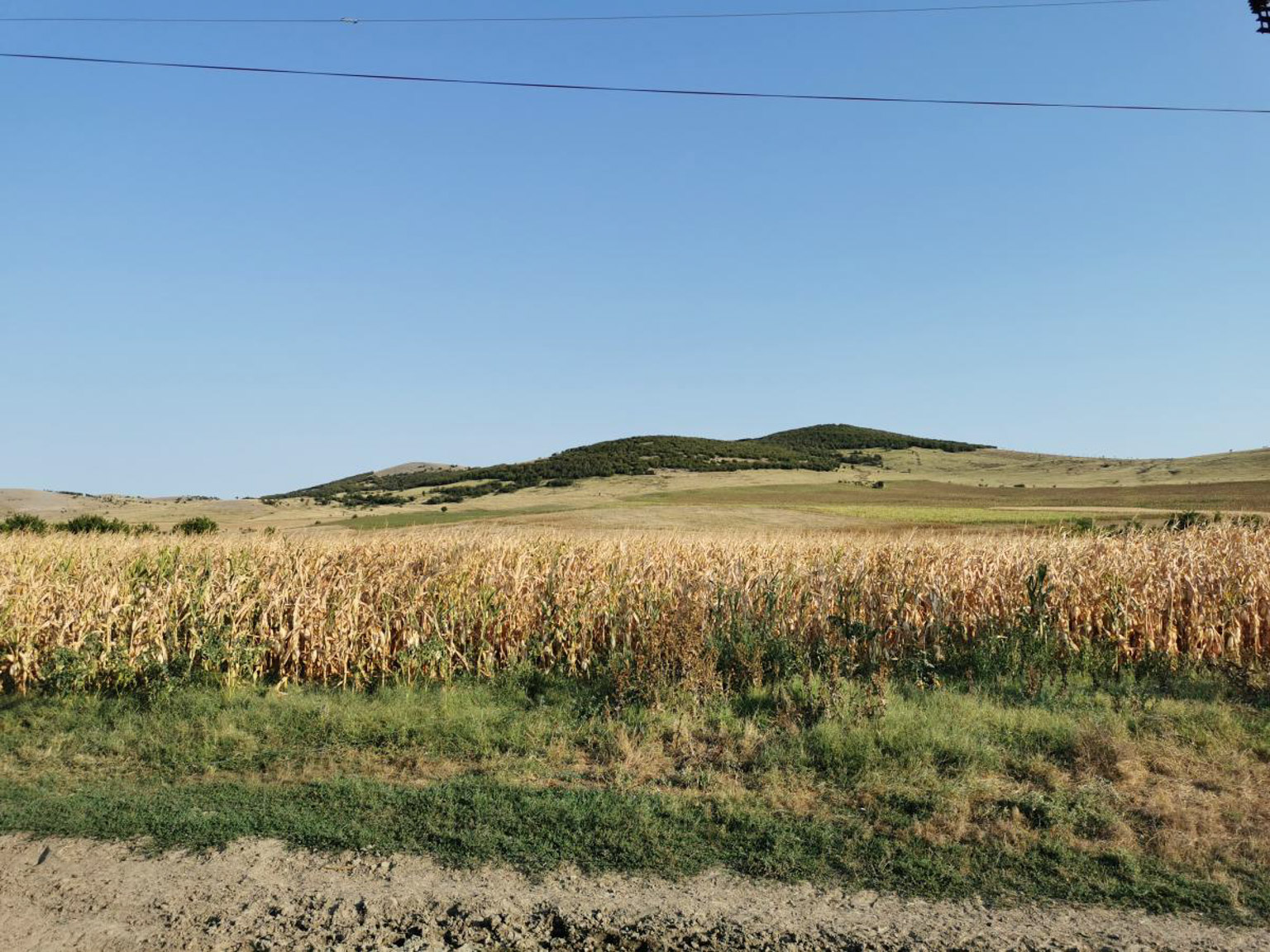
The traveler who explores the northern half of Dobrogea is amazed by the contrast between the sizes of the valleys and the small size of the waters that flow through them, likening them to children in their parents' loose clothes. This feature can be understood from the perspective of geological periods when rainfall was much more abundant than today.
Most of the lakes, now dry, show similarities to the Atlas Mountains, embodying only a part of the similarities with the mountains of North Africa. Their general appearance, with the aridity of the climate, the bare peaks and the depressions that divide the mountains, suggests a connection with the Atlas Mountains, but also with the Taurus Mountains of Anatolia (Turkey) or the Mezic Mountains. Indeed, the French geographer Emmanuel de Martonne, having an extensive knowledge of both Romania and North Africa, made comparisons between the landscapes of northern Dobrogea and those of Algeria, located near the Sahara.
The Niculițel massifs are notable for the presence of volcanic lava, their extent being delimited by the Telita and Taița valleys. The character of the landscape is defined by the downy oak and especially the white linden. At the beginning of summer, when the aroma of linden flowers covers everything, the beehives are brought to the top. At Niculițel and Luncavița you can see orchards rich with apricots, peaches, cherries and plums, while at Sarica, the volcanic lands produce wines with a refined bouquet. The same types of land were also fundamental for the famous vineyards of the French Massif Central (Burgundy) or the volcanic plateaus near Vesuvius.
In recent years, vine culture has seen a significant expansion on the terraces near Isaccea. The final group in the Dobrogea Mountains is represented by isolated mountains that rise abruptly from the plain, like islands in the middle of the sea. An example is the Consul peak, made up of red and purple porphyry, and the five ridges of Beștepe, offering an ever-changing image to travelers on St. George's Arm. Towards the sea, the mountain chain continues with the Danube peninsula, similar to the peninsulas of Brittany (France), where it gradually sinks into the waves, to then rise, surrounded by waters, in the Snake Island.
In conclusion, the Dobrogea Mountains represent a modest series of residual mountains, left as a testimony of the times hundreds of millions of years ago, when the Danube flowed into the sea. These mountains are not just a geological relic; they possess a distinct charm, a scenic beauty rarely seen in other regions of the country. We can only remember the magnificent view of Pricopan, the diversity of the colors of the ridge during the summer evenings and the unmistakable aroma of the linden flowers in the forests of Medgidia and Niculitel.
Source: The Romanian Black Sea Coast (Ministry of Tourism, 1976)