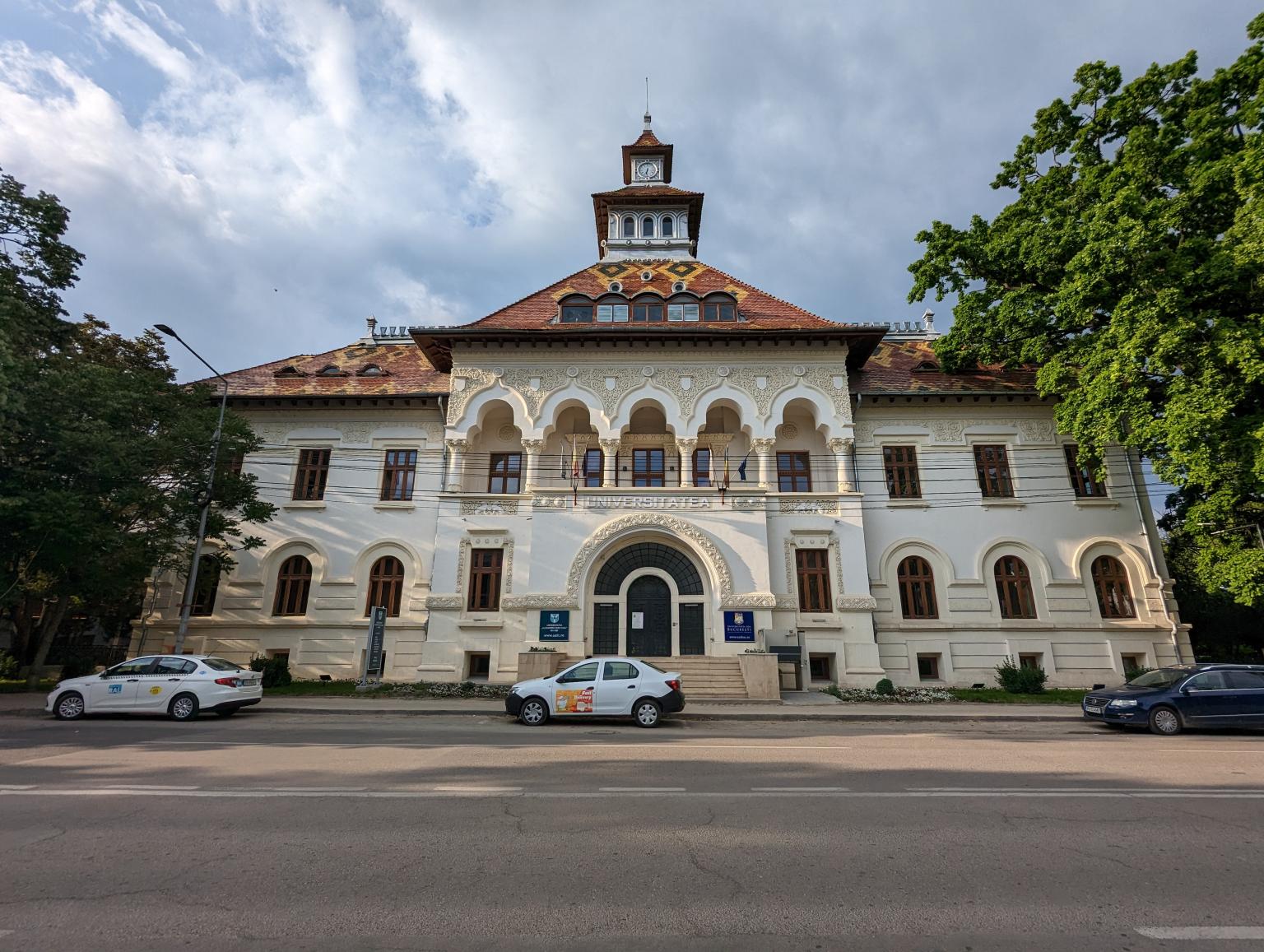
The building of the former Putna Prefecture is a historical monument built between 1913 and 1926, in traditional Romanian style, specific to the 20th century, according to the plans of the architect Daniel Renard. The architectural style was created at the school of the renowned architect Ion Mincu.
The building, also known as the Administrative Palace, has a history of over 100 years.
Around 1870, the local authorities purchased a seat for the county prefecture, namely the "Manuc Caramlău" Inn. Due to the age of the building, they decided to demolish it and build a new and modern one. In 1913, the foundation of Putna Prefecture was laid, the work progressing slowly because many workers were mobilized in the Balkan wars. In 1915, the building was almost finished, but it still could not house the county administration.
A provisional reception was held and work continued after the war in 1918. At the end of 1919, the final reception of the building was signed and the administration offices were installed.
In 1948 the Prefecture building suffered a fire, which led to the modification of the facade and roof architecture. Nicolae Iorga and Nicolae Titulescu are among the personalities who visited Putna Prefecture. After 1968, certain offices of the Focșani City Hall were installed in this building. The earthquakes of 1977 and 1986 seriously damaged the building, and after 1990 it was removed from the public circuit, with consolidation and renovation works continuing to this day.
Located in the civic center, the building has two levels and a basement, with the ground floor being U-shaped with a central overhang. Four columns with composite capitals support the ceiling in the central hall. Two staircases supported by the same type of columns lead to the first floor. Circulation upstairs is through a loggia with access to each room. The main facade emphasizes the entrance to the pediment and the loggia on the first floor, supported by six columns with composite capitals and trilobed arches. Between semicircular arches in the upper part, with sandstone frames, the facade is rhythmic in yellow, red and green, forming a decoration of bunches of grapes.
The building has over 80 rooms, including two large meeting rooms. Perhaps the most attractive and interesting building element is the drawing on the roof tile, a decorative composition with folk motifs from the north of Moldova, made by a painter from Focșani.
The building of the former Putna Prefecture is located on Strada Republicii no. 71, being one of the representative buildings of Focșani municipality. This has stood the test of time and continues to beautify the city of Focșani.
Sursa: www.focsani-turism.info