The municipality of Suceava, the seat of the county, is located on the banks of the Suceava river and near the center of the plateau of the same name (at an altitude of 340 meters).
According to legend, in the western part of Siret space lie impenetrable forests, which people avoid exploring due to the dense darkness of the huge forests. In an extremely dry summer, when the pastures on the hills were affected by drought, a group of shepherds arrived at the edge of the woods with their flocks. Despite the fears generated by the density of the forest, five brave shepherds decided to venture into the unknown. After a long hesitation, they explored the area and discovered a small clearing, covered with tall grass and running through a rushing river. Thinking they were alone in these blessed places, they were surprised to meet a lame old man emerging from the hollow of a giant beech at the edge of the clearing. The old man examined the brave shepherds and suggested that they bring their friends with the flocks and settle on the banks of the Suceava River, as the water dictates. Following the hermit's advice, the shepherds decided to stay there, turning huts into houses and developing the small settlement into a proud village named after the Suceava River. The hermit died soon after the settlement of the first shepherds, and they, grateful, built him a small church from the wood of the beech in whose hollow he had found shelter. Later, other shepherds joined them, turning the village into a prosperous place. On the banks of the Suceva, skilled hunters led by a brave captain also arrived, who, loving the places, decided to stay and built a fortress on the edge of the hill to consolidate their rule over the territory.
The hermit's tree was located exactly where the Mirăuților church stands today, while the fortress was located on the hill from the village of Scheia, where today the ruins of the fortress of Scheia are located. Various legends, including this one about the founding of Suceava, try to fill in with imagination the little-known history until now.
The city was mentioned in a documentary in 1368, when, from the "Citadel of Suceava", Petru Musat communicated to the king of Poland, Vladislav Jagello, that he could only borrow 3000 silvers, not 4000, as was originally assumed. Archaeological evidence has, however, demonstrated continuous habitation on the present hearth of the city since the Neolithic.
From the period of Petru Mușat (1375-1391) to the second reign of Alexandru Lăpușneanu (1563-1568), Suceava was the capital of Moldova. It was placed on the main road that came from Poland and connected with the Danube ports. From here, the roads went to Ardeal, through Țara Dornelor, towards Neamțu Citadel, through Fălticeni and Baia. To the east, a branch extended to the "Tatar road".
The commercial hegemony of the Venetian Republic in the Mediterranean led the Genoese to seek a continental route to the Asian East. Through alliances with Germans and Poles, having Armenian and Greek agents, Genoese merchants also used the Tatar road, which crossed Moldova.
These elements supported the commercial and craft activities of the city. The economic center was located in the vicinity of the royal court, occupying mostly the same territory as the current civic center. Goods from Poland, Venice, Greece and Turkey were concentrated in Suceava, constituting the venue for the great Moldovan fair. Trade was also influenced by Armenian merchants who lived in the colonies formed on this territory. After the capital moved to Iasi in 1564, Suceava's economic importance declined.
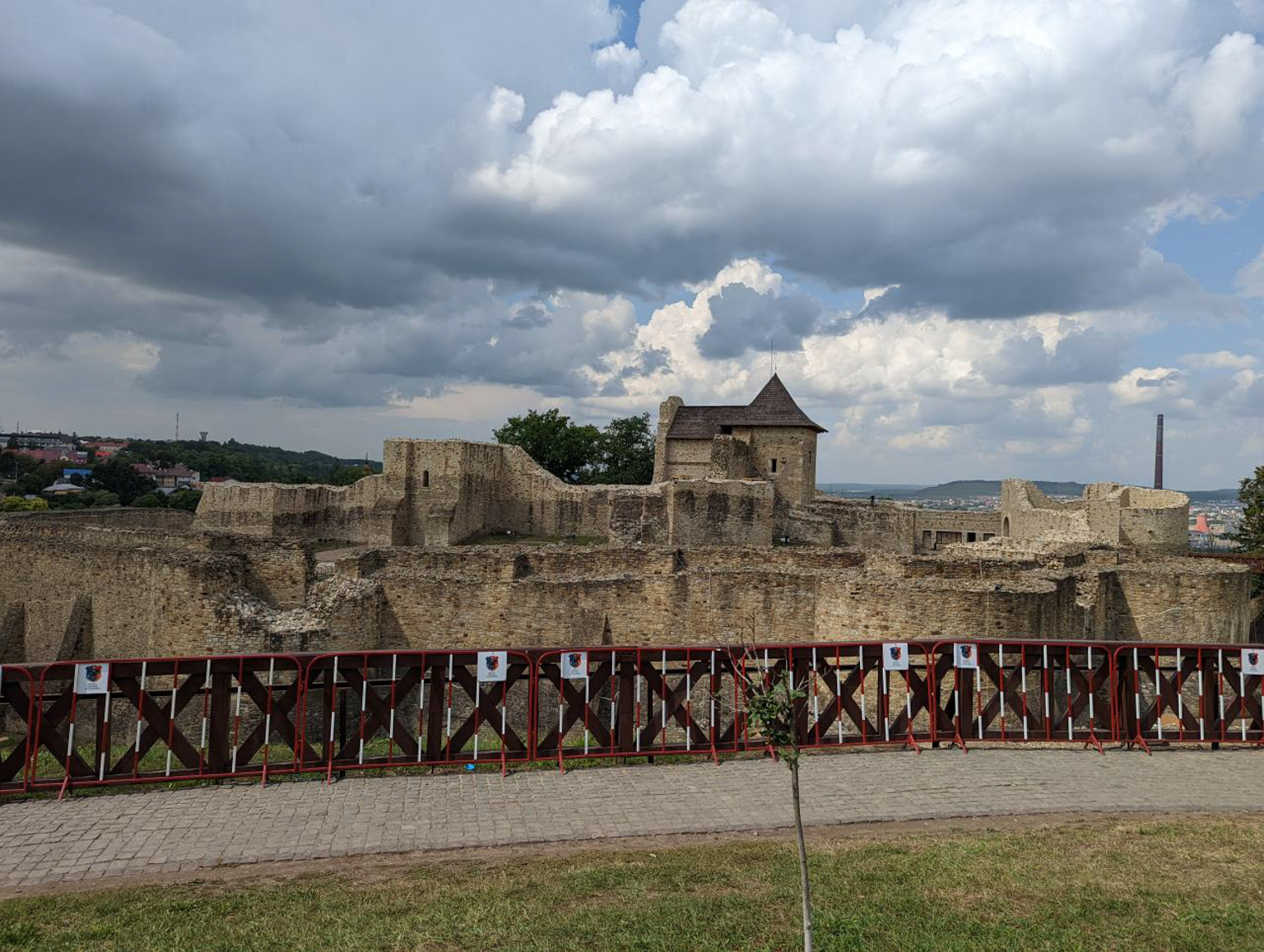
Even though it is in ruins, Suceava's seat fortress impresses with the grandeur and solidity of its walls. At that time, it symbolized the magnificence and represented the political, military and cultural power of the entire country.
Built during the reign of Petru I Mușat (1375-1391), the citadel was located in the eastern part of the city, on top of a high plateau, from where the extensive surrounding regions could be observed. Even now, the citadel dominates a large part of the city.
Being built of stone, the citadel had a rectangular shape, and at each outer corner there was a square tower. The enclosure wall had an average height of 10 meters and was equipped with crenellations at the top.
One of the aspects that strengthened the robustness of the Musa fortress was the defense trench dug in the eastern part, having a width of 30 meters and a depth of 10 meters.
The successors of Petru Musat made significant changes according to the needs. Although he had a peaceful reign, Alexander the Good decided to strengthen the fortress when he learned of the secret treaty between Vladislav Jagello, King of Poland, and Sigismund, King of Hungary, by which they planned to divide Moldavia. Excavations carried out during his reign have brought to light slabs of mortar and calcareous tuff, calcareous sandstone pavements and lime kilns. Dwellings, workshops, barns, a small church and a cemetery were also discovered on the front plateau.
The importance of the fortress increased especially during the reign of Stephen the Great (1457-1504). In the spring of 1457, Ștefan, the son of Bogdan Vodă, arrives in Valea Siretului with 6000 soldiers to face the ruler Petru Aron, the murderer of his father. Through the quick victory achieved, Stefan wins the sympathy of the masses and is proclaimed lord of Moldavia, occupying this seat for almost half a century.
Representing the symbol of justice and independence, Ștefan left the most beautiful page in the history of Moldova. Also known as "the Great", he demonstrated political maturity and a remarkable diplomatic sense from a young age. At the center of his policy, described as "high genius" by N. Bălcescu, were fundamental issues such as the elimination of factors of feudal fragmentation and the centralization of the state internally, alongside the defense of the country's independence externally.
The superior political thinking, the perfect control of the military art, the implementation of its own strategy and tactics in the war were essential factors in rejecting all the attempts of the three great neighboring powers - the Ottoman Empire, Poland and Hungary - to subjugate Moldova.
The army's configuration included mounted soldiers, artillery units, and infantry, an adaptation necessary due to the emergence and diversification of firearms. In parallel, attention was paid to equipping the army with adequate weaponry, purchased from the cities of Brașov, Sibiu, Bistrița, Lviv and, if necessary, even from Venice and Genoa.
Stephen the Great always faced an army numerically inferior to that of his enemies. Thus, his tactic consisted in harassing the enemy, luring him into unknown places, swampy areas and forests, starving the enemy armies by desolating the areas they were going to pass through. He skillfully drew up a war plan and tenaciously implemented it, personally leading the army on the battlefield. Stefan possessed all the qualities of a great commander, qualities that helped him win 34 of the 36 wars fought.
With a remarkable military strategy, a master's ability to make alliances (avoiding fighting several enemies at once) and consummate diplomatic skills, Stephen the Great transformed Moldova into a strong and independent state.
After giving a "lesson" to the Turks in the famous battle of Vaslui in 1475, the Polish chronicler Dlugost noted:
"An admirable leader, who in our day has obtained a remarkable victory against the Turks, deserves most to be appointed commander and leader against the Turks, with the common council, understanding, and resolution of the Christians, while other Christian kings and princes wallow in idleness and civil strife."
Indeed, Stefan Vodă was the only one who could have successfully led a crusade to remove the Turks from Europe, but only through an alliance of forces. He therefore drafted and sent a letter to all the Christian monarchs of Europe, calling them to battle. The letter highlighted the strategic importance of Moldova: "If this gate, which is our country, will be lost, then all Christendom will be in great danger."
In a correspondence addressed to Stephen the Great, called the "athlete of Christ" by Pope Sixtus IV, he declared:
"Thy deeds have brought so great a celebrity to thy name, that they are known to all, and thou art universally praised."
However, the beautiful words of praise were not enough for Stefan, who needed real support, either in the form of troops or in the form of money, but which he did not receive.
In 1492, aware that continuing the fight alone would expose the country to major risks, it was decided to pay tribute to the sultan.
However, this illustrious personality of the Romanian people, facing the hostility of the most powerful state of the time, the Ottoman Empire, assumed the responsibility of stopping the Turkish expansion towards the center of Europe for half a century.
The political conception of the great voivode, who managed to attract the most economically and culturally dynamic strata of the Moldovan society, reflected a specific vision of the Renaissance era and, under these circumstances, the coexistence of military glory with spiritual brilliance is not at all surprising. Stephen the Great's interest in the development of art is evidenced by his numerous religious monuments, characterized by a rare and beautiful architecture, built, according to tradition, after each victory.
Moldova never knew a greater extent, greater prosperity and greater consideration.
Being brave, wise, faithful, a good leader and a lover of the people, the Grand Duke of Moldavia was given praise and appreciation not only from his fellow citizens, but also from foreigners and even enemies.
In 1571, the Czech scholar Jan Bahoslav noted with astonishment that in Venice troubadours were singing the victories of Stephen the Great.
The leg wounds suffered during the siege of the Chilia fortress (1462) tormented him until his death. Of course, even with the presence of famous doctors from Venice and Nuremberg, he could not be saved. Aware of the nearness of his end, he removed the crown from his head and placed it on the head of his son Bogdan Vodă, appointed successor to the throne.
The founder and diplomat, military commander and leader, administrator and man Ștefan Vodă, after marking the chronicles and the century with his achievements, "died with great honor on Tuesday, July 2, 1504".
The complete change of the defense system of the Suceava Fortress became necessary due to the fact that in the second half of the 15th century, artillery was used more and more frequently, being the weapon with which the Turks conquered Constantinople.
In the preparatory stages of the conflicts with the Turks, the fortress was surrounded by a massive wall 2 meters thick and 15 meters high, supported on the outside by buttresses. For the placement of artillery, the walls were provided with crenellations and towers.
Firmly resisting, the fortress survived two Turkish assaults, helping to maintain the country's independence.
In 1476, the Turkish forces led by Mohammed II headed towards Suceava with the intention of conquering the fortress and dethroning Stephen the Great. Although the city was set on fire, the fortress remained impenetrable, and Mohammed II was forced to withdraw permanently from Moldova. Justifying this retreat, the Sultan's secretary, Angiolello, stated: "The fortress was built of stone and was on a hill, outside the city."
In 1485, the Turks resumed their attacks, penetrating by surprise to the walls of the fortress. Although Stefan Vodă was absent from the country, his fearless garrison repelled the enemy's attacks.
Later, a new defensive system was built, consisting of a ditch 20 meters wide, surrounded by a wall several meters high, which had to be climbed to reach the ditch. This wall also had the role of preventing landslides and can still be seen today.
Access to the fortress was through a suspension bridge, and behind the gate there was a rectangular depression, completely surrounded by walls and inaccessible, known as the "trap" or "mouse run". This was covered by a plank bridge operated by a pulley system.
In that fortress, the voivode of the country had his residence. When he returned from the campaigns, he enjoyed himself with his "knights and subjects". Here, Stephen the Great kept the soldiers captured in the war as prisoners and stored the treasures in his cellars.
The buildings in the precinct were covered with glazed bricks, and the walls were decorated with decorative interior tiles. The stoves were covered with glazed and colored terracotta, having various motifs inspired by folk art. The palace was decorated with Venetian glassware, silverware from the West and expensive fabrics from the East.
On the northern level, the guard rooms occupied the ground floor, while the chapel or chapel of the fortress was upstairs, using one of the outer square towers as an altar, and the proscomidia and diaconicon were built into the walls. The painting of the chapel underwent multiple restorations, including one during the reign of Ștefan Vodă, and fragments of the painting are still preserved today in the area of the apse.
On the south side, the rooms on the ground floor and first floor were vaulted, with the ceiling built of bricks. A spiral stone staircase that led to the first floor is still preserved in one of the rooms.
In the western part, apart from the ground floor and first floor, there was also a basement with cellars, highlighted by pillars and stone arches, which can still be seen today. These rooms had a household purpose.
The roof was made of lead or copper sheet.
In 1497, King John Adalbert of Poland, at the head of a massive army well equipped with powerful artillery, entered Moldova. For three weeks and nights the fortress was bombarded with artillery fire, but to no avail. The attempt of the Polish troops to conquer Moldova ended in the disaster suffered in Codrii Cosminului.
Following his military tactic of luring the enemy into the woods, Ștefan Vodă ordered his soldiers to cut down the trees on both sides of the road, leaving them with their tops stuck in the ground. When the Polish army entered the forest, where it was difficult to advance due to the limited space, Stephen's foot troops overthrew the stuck trees, trapping King Adalbert's army in a trap.
Even if Stephen the Great built a real invincible fortress for the country, his descendants no longer show interest in improving the defense system.
In 1538, Petru Rareș refused to pay the tribute imposed by the Turks and surrendered the fortress to them. They looted all the riches and sent them to Constantinople.
Petru Rareș (1527-1538; 1541-1546) was a worthy successor of the blood, a bold leader and passionate about the arts, like his father, Stephen the Great.
At the beginning of Petru Rareș's reign, internal and external conditions were extremely difficult. Through its ability to combine diplomatic skills with surprising military attacks, Moldova has experienced a period of flourishing stability, conducive to economic development and cultural and artistic achievements. With a solid education and a deep understanding of the political realities of his region, Petru Rareș stood out as a character of the Renaissance, comparable to his contemporaries in the West. At a time when the Ottoman Empire was attacking Central Europe under the leadership of Suleiman the Magnificent, Petru Rareș, through remarkable diplomatic effectiveness, managed to maintain Moldova's independence.
It is obvious that his politics could not have prospered without a solid economic and social base. Following his father's example, Petru Rareș based his authority on supporting active social strata, essential for maintaining the country's independence. Moldavian fairs housed significant craft centers, and their production was stimulated by the intensity of trade with neighboring countries.
The figure of Petru Rareș as head of state left a strong impression on Ioan Peresvetov, a Russian scholar. In his "Great Complaint", Peresvetov appreciated that Petru Rareș represents the ideal of the centralized state leader, capable of counteracting the centrifugal tendencies of the boyarism and resisting external pressures. So he recommended him as a model for his student, the future Ivan the Terrible, unifier of Russia.
Petru Rareș was an enthusiastic supporter of culture and art, his support being a luminous equivalent to that granted by Stephen the Great. The brilliant builders of his reign testify to the flourishing of culture in that period, considered one of the happiest in the history of Romanian art.
Alexandru Lăpușneanu promised the Turks that he would demolish the fortresses of Moldavia in exchange for their support to regain the throne. Both sides honored the commitment, and Lăpușneanu burned down the Suceava citadel, transferring the capital to Iasi.
After decades, the Movilești family rebuilt the fortress, but in 1653, it was besieged by Gheorghe Ștefan, a new pretender to the Moldavian throne, supported by the Poles.
Archaeologists discovered two hoards (over 2 kg) in the wall of a trench, including fragments of crosses, paftals, iron bars, talges (silver, blown silver and gold), as well as 300 gold appliques, massive gold jewelry and about 800 of pearls. These artefacts, hidden during the siege of 1653, are essential to understanding the evolution of the art of precious metal workers in the 15th and 17th centuries.
In 1675, at the order of the Turks, Dumitrescu Vodă Cantacuzino placed gunpowder at the base of the walls. The dynamite was neutralized, but the fortress was destroyed by igniting the wood and straw stored inside. Later, following an earthquake, the weakened walls collapsed.
This represented the end of one of the most prestigious monuments of Moldova.
Source: Bucharest-Suceava and in Northern Moldova (Ministry of Tourism, 1977)