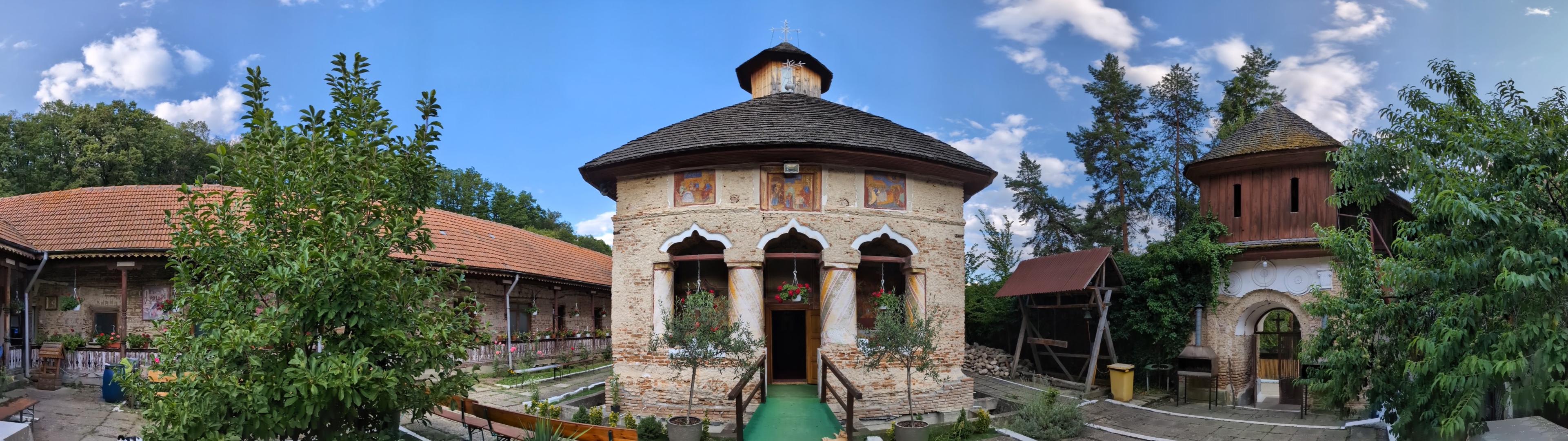
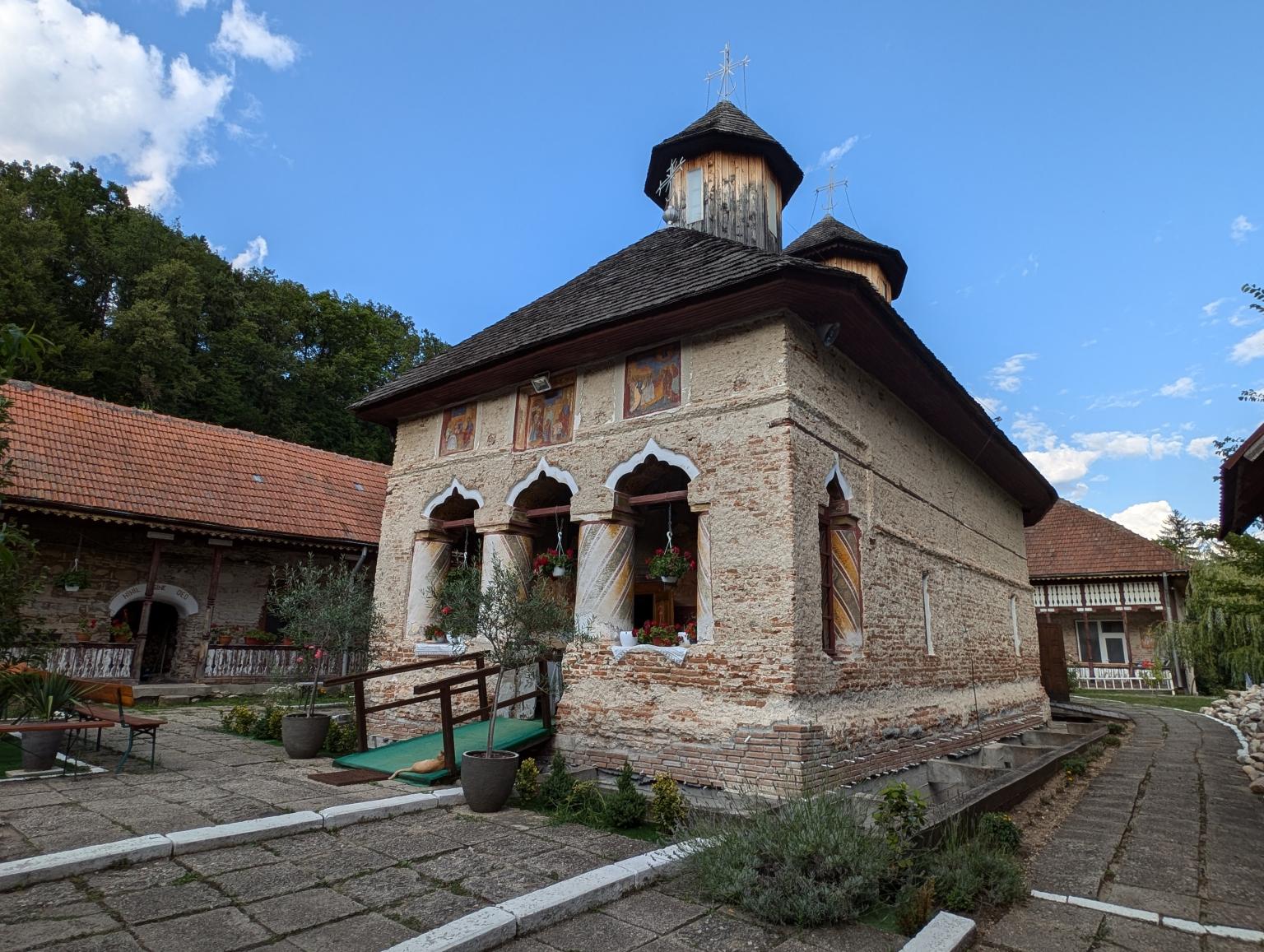
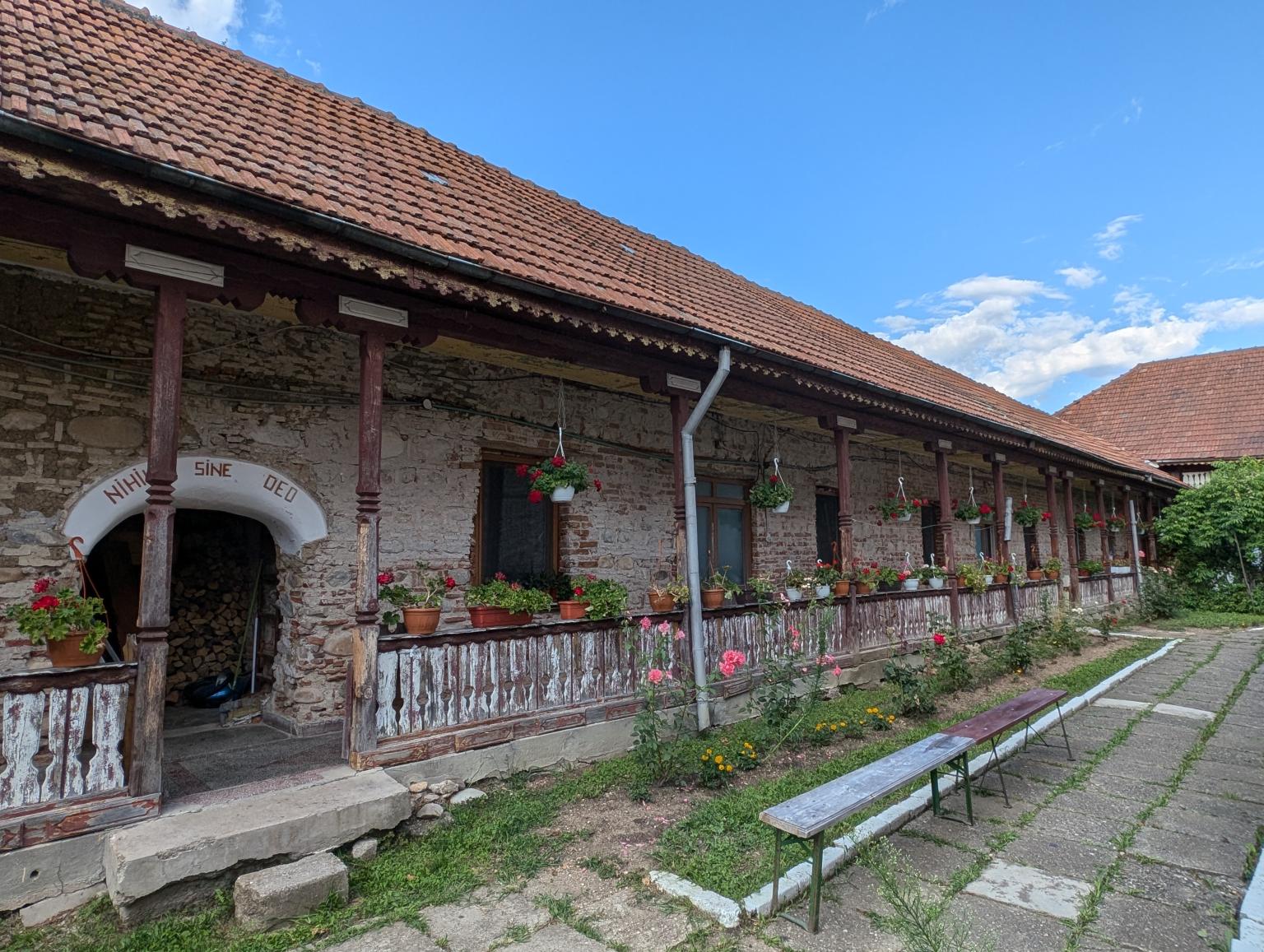
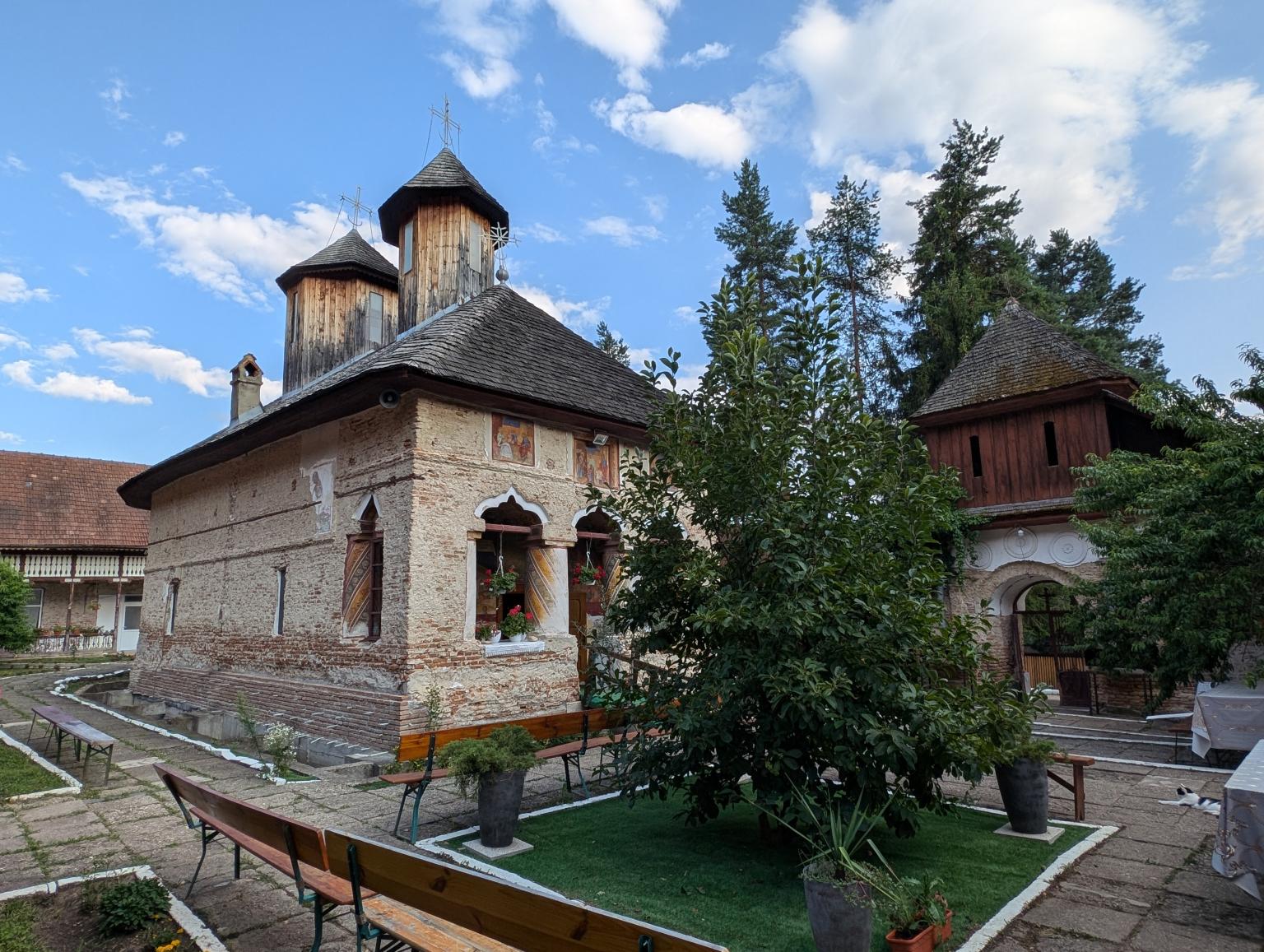
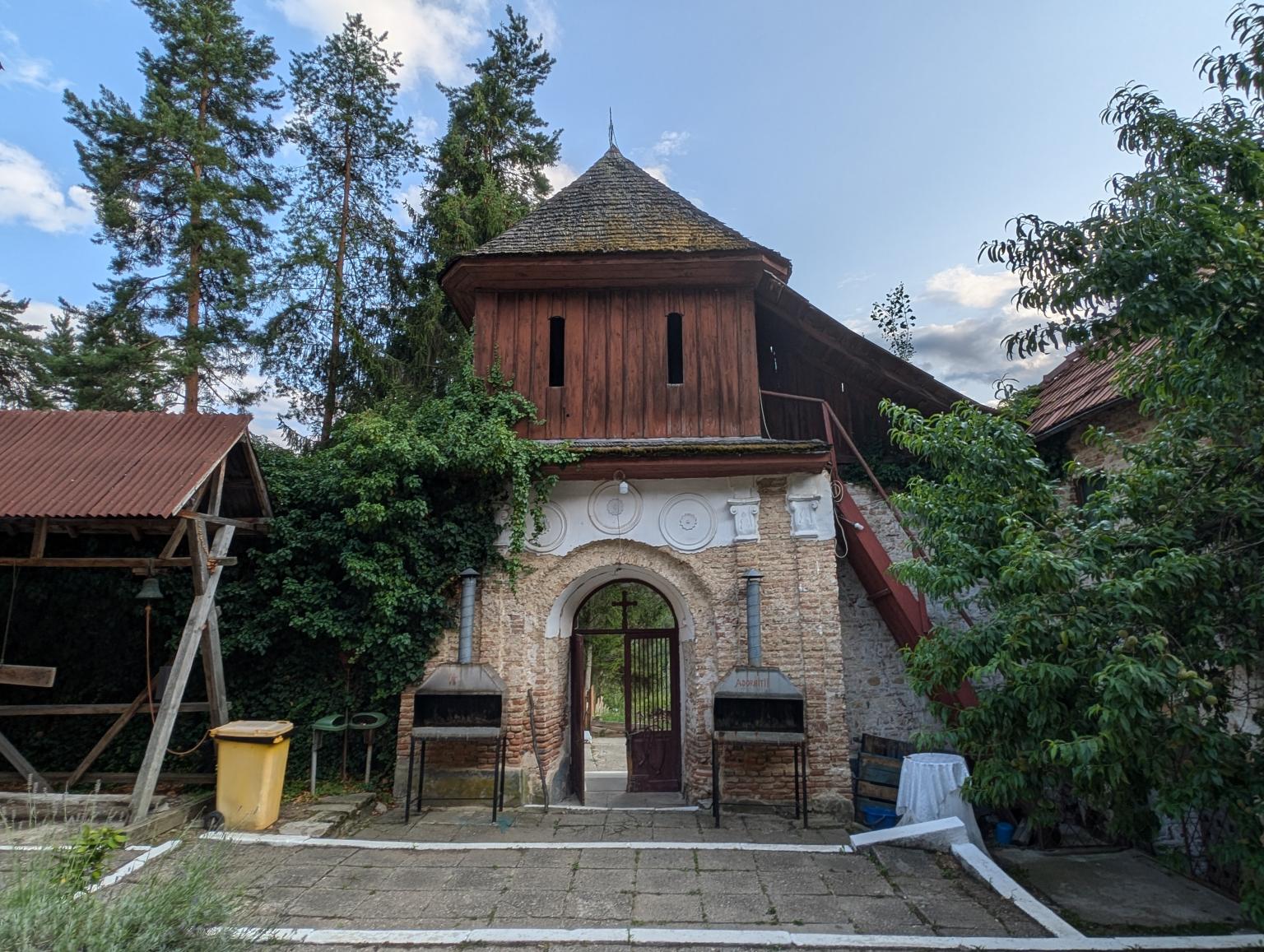
The history of the Bascovele nunnery began over 300 years ago, being built during the reign of the holy martyr Constantin Brâncoveanu (1688-1714) by a member of the powerful Cantacuzino family, the vel comisul Şerban Cantacuzino. Historical sources record that this vel comisul was one of the great rulers of Wallachia in the last decade of the 17th century and the first decade of the following; he held the positions of great comisul, great cupbearer and great speaker.
He proved to be a worthy bearer of the Cantacuzino name, a mediator of peace and understanding within his family and people, and a great benefactor of the ancestral Church. Like the other Cantacuzinos, the vel comisul Şerban had a life full of trials, not being spared by the times at all, but these made him forget our Lord Jesus Christ.
Although he built and helped many holy places, the soul foundation of the vel comisul Şerban Cantacuzino was Bascovele. The monastery came into being following a promise that the vel comisul Şerban made together with his wife, Maria: they promised the Lord that, if he would give them an heir, they would build a church or a monastery. Their wish was fulfilled, Lady Maria became pregnant, but died at birth. Left alone with his little girl, the vel comisul forgot about the promise he had made, but when he also lost his daughter when she was only three years old, he realized that the Good God had punished him and deprived him of the two joys and of what he had given him and his wife following the promise.
Once, on his way to Valcea, the vel commissar Şerban Cantacuzino arrived at the place where the monastery would be built, which at that time was nothing more than a wooded peak with oak trees, hence the name "Bascovele", which means "hill wooded with oak trees". It was a secluded place, with no villages in the vicinity. He thought that this was the right place where he could fulfill the promise he had made to God a few years earlier, that of building a monastery. In a few months of 1695, his thought was fulfilled, with a church dedicated to the "Entry into the Church of the Virgin Mary" being built. Thus, the vel commissar showed his faith in God and his hope in the forgiveness of his sins and those of his loved ones.
He testifies to his beliefs in a beautiful writing, a true document of the soul (beyond its undeniable historical value). In it, the founder says, among other things: And I, as an unworthy one who was ungrateful for this good, lost in countless sins, not only the joy of birth was taken from my eyes, and even birth, first of my wife death deprived me, then of my child. Which, praise and thanks to the Heavenly Emperor and His Most Glorious Mother, I gave, not wavering in the least from the promise I made before, but with great courage I forced myself to fulfill it, I, the servant of God, Sarban Cantacuzino, vel comisu ()where but vericine would add at least a brick, or with anything to strengthen the monastery, to be a founder just like us, having eternal memory..."
Around 1770, the monastery had about 70 living beings, half of them being shemitches, which represents a very small amount large for a small area like this, where there were also other monasteries, Cotmeana and Tutana. Bascovele Monastery has a close connection with Cotmeana Monastery, because for a long time, without a serving priest, priests from Cotmeana came and served, until the beginning of the 19th century, when the monastery began to have its own permanent priest. Monastic life at Bascovele was not disturbed by anything until the secularization of the monastery's assets in 1863, when the monastery suffered, losing almost all its means of livelihood, so that around 1883, with very few inhabitants, it was dissolved, and the church was transformed into a church for the village that had grown up around the monastery. Before these events, we also learn that in 1835, following an earthquake, the church was ruined, being rebuilt after eight years with the support of a benevolent Christian, Ştefu Nicolau, "of Greek descent", and his wife Paraschiva, originally from the city of Pitești (as recorded in the 1843 inscription); on this occasion, two more patron saints were added, also in honor of the Mother of God, the Nativity and the Assumption.
In 1932, the monastery reopened at the decision of the eparchial bishop (of Argeș) at the time, Nichita Duma (†1936), who brought three nuns here from Văratec, and in 1950 everything was rebuilt: the painting, the reconsolidation of the church and the cells, to which other bodies were also added.
In 1991, through the care of His Eminence Father Calinic, Archbishop of Argeș and Muscel, the Holy Synod of the Romanian Orthodox Church approved the re-establishment of three Argeș monasteries, historical monuments: Bascovele, Cotmeana and Glavacioc.
On May 5, 2015, Stavrofora Petronia Dobrescu (founder of the revival of the Monastery ii Robe between September 1992-April 2015) as abbess of the Bascovele Monastery, in order to fulfill and achieve here also the continuity of the administrative and spiritual renaissance of this historic monastery in Argeș.
Source: text taken from the monastery's history
//
From the town of Bascovele, part of the commune of Cotmeana, there is a road to the right that leads to the village of Ursoaia.
In this place, you can visit the Bascovele monastery, founded by Șerban Cantacuzino in 1695. The religious building underwent significant changes in 1843, when the church was rebuilt, and in 1940. The wall erected in 1932 was preserved from the original constructions, the enclosure, the cellar, the belfry and the cells. The current painting of the church, made in fresco, dates from the period 1948-1950.
Source: Bucharest-Sibiu (Ministry of Tourism, 1977)

4 out of 5 stars
based on 0 reviews
If you’ve visited this place, share your thoughts with others
write review