Many monuments related to the activity of great personalities, who sacrificed themselves for the fulfillment of noble ideals, are kept in good condition, instilling in many visitors deep patriotic feelings. Some are located in such a way that they can offer the possibility of a real thematic excursion, dedicated to the period of the national renaissance. The most notable example is a trip from Bucharest to Cozia.
Going to Pitești on the old road, in Leordeni we will remember that at the foot of a forested valley lies a villa that was the mansion of Dr. Nicolae Krețulescu, prime minister of Alexandru loan Cuza, a mansion that the ruler visited in 1863. Further, our attention will be drawn to the valuable heritage of the Goleşti Museum Complex, highlighted on multiple levels by a group of passionate and competent researchers.
The same interest arouses at the memorial museum "Nicolae Bălcescu", the museum complex "Gheorghe Magheru" or the collection of the Cozia monastery where the two coats of arms of the Romanian Principalities are kept here, with a disturbing foreshadowing of the great event of January 24th, 1859, "the great day of the 19th century ".
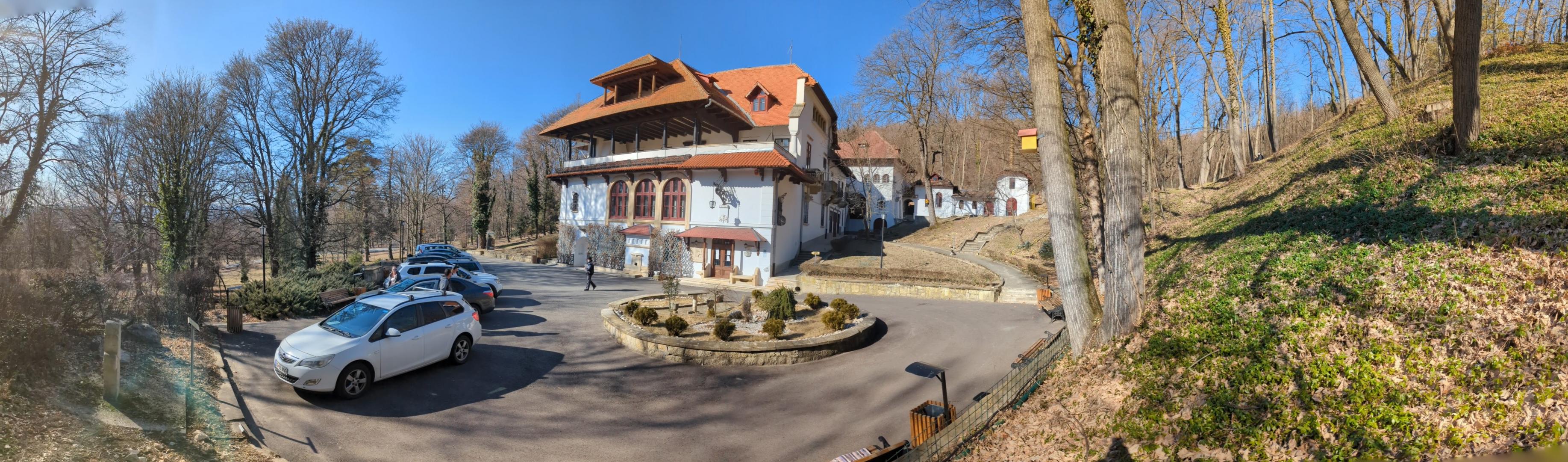
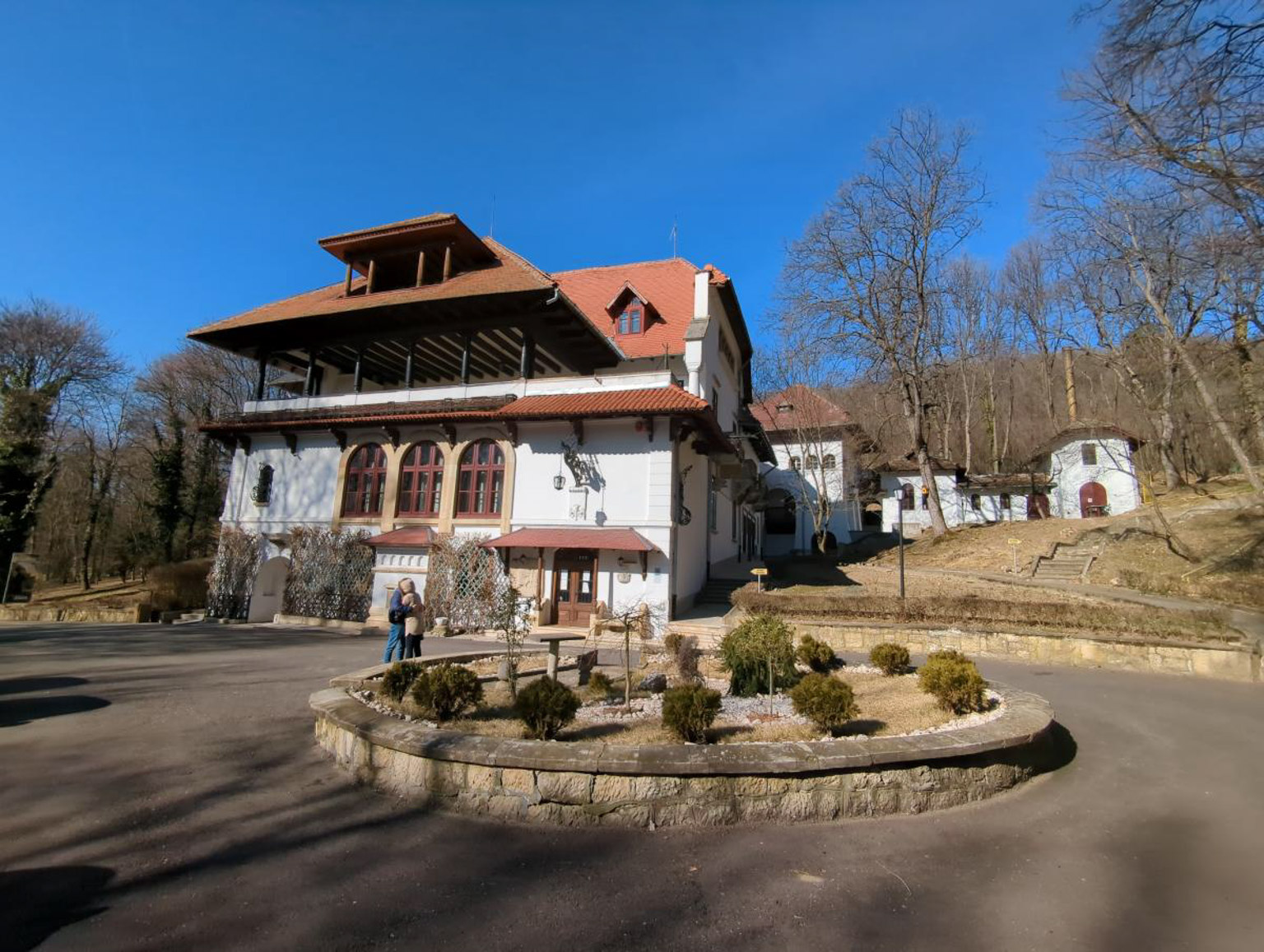
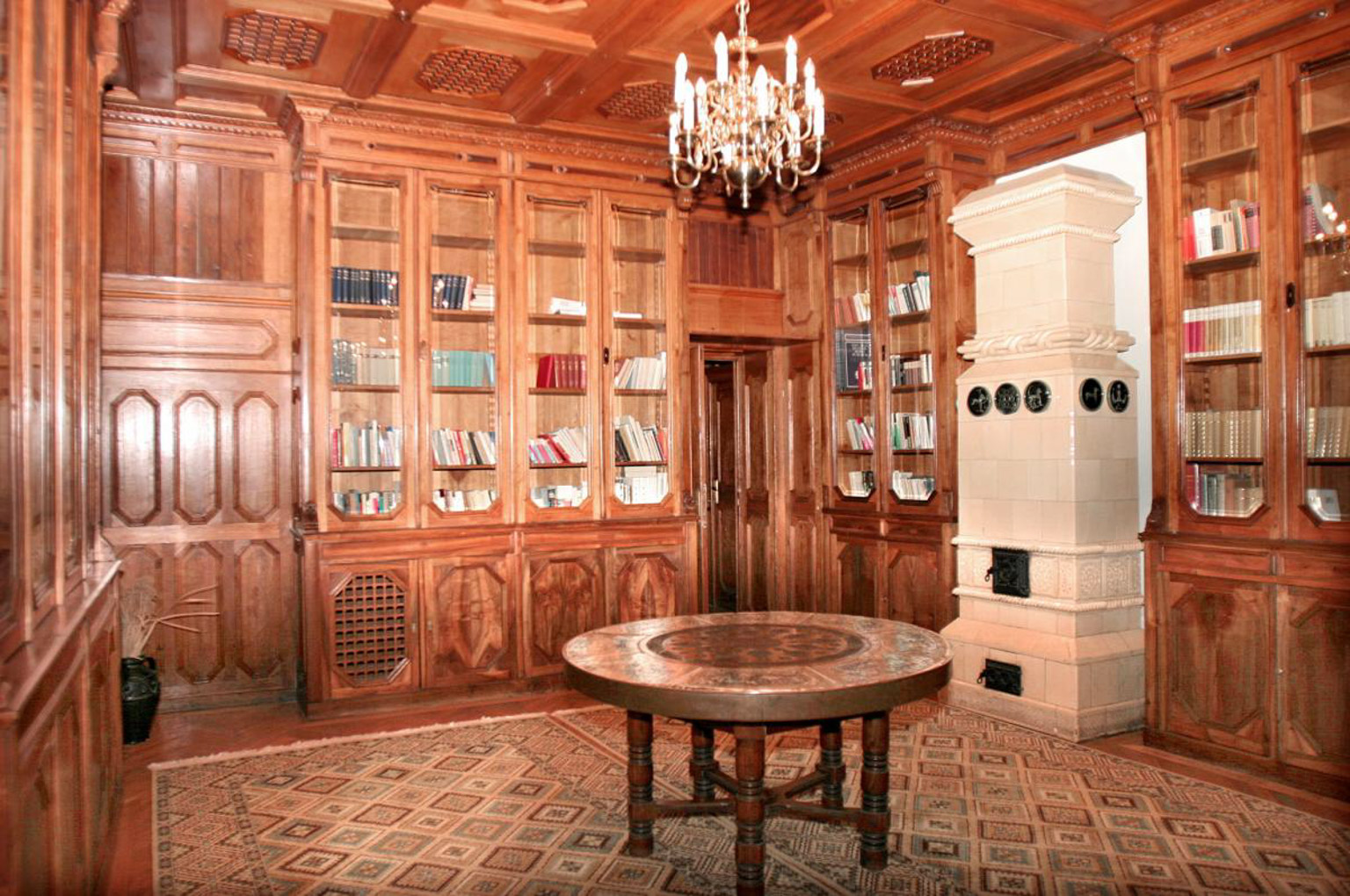
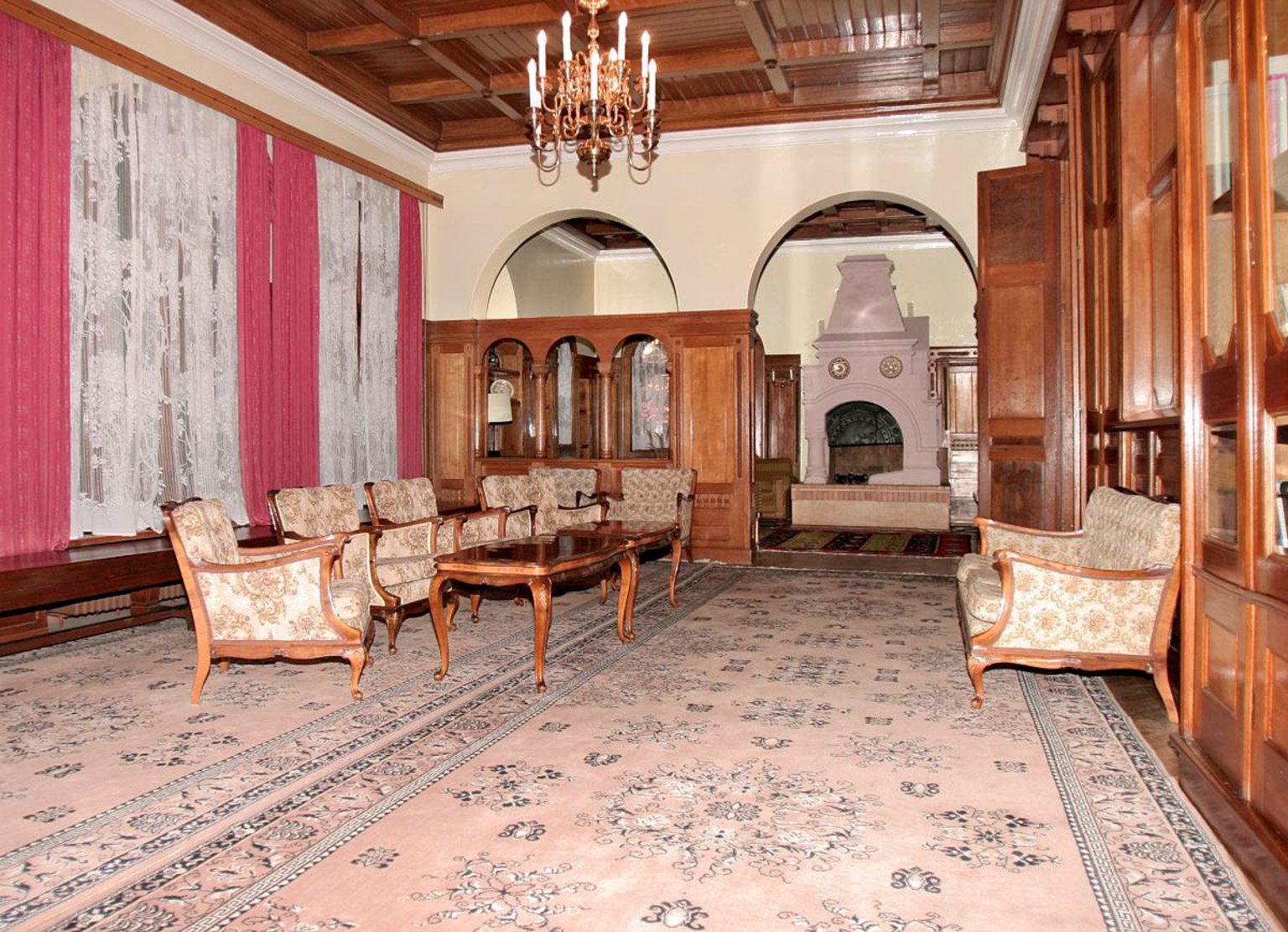
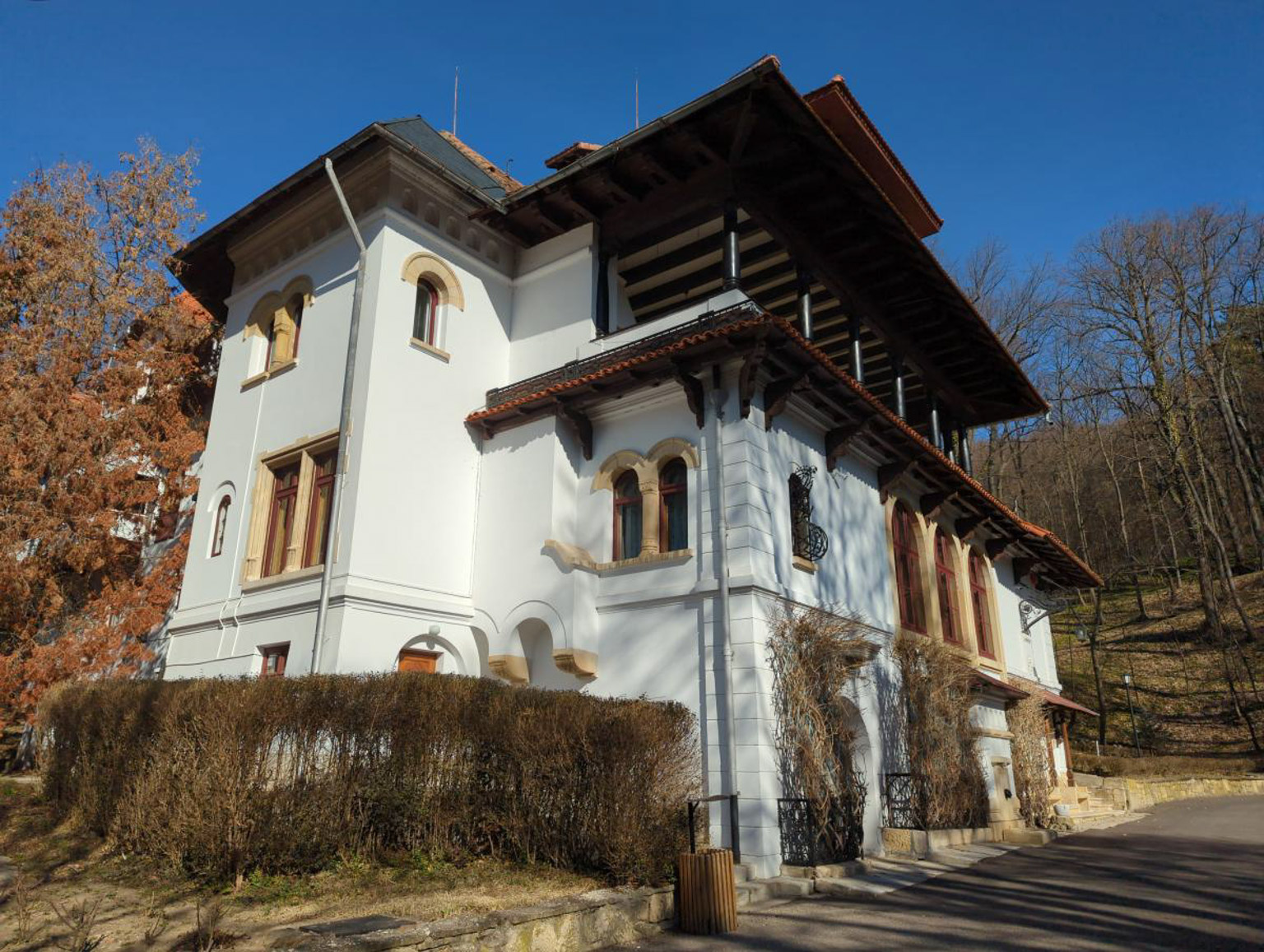
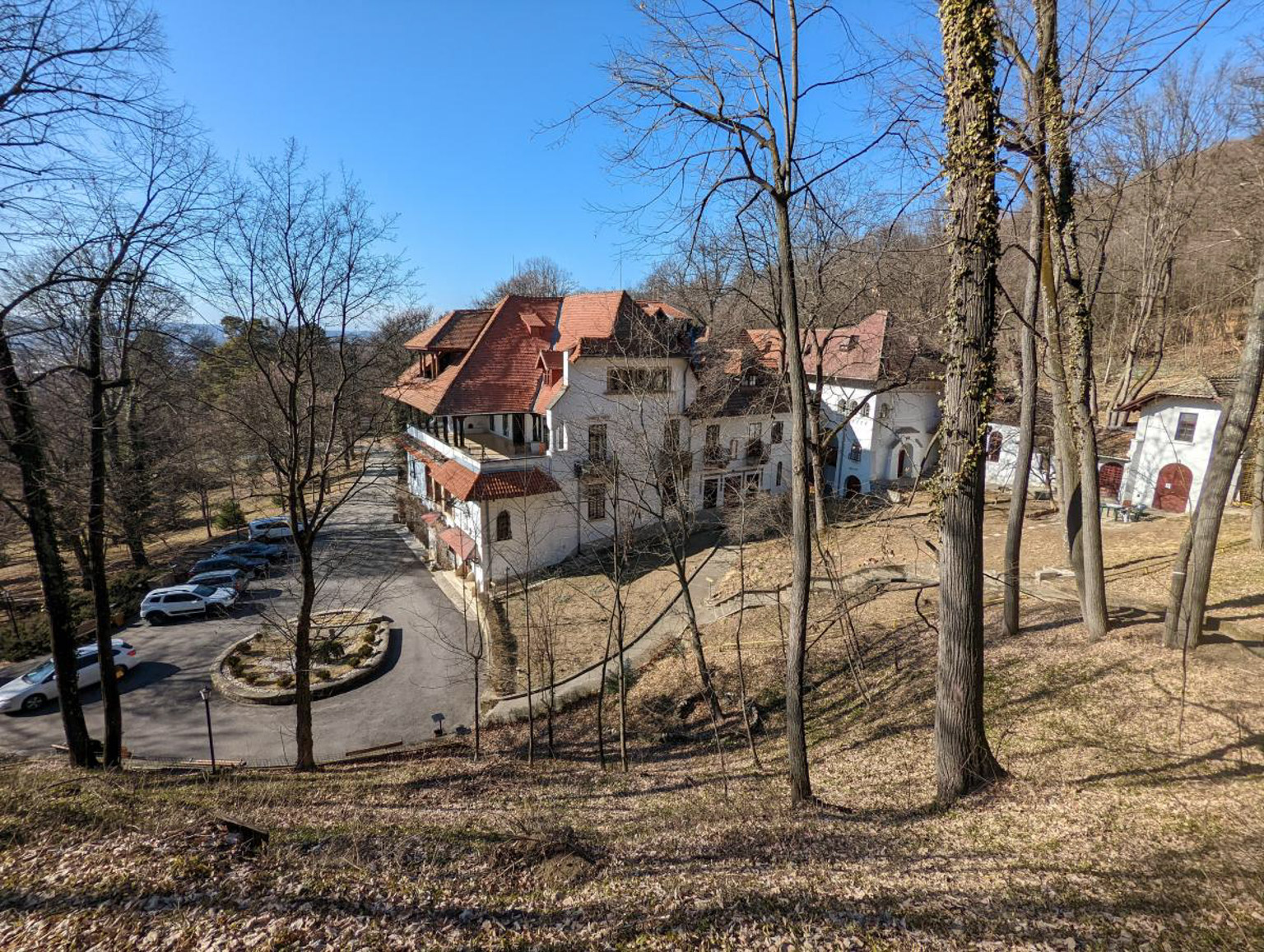
Monuments that have entered our consciousness are well preserved and valued, others were covered by oblivion. Among them is "Florica", the former mansion of the Brătians, on the outskirts of Ştefănești, where the River Doamnei flows into Argeș River, near Pitești.
There are numerous references to this mansion, in the correspondence of the Brătianu family, in the two volumes of Sabina Cantacuzino, as well as in the cycle of poems entitled, "Florica", written by lon Pillat, a descendant of this important family.
After 1948, no tourist guide mentions the place, the reasons for the omission being obvious, with the exception of a small memorial plaque placed on the facade of the building. The estate of "Florica", among others, has returned, in 1844, after the death of the great nobleman Constantin Brătianu, deputy in the Public Assembly and deputy of Argeş, to his youngest son, lon.
His youth was tumultuous, apparently, after he took part in the revolution of 1848. As the youngest of its leaders, he was forced to go into exile in France. Here he completed his studies at the Collége de France and the Sorbonne, meeting Jules Michelet, Edgar Quinet, Pierre Leroux and other great personalities, who became fervent supporters of the Romanian cause.
Making national propaganda, he was involved in an assassination attempt of Napoleon III and got imprisoned. With the help of famous lawyers, his sentence was commuted to Dr. Blanche's health home in Passy.
After returning to his homeland in 1856, marrying in 1858, he began building the "Florica" mansion, where there were only three rooms from the time of the royal vineyards, one of which was occupied by old man Oprică, the boar and his wife. The choice of place proved to be inspired by the intense activity of the future politician, because when he was to be detained on the ministerial bench or in the parliamentary tribune, Florica, being very close to Bucharest, was a real home for him, where he always found health, body and spiritual strength".
The end of 1865 and the beginning of the next year, kept Ion C. Bratianu away from Florica. He went abroad, from where, failing to convince the Count of Flanders to accept the throne of the United Principalities, he brought Carol de Hohenzollern. After holding the ministerial portfolio between October 27, 1867 and November 16, 1868, lon Brătianu returned to Florica, constantly dedicating himself to it until 1876.
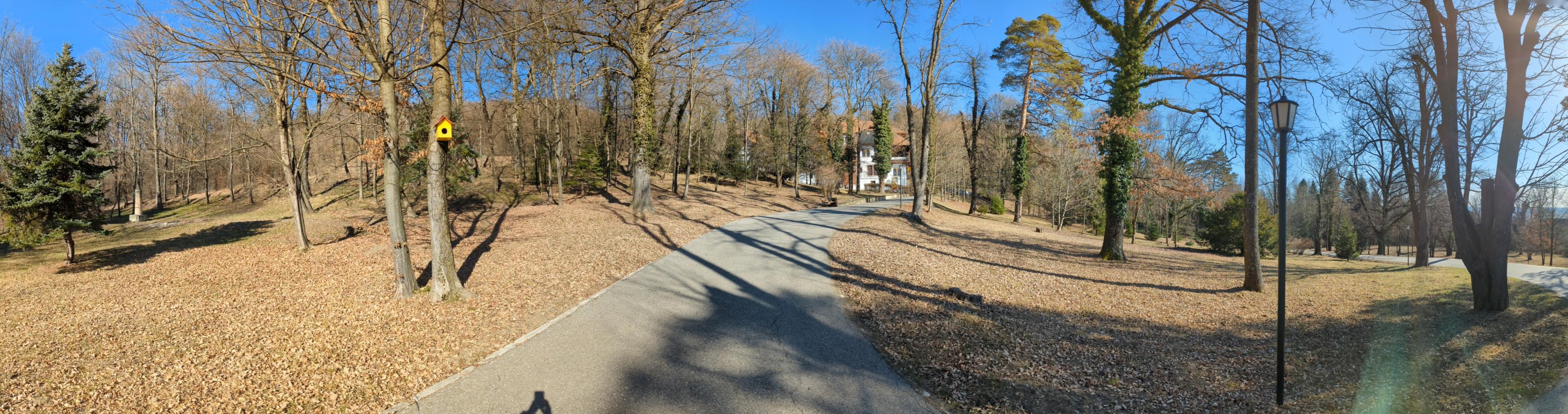
During this period, a large alley was arranged with the help of Alexandru Golescu-Albu, a passionate horticulturist. He paid special attention to the surrounding vineyards and wineries, here, producing wine "systematically maintained and aged", which could be sold since 1869 by the thousands of bottles. With the formation of the coalition by "Mazar Pasha" - the name given by the Turkish army to the Englishman Lackey, who settled in a house next to the Enei Church in Bucharest - here it was practically the birthplace of the National Liberal Party "as the most numerous and best disciplined party".
Since then, lon C. Brătianu, "begins to feel and to gradually develop his human qualities - as a statesman", as Titu Maiorescu said. From July 24, 1876 until March 23rd, 1888, he would be prime minister, always linking his name to the greatest event of his time, the war for independence.
After the resignation and filing of the lawsuit that had been filed against his government, lon C. Brătianu had more time to deal with the mansion and the farm, but, in a short time, the old man, diminishing his full strength was taken over by his eldest son, although he was a young engineer enrolled in the state service in 1889, under the direction of Anghel Saligny and with works in Moldova or Dobrogea, lon I. C. Brătianu found time to rush often to his hometown.
On May 1, 1891, Ion Brătianu set off in his carriage from "Florica" to Valea Mare. Although very short distance, he did not have the resources to finish the road ... In a few days, on May 4, he passed away, the last of the stars of the pleiad that had shone in the sky illuminated by national ideals in 1848. Starting with King Carol I, great personalities came to his catafalque and at his funeral, the whole hill was crowded with people, much of it coming from far away.
Prominent figures of Romanian political life and culture had passed through the "Florica" mansion over the years. Usual visits were made by the Goleşti family, neighbors and colleagues of ideals, Nicolae Kretulescu and Alexandru Lahovary from Leordeni, not far from there. Gregoriu Ștefănescu, born in Rucăr of Argeș county, on his way to the mountains for his geological research, stayed for a few days at "Florica", several years in a row, for the good air, to alleviate his weakness caused by phthisis. The future poet Ion Pillat, nephew of lon C. Brătianu from the marriage of one of his daughters with a parliamentary landowner from Moldova, also spent his childhood at "Florica".
After the death of lon C. Brätianu, his eldest son became the head of the family, whom, when the real estate was divided between the brothers, Florica returned to him".
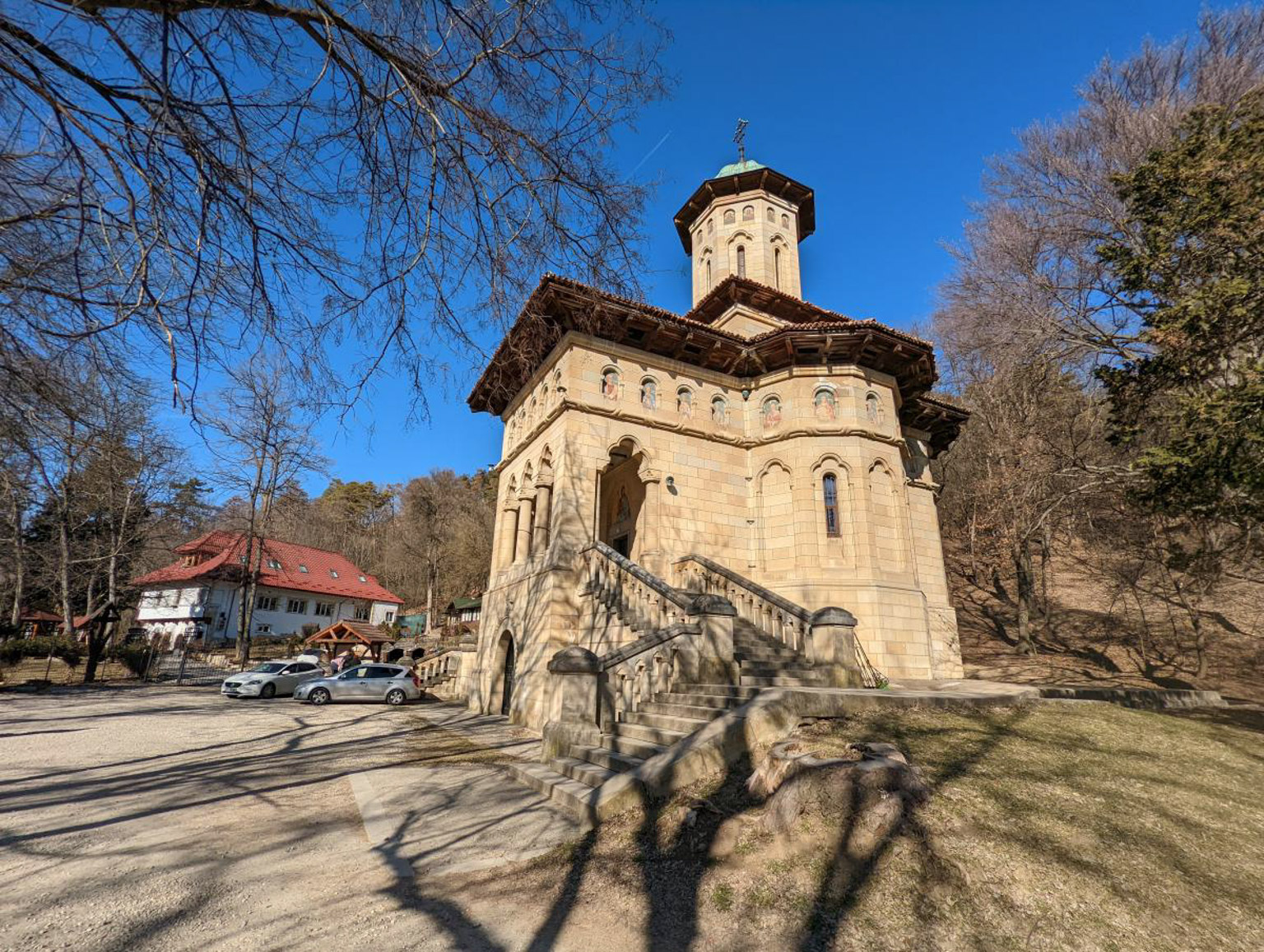
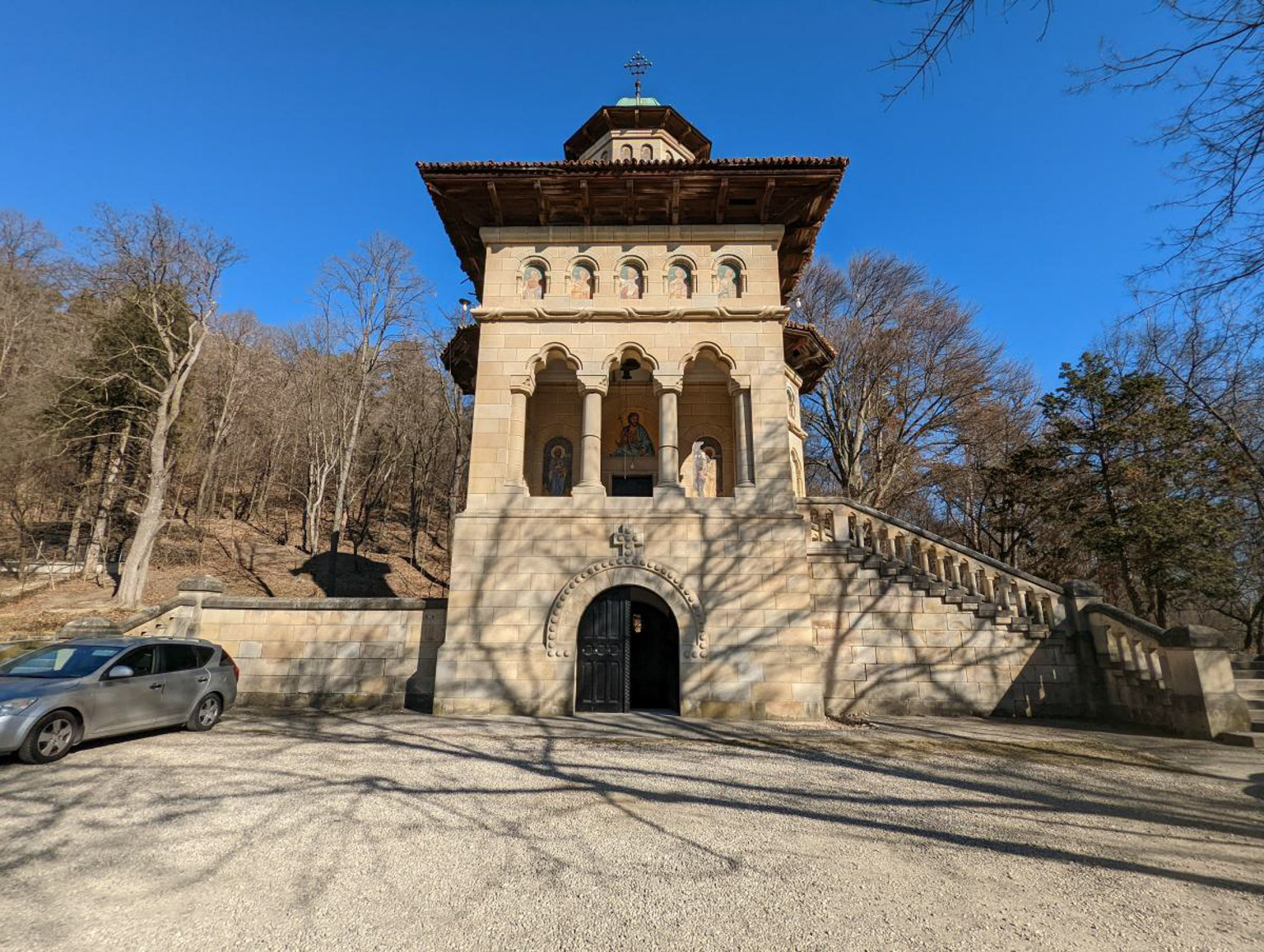
For „Florica: lon I. C. Brătianu, as his sister Sabina Cantacuzino wrote,“ already had, like his brothers, an inherited love, because of the childhood spent there... This love (...) went growing up to the end of his life and had become a passion: everything that Florica had in terms of buildings, gardens, stables, cattle of all kinds, birds, roads on the hill and in the forest, not to mention the comfort and interior beautification of the house) what could adorn this place, made more dear for us by building the church where four members of the family rest now.
"The chapel at" Florica "was built by Andre Lecomte du Noiiy, a renowned architect, who came from France to restore the church of Curtea de Argeş, and who also remained in Romania until his end. Here lon I. C. Bratianu also brought the wooden church of Horia from Albac.
Passing through the Apuseni Mountains in the autumn of 1907 and learning that the local authorities of Albac had decided to destroy it, he hurried up to buy it and bring it to the country, overcoming many difficulties such as those with the border guards from the Giuvala pass, who did not take long to stop him get through. The great patriot and politician saw in the modest religious monument the same symbol as his nephew, the poet lon Pillat: The ancestral faith tied in the hard roofter". In memory of the three martyrs of 1784, lon I. C. Bratianu took care to alter Horia’s church by adding the altar of the church from Cărpinişul of Cloșca with the chalice of the one from Mesteacăn, from which Crişan prepared the Communion for the moți peasants instilling the spirit of uprising in the fight for national justice and freedom. As it was inappropriate to use two consecrated churches on the same spot, Ion I. C. Brătianu decided to turn it into a museum, and after 1947 Horia's little church was moved to the park of Băile Olăneşti resort.
As his father before him, Ion I. C. Brătianu reached the highest dignitaries, becoming the leader of the National Liberal Party and a highly regarded statesman. A strong personality, with extensive experience acquired at an early age, in 1877 he accompanied his father, to the general HQ of the Romanian army in Bulgaria, the undisputed leader of the Liberals, combined his vocation as a politician with his knowledge imposing himself in the political scene since the end of the 19th century. His father's long struggles for the realization of national aspirations, as well as the bitter disappointment experienced by the Romanian people, gave him relentless tenacity and exceptional authority in domestic political life, as well as in international diplomacy.
Supporting, in the Crown Council of Sinaia, on July 21, 1914, Romania's neutrality in the first great world conflagration and signing two years later the treaty with the representatives of the Entente, lon I. C. Brătianu had prepared the entrance in the war for the unification of the nation. He had made this historic decision after long turmoil, after passing and meditating deeply at the grave of his father, one of the proponents of Romanian Independence.
The retreat of the army and government to Iași, after the occupation of the Capital by the enemy, kept Ion I. C. Brătianu away from his mansion at "Florica". The mansion was occupied by the enemy, taking possession of all family objects, supplies and wines. It seems that a nephew of Marshal Mackensen settled here. Far from "Florica" were detained the other members of the family, whom the authorities forbade, in 1917, to attend a religious service held at Ion C. Brătianu’s grave.
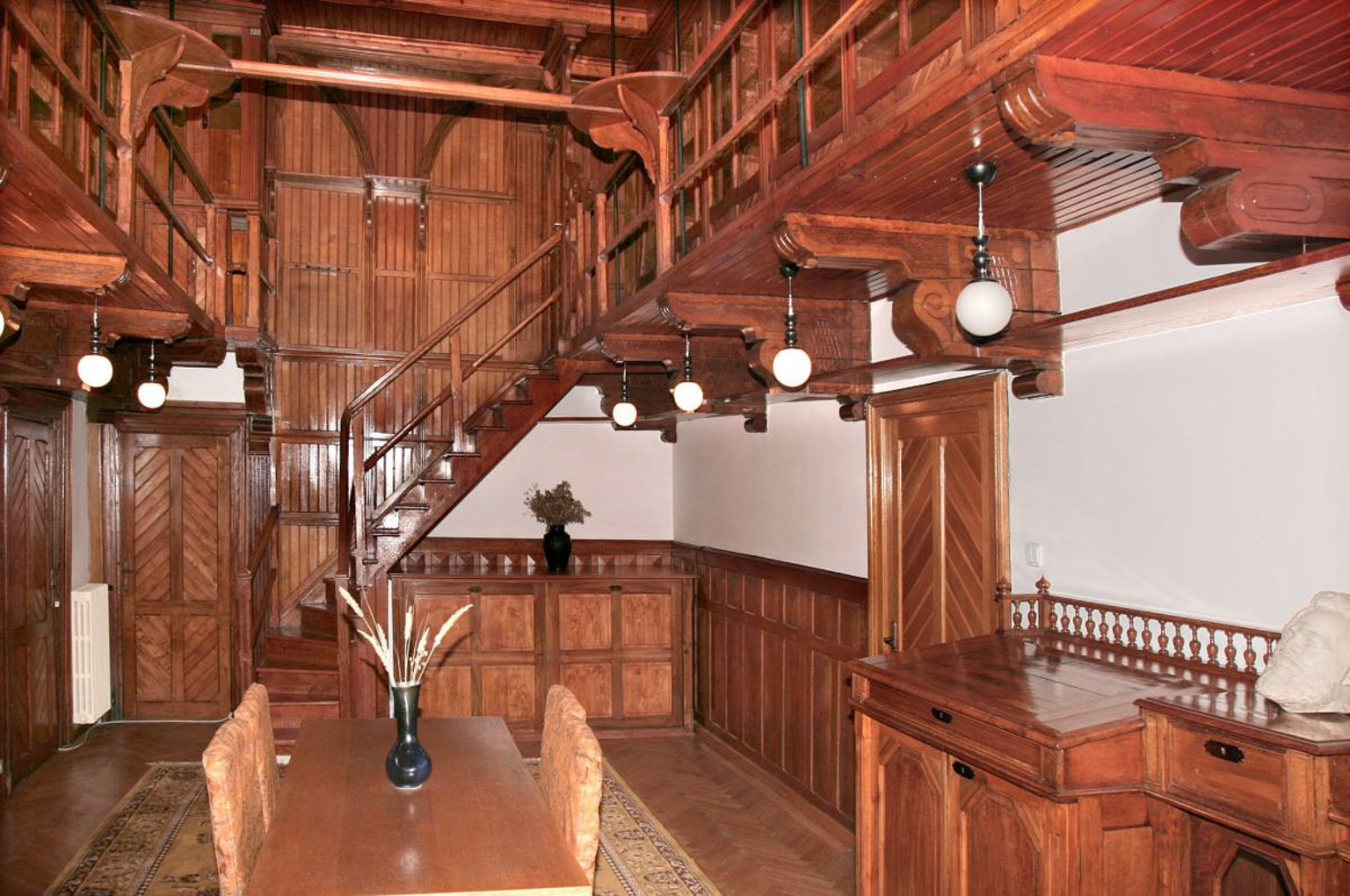
By the end of the war, although caught with problems of national interest, lon I. C. Brătianu also found time to refurbish the mansion. After a short time he was to leave for the Paris Peace Conference where he was forced to face the representatives of the great powers, who often neglected the interests of small countries.
Analyzing his activity before and after the end of the war, I. G. Duca, his close colleague during the long external crisis that led us to the unification of the nation, Brătianu was able to make mistakes, to have weaknesses, but the most unreconciled of his enemies will have to admit that what characterized him above all was the strong and deep sense of our national dignity. He did not only defend the material privileges of his country, he sought to preserve its moral prestige also; the European chancelleries knew that they could use neither intimidation nor humiliation during negotiations. "Although he failed to fully achieve the results he was pursuing for the benefit of the country, lon I. C. Brătianu left a strong impression at the Peace Conference, being considered far more versed than any of the four greats, none of whom were acquainted with his diplomatic dexterity. "
After retiring from the Peace Conference, Ion I. C. Brătianu, taking into account the wear and tear of the National Liberal Party in wartime governments, went on to consolidate organizations and prepare the strategy for returning to power. The campaign was conducted from his mansion. Here, in the summer of 1921, an exceptional political event took place, reported to George G. Mirzescu in a confidential letter from a well-known liberal journalist. King Ferdinand, before a visit abroad, called Ion I. C. Brătianu in the audience, wanting to build on the general situation and especially on the attitude of the National Liberal Party. The authoritarian leader of the liberals, under the impression that the government is trying a phase of emancipation from his tutelage ", refused to come. The king, in the desire to find the necessary solutions to overcome the political crisis, gave up the protocol, requesting an audience with Ion I. C. Brătianu ". He received the king on July 16, 1921, at his mansion, and the king came to "patient" him, assuring him that he would be recalled to power in autumn. With all the precautions for keeping the discretion over the audience ", the king's gesture sparked discussions among politicians, Take lonescu recounting in a circle of friends:" I asked the king if it is true that he went to Florica's and what do you think he answered me? Yes, of course I went to Florica because otherwise I could not go abroad without consulting the president with which I made Greater Romania. ”Ion I. C. Brătianu's maneuver, in fact, should not have surprised anyone, his great authority being already known by many. Only Clemenceau had declared in his confrontation with the Romanian leader at the Peace Conference that "No one can be a sovereign and a party leader at the same time."
After this audience "of the king at Florica " the Bratian dynasty proved to be stronger than that of the Hohenzollerns. Coming to power at the beginning of 1922, lon I. C. Brătianu managed, during the great liberal government, to adopt a series of measures in order to complete and consolidate the economic, administrative and political unity of Greater Romania.
When Ion I. C. Brătianu died on November 24th 1927, his body was buried in the family church at Florica. He had left to lead the party and the government his brother Vintilă, who, towards the end of 1930, died in Mihăiești, in Vâlcea county, his body was deposited in the chapel at "Florica".
Continuing the family tradition Constantin-Dinu Brătianu later took over the leadership of the National Liberal Party. In this gallery of great personalities a notable presence was of George Brătianu who, in addition to the qualities of a politician, inherited or acquired from his father lon I. C. Brătinu, consecrated as a historian of brilliant reputation.
After the dissolution of the National Liberal Party and the arrest of its last Bratian leaders by the communists, the oblivion overshadowed the memory of the personalities that had enlivened it.
An article published in Almanahul Turistic 1991
On the beautiful hill like an adorned chest "was organized the Farm of the Experimental Wine Resort Ştefăneşti, continuing the tradition in a rich and valuable ampelographic collection.
Here we also find the Chapel, let us not forget that here lie Constantin I. C. Brătianu, who died in a cell in 1950 in Sighet, and Gheorghe Brătianu, who died on April 17, 1953 in the same place in tragic conditions and Constantin C. Brátianu, who passed away in 1955.
Even if we are just passing by Florica, “where memory lights candles", let us turn our thoughts for a moment to the memory of those who fought for the unification of the country, for its prosperity under the sign of independence and dignity.