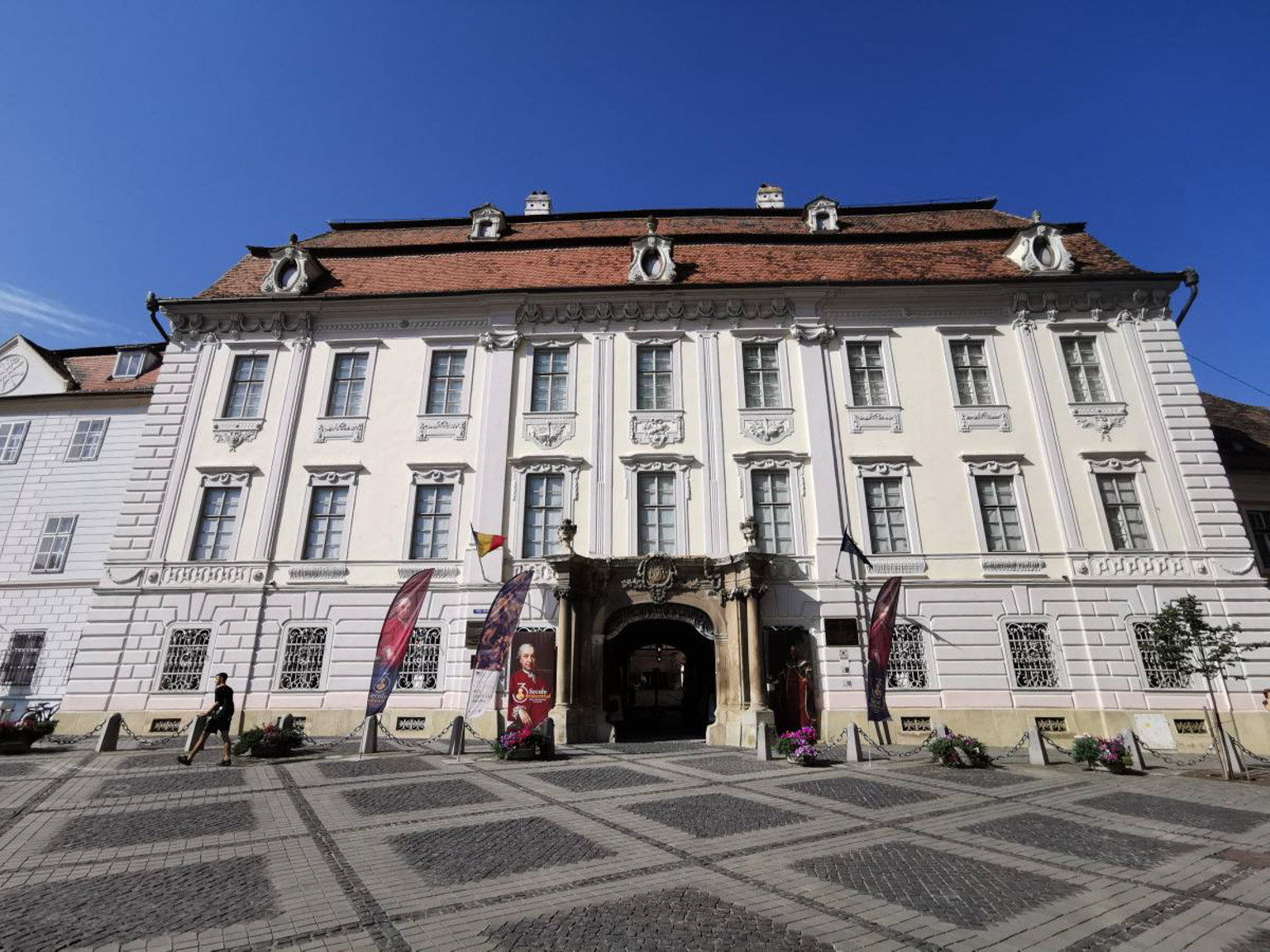
The Brukenthal Museum, with over 1 million pieces in its heritage, is considered the oldest museum in Romania, being one of the representative cultural institutions for Sibiu and the country.
Built in the period 1781-1785 according to a plan designed by a Viennese architect in the late Baroque style, the building impresses with the austerity of the facade, the sober line of the main portico and the atlantes in the inner courtyard.
The massive stone portal, decorated with Samuel Brukenthal's coat of arms, dominates the entrance, and the corridor supported by stone columns leads to rooms decorated with flowered silk tapestries, Rococo and Empire style stoves, and wooden panels depicting mythological scenes or musical instruments .
The passage to the festive courtyard is made under the vaults of the transversal tract, flanked by two Atlanteans carved in stone.
In 1790, Samuel Breckner von Brukenthal inaugurated the art collection in the museum building, which at that time included 1090 paintings, a Flemish breviary with miniatures from the early 16th century, over 400 engravings, numismatic pieces and mineralogy, archaeological objects from the time of Roman rule in Dacia, gilded vessels made by Transylvanian goldsmiths and a vast library.
The collection became a public museum in 1817, in accordance with the testamentary decision of the founder, and after the release, the museum was scientifically reorganized, becoming a complex museum with five sections: fine art, folk art, natural science, history and library.
In the courtyard of the building there is a lapidary with works in Gothic, Baroque or Renaissance stone, representing coats of arms, statues, epitaphs and door frames. Remarkable is a stone portal dated 1577, sculpted by Thomas Lapicida in the Renaissance style, coming from a house in Sibiu, on Tipografilor street no. 4.
Source: Sibiu and surroundings (Ministry of Tourism 1979)