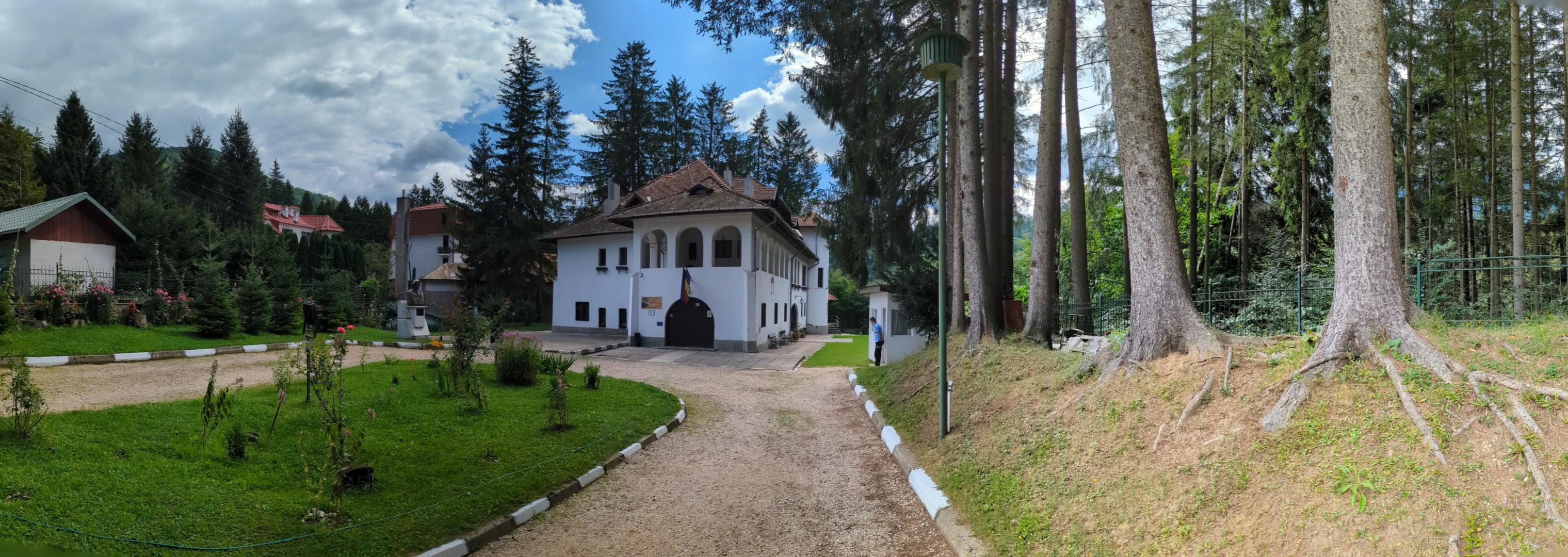
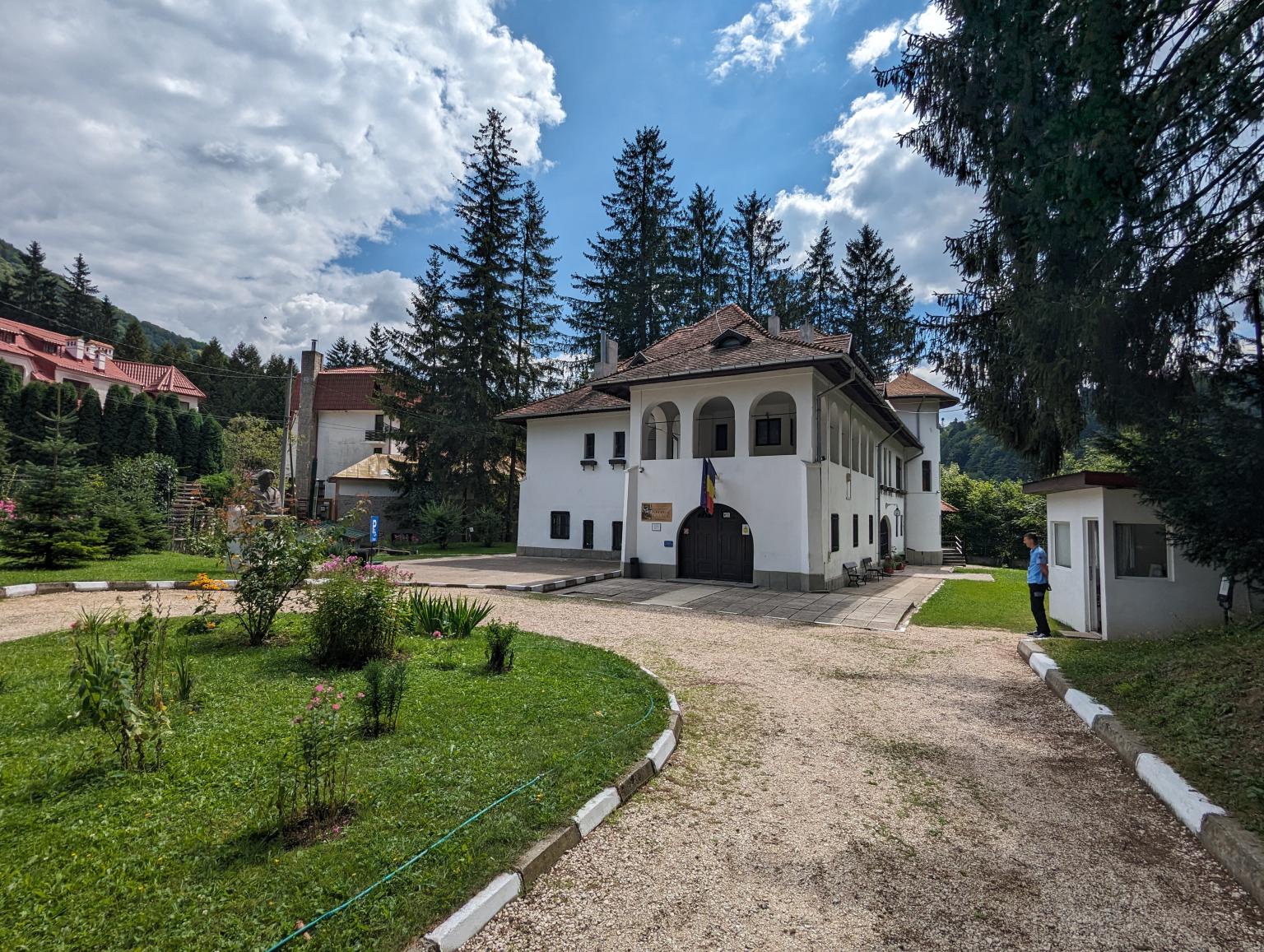
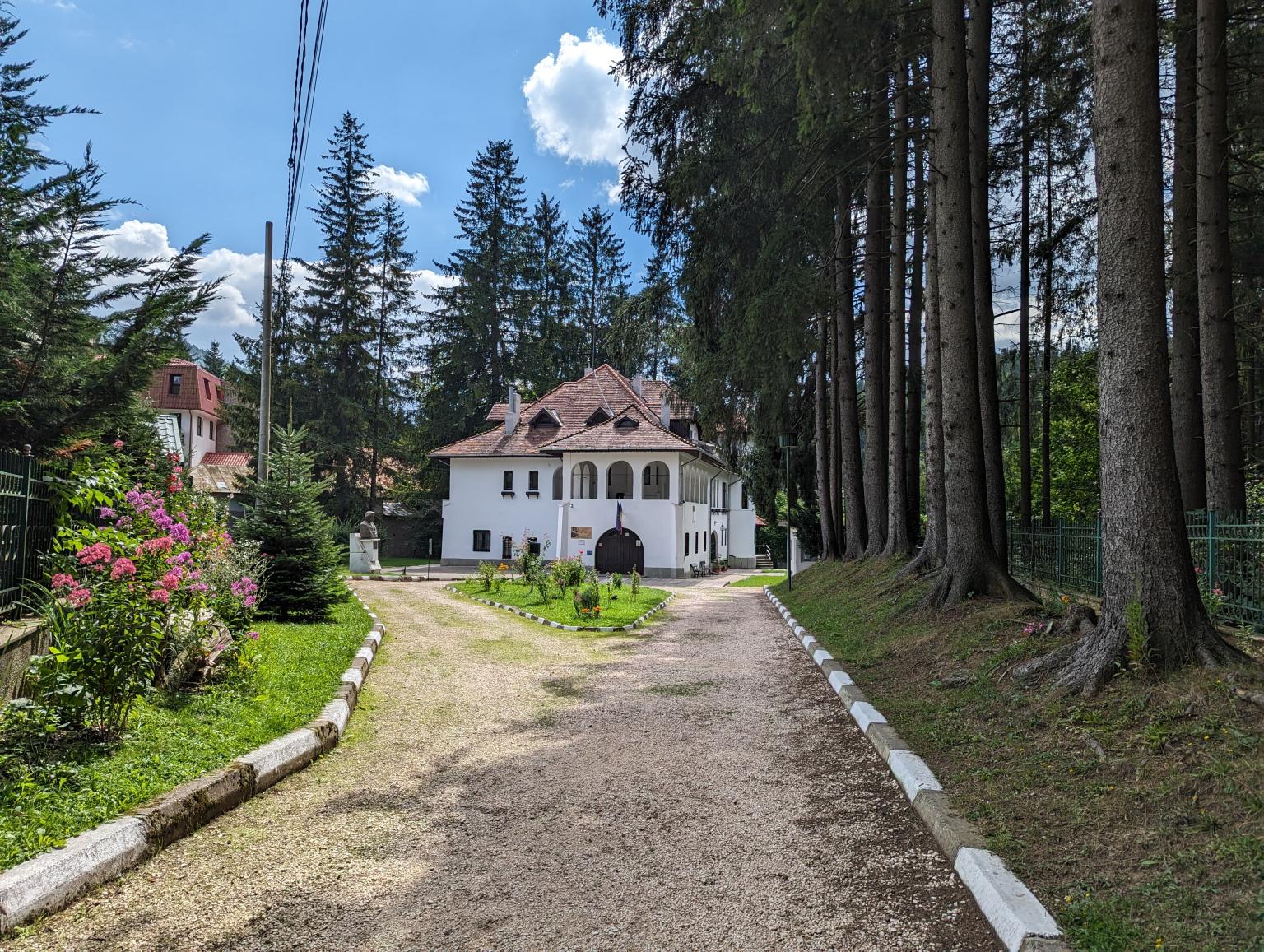
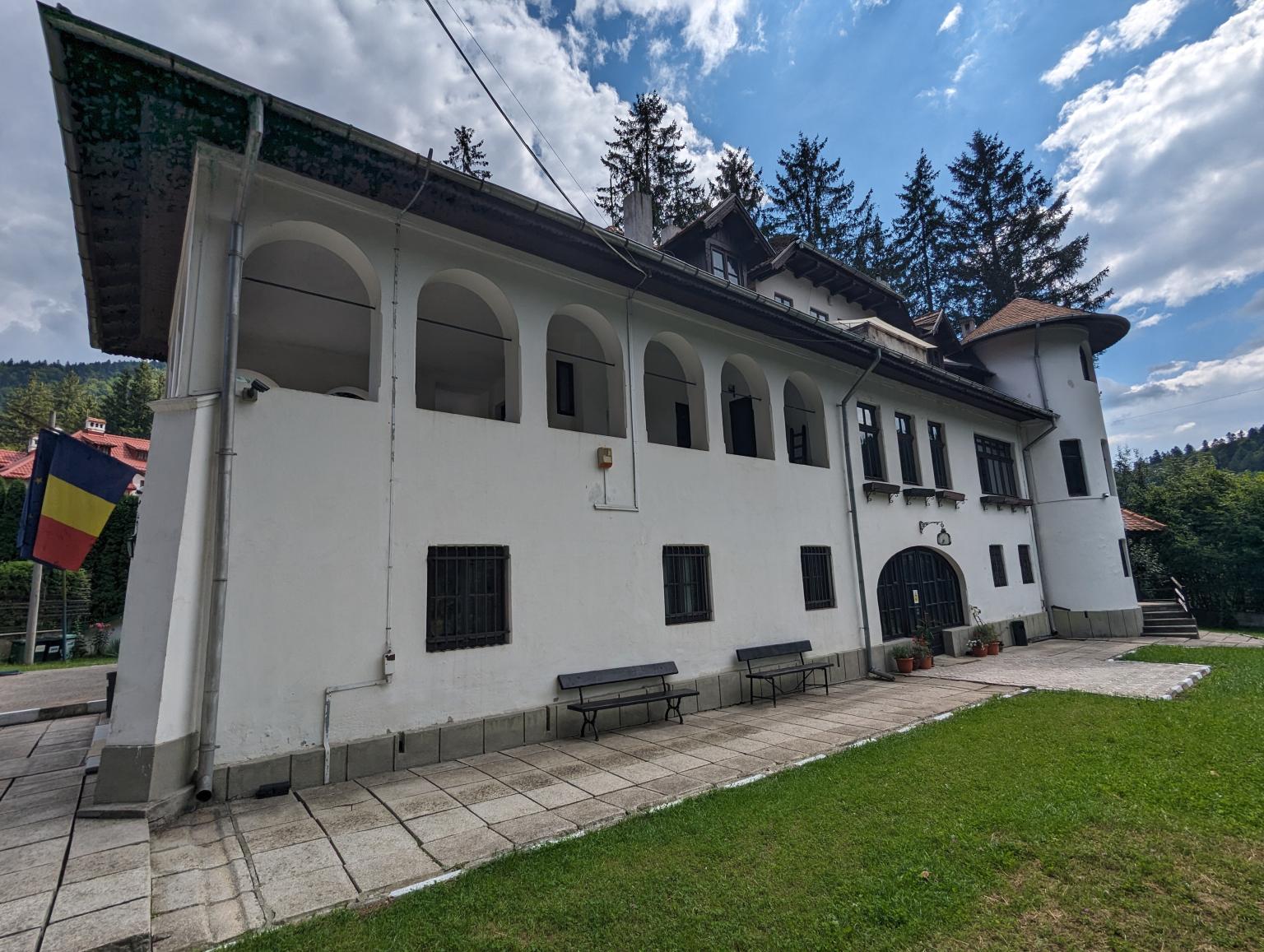
The villa was built between 1923 and 1926, by the architect Radu Dudescu, from the money brought by the maestro's concert activities.
Built in an authentic Romanian style, and harmoniously integrated into the inspiring atmosphere of the Bucegi mountains, the "Luminis" villa was to be both a place of inspiration for a significant part of Enescien's creation, as well as a place of recreation, the master living here for 20 years, between 1926 and 1946.
Text taken from the history of the museum displayed at the entrance
//
The George Enescu memorial house is located in the Cumpătul area, on the left bank of the Prahova river, located on a terrace on the slope of the Gârbova massif. The famous Romanian composer, a great lover of Sinaia, designed and built the Luminis villa in the period 1921-1922, according to his own plans, in order to find his eternal rest. The building incorporates Romanian architectural elements, such as a gazebo, arcades and a corner tower. Located in this fairytale place, at the foot of the mountains, the villa was the place where Enescu created a significant part of his musical masterpieces.
In this bright abode, the composer used to happily welcome the young musicians who came to ask him for guidance and advice.
Here, in the fall of 1928, Yehudi Menuhin was Enescu's student, later becoming one of the most famous violinists of the era. For three consecutive summers, Yehudi Menuhin was the guest of George Enescu in Sinaia, and the illustrious American violinist repeatedly admitted that his Romanian mentor decisively influenced his artistic formation.
Source: Bucharest-Brașov on Prahova Valley (Ministry of Tourism, 1976)