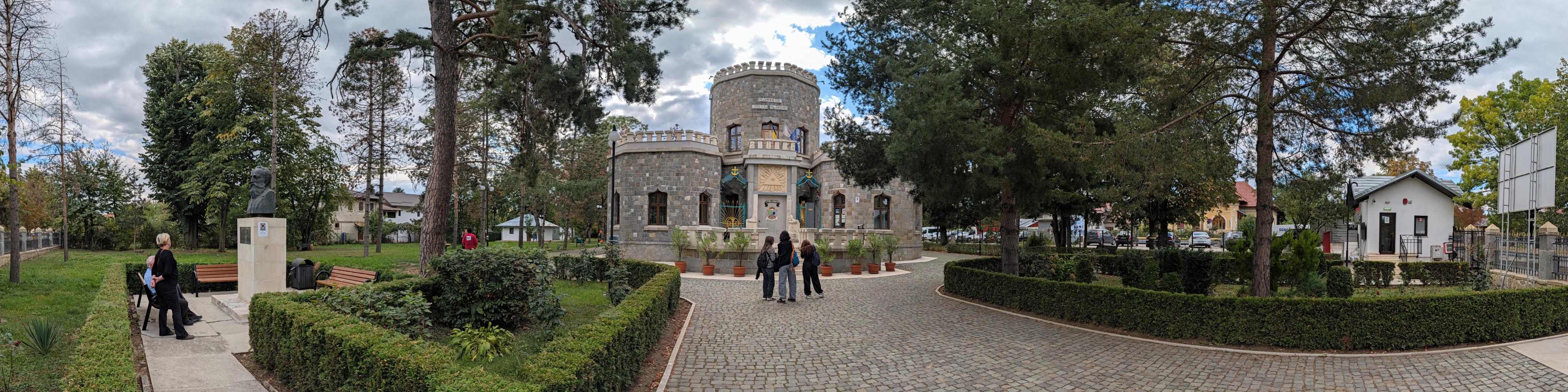
The "Bogdan Petriceicu Hasdeu" memorial museum in Câmpina is a museum dedicated to the Romanian writer and scholar Bogdan Petriceicu Hasdeu (1838-1907) and his daughter, a highly talented poet, Julia Hasdeu (1869-1888).
The museum is located in a building that was originally the residence of the Hasdeu family, but which was devastated during the occupation of 1916-1918. The building was restored in 1958-1964 and became a memorial museum.
The museum exhibition showcases around 300 manuscript documents, furniture, old books, paintings and personal items that belonged to B.P.Hasdeu and his daughter. Portraits of personalities from the Hasdeu dynasty are also on display. The museum keeps the archive and part of the library of the scholar-encyclopedist B.P.Hasdeu.
The services offered by the museum include guided tours, audio guide, infotouch and documentation. Those who come to visit the Museum and Castle in Câmpina have the surprise of rediscovering perennial values of Romanian and universal culture and spirituality.
//
The town of Câmpina is located on a 45-meter-high terraced bridge at the intersection of the Prahova and Doftana rivers. Mentioned in documents since the 15th century, it developed simultaneously with the construction of the road in Valea Prahova. Before 1663, documentary references indicated the village of Câmpina, and later it was called the fair. According to the chronicler Miron Costin, Câmpina was considered an urban settlement, along with Gherghița, Ploiești, Târgoviște, Vălenii de Munte, although the city status was only assigned to it in the second half of the 19th century, in 1866.
The intensified process of oil extraction led to the interweaving of the city's history with that of oil exploitation and industrialization, turning Câmpina into the Romanian oil capital towards the end of the 19th century.
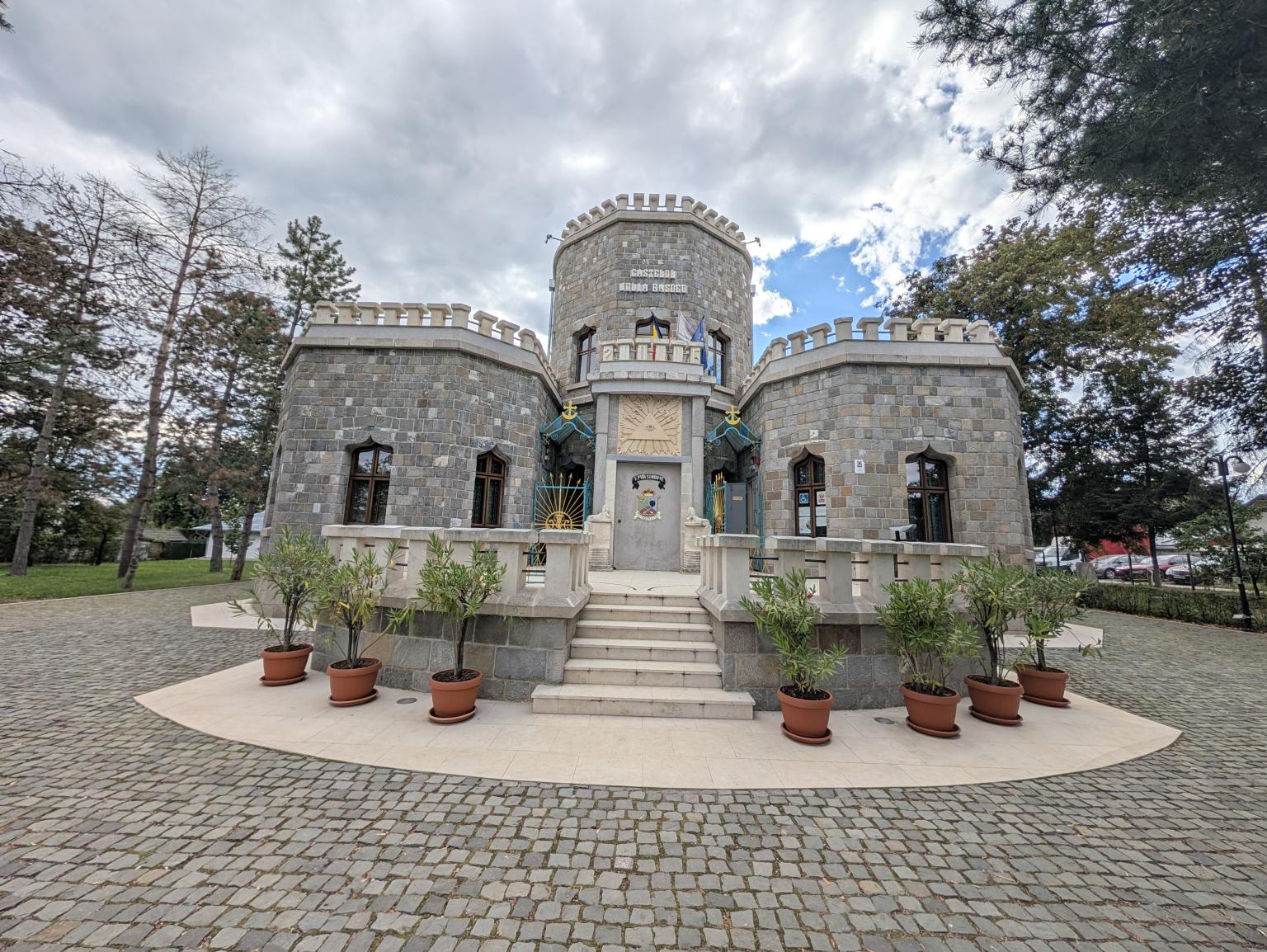
The memorial museum "B.P. Hașdeu" (str. 23 August 199) was organized in the Iulia Hașdeu castle, built between 1893-1896 by Iulia's father, in memory of his daughter lost at the age of 19, in 1888.
BP Hașdeu (1838-1907), a prominent figure in Romanian language and literature, carried out an extensive and captivating activity as a historian, philologist and folklorist. Hașdeu was a university professor, a member of the Romanian Academy and several scientific societies.
Deeply affected by the passing of his daughter, the individual was driven to delve into mysticism, attempting to establish connections with entities through spiritualism.
Iulia Hașdeu, recognized nationally and universally, was born on November 2, 1869 in Bucharest. From the age of 2 and a half, he showed reading skills, and at the age of 8 he passed exams for 4 primary classes, speaking German, French and English fluently. At the age of 11, he graduated with first prize from 4 secondary classes at St. Sava High School, distinguishing himself in satire on teachers and in composing comedies and dramas. In 1886, at the age of 17, he successfully obtained his baccalaureate in rhetoric and philosophy in Paris. She became a student at the Sorbonne, simultaneously taking singing and painting lessons, also standing out in brilliant conferences.
While preparing for her degree, she was stricken with tuberculosis; he traveled to Switzerland for treatment, but his health deteriorated, and upon returning to Bucharest, he died on September 17, 1888, at only 19 years old. Iulia was the subject of articles in the European newspapers of the time, and conferences were held about her abroad, receiving praise from distinguished foreign scholars and men of letters, including Cavel, Arc, Maeterlinck, and Nobel laureates for literature Sully Prudhomme. She left behind three volumes of verse and theater in French.
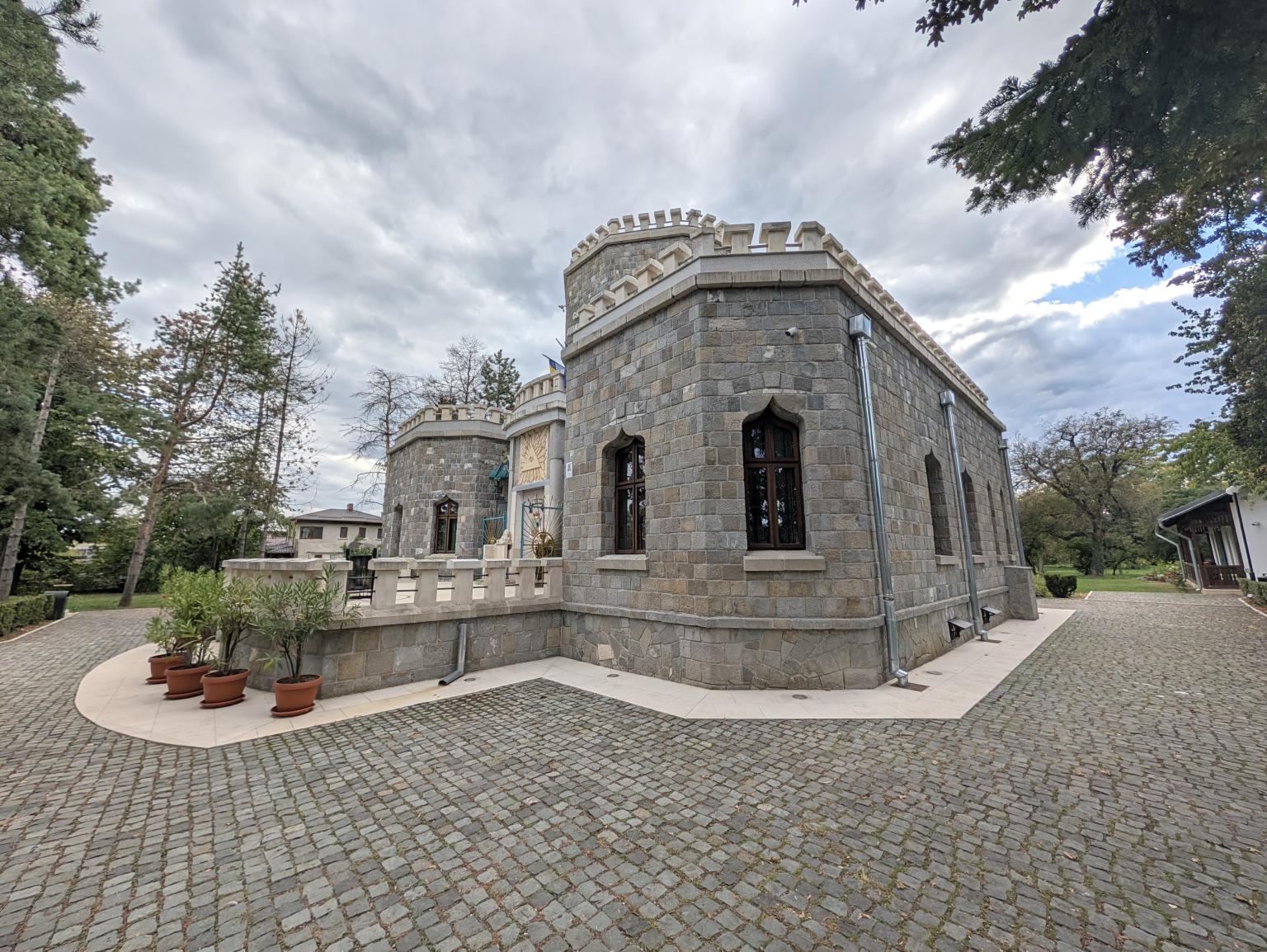
Iulia Hașdeu Castle, built after Iulia's passing away, reflects beliefs related to the "afterlife". Having a cross-shaped configuration, the construction has fortress-like characteristics due to the crenellations on the sides and buttresses on the northern side. The main entrance is protected by two pairs of stones arranged on seven slabs, symbolizing, according to metempsychosis, the journey of the human soul through 7 stages. The names of the women who, according to Hașdeu, influenced Julia's spiritual path, are inscribed on these slabs (Agnodike - the first woman doctor; Aspasia - Pericles' wife; Beatrice - Dante's lover; Ioana Veranez; Elisabeta; Charlotte Corday - the assassination of Marat ; Iulia Hasdeu).
Inside the castle, an iron grill demarcates the "Temple" (marked externally by a decagonal keep) from the rest of the rooms. This portion symbolizes the separation between the "spirit world" and everyday life. Inside the temple, there is a round chalice-shaped pedestal with a vault at the top.
Inside the castle, an iron grill demarcates the "Temple" (marked externally by a decagonal keep) from the rest of the rooms. This portion symbolizes the separation between the "spirit world" and everyday life. Inside the temple, there is a round chalice-shaped pedestal with a vault at the top.
The museum's basic exhibition includes authentic objects that attest to the presence of the Hașdeu family since the 17th century, such as family photographs, manuscripts, furniture, personal items, a portrait of Hașdeu made by Nicolae Grigorescu and another of Iulia, made by Sava Hentia, etc.
Source: Bucharest-Brașov on Prahova Valley (Ministry of Tourism, 1976)
Sursa: www.campinaturism.ro