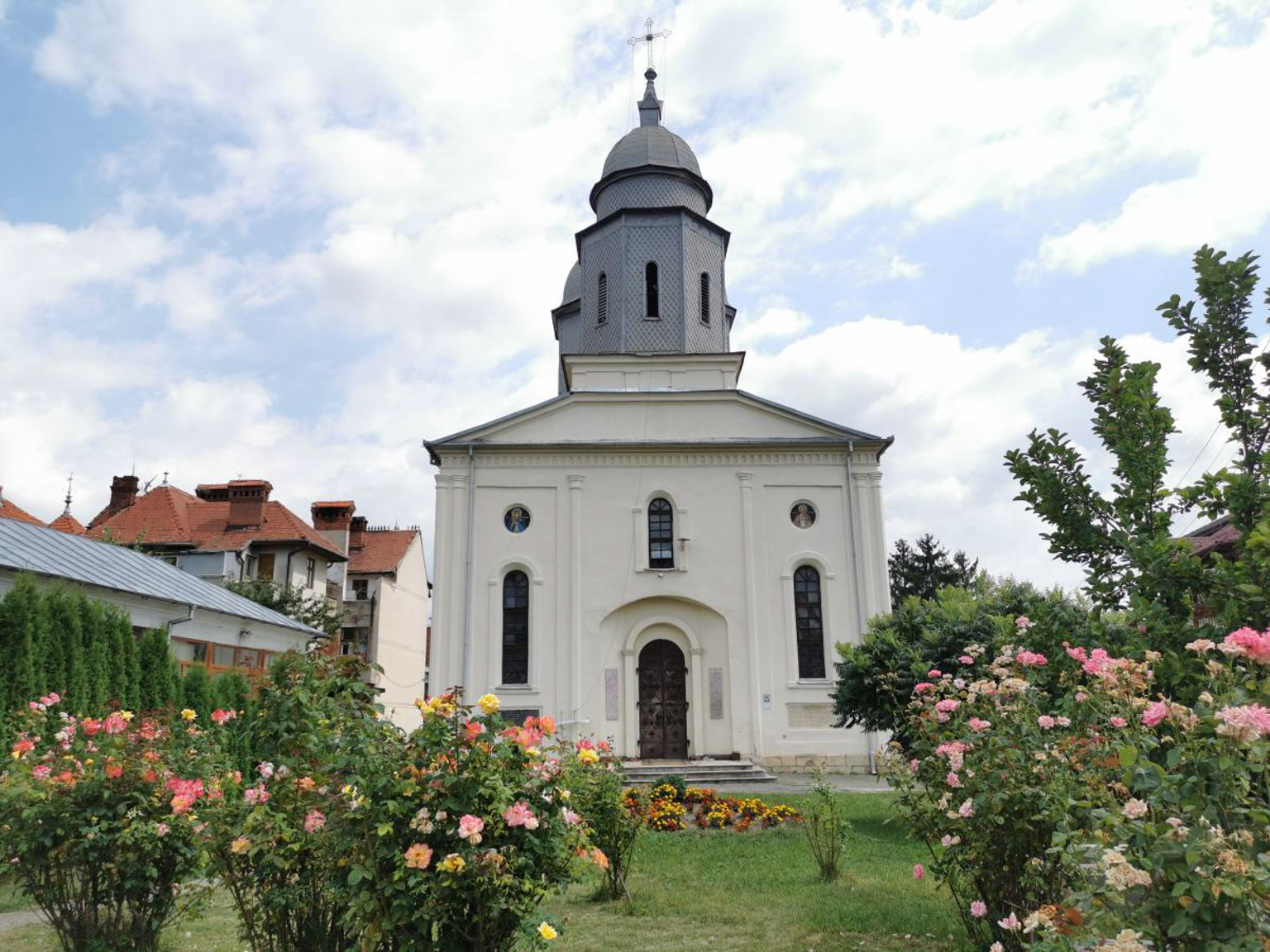
The Royal Church was built by Lady Chiajna in 1567.
The daughter of Petru Rareș and the wife of Mircea Ciobanul, also known as "Mircioaia" thanks to her contemporaries, was Mrs. Chiajna, a woman full of energy, determined and fierce in front of her enemies, but at the same time unscrupulous. She knew Turkish and Arabic. After the death of her husband, her son Petru, only 12 years old and having a physical infirmity, took over the reign. Practically, for nine years, Mrs. Chiajna effectively ruled the country, facing numerous attacks by disgruntled boyars. At that time, the leadership of the country by a woman was a completely unusual phenomenon.
Mrs. Chiajna had strong connections with the Porte, both through the governors and the royal harem, being supported by the sultan's mother and his favorites. All these relationships involved significant costs, and to strengthen his position, he sought to be related to one of the richest families in Constantinople, the family of Mihail Cantacuzino. For this purpose, he agreed to sacrifice his own 15-year-old daughter, marrying her to Michael's brother, who was already 50 years old.
After celebrating the wedding in Bucharest, the couple headed to the residence on the shores of the Black Sea. During the trip, a conflict occurred between the spouses, resulting in Mircioaia bringing her daughter home, along with the entire dowry, including part of the groom's wealth.
This generated numerous disputes, complaints to the sultan and a deep enmity with the Cantacuzin family. The intrigues persisted for about two years and led to the deposition of Petru, who, together with Lady Chiajna, was exiled to Aleppo in Syria, then to Koniah in Asia Minor. In this settlement, they built the Transfiguration Church.
The Royal Church, having a rectangular shape, has an imposing tower above the nave and has been restored several times. The notable feature of interior painting is the abundance of decorative elements at the expense of religious scenes or subjects. One of the first schools in Țara Domnească operated near the church, established in 1669, according to the order of ruler Antonie Vodă (1669-1672). The priests of the Domnești church were responsible for taking care of the students, representing the interests of the country's metropolitan.
Source: Bucharest-Brașov on variants (Ministry of Tourism, 1976)